Search

Tuesday, 29 August 2017

Memories Are Made of This

Simon Schama's 1989 history of the French Revolution, Citizens, memorably opens with a description of the monumental plaster elephant that stood in the Place de la Bastille between 1814 and 1846. It was a temporary structure erected on the order of Napoleon as a celebration of his victories and intended to be replaced by one cast in bronze from captured cannon. It long-outlived its purpose and was eventually eclipsed by the current monument, a column memorialising the dead of the 1830 July Revolution. Schama uses the increasingly decrepit elephant as a metaphor both for the obliteration of the 1789 revolution's history after the Thermidorian Reaction and the ultimate vanity of the revolutionaries' hopes, though their true monument was surely the dismantling of the Bastille Prison - i.e. the creative absence you still feel in the square as you circle the July Column. If Schama ideologically followed Francois Furet in seeing the Revolution as on-the-whole a bad thing (essentially liberalism perverted by the totalitarian left), then he followed the method of Furet's brother-in-law, Pierre Nora, the author of the monumental Les Lieux de Mémoire, in seeking to tell the story of the Revolution through its rhetorical expressions, from pamphlets to pageants.


Nora's even more comprehensive approach to French historiography (which ironically recuperated techniques pioneered by Debord and Foucault) would inspire the genre of popular world histories seen through the prism of a commodity: salt, pepper, the chronometer etc. It would also provide a background to the post-1989 debates on the removal of statues in Eastern Europe and the memorialising of resistance to Communist rule (the Gdansk shipyard gates, the site of Jan Palach's self-immolation in Prague etc). Unfortunately, this approach encouraged the idea that retiring some configurations of metal and marble and erecting others was sufficient in itself, which would eventually lead to the orgy of statue-toppling that obscured the far more damaging destruction of the institutions of the state in Iraq in 2003. What the focus on the symbolic in Eastern Europe hinted at was the high degree of continuity at the institutional level. This wasn't merely because democracy was adopted as a cover for existing networks by elites, though this clearly played a part, but because those states had institutions that were largely accepted as legitimate by the population. The two exceptions to this were East Germany and Russia: the one "taken over" by another institutional culture (to no little resentment), the other weakened by the fragmentation of the institutions of the USSR, which empowered now-private actors in state industries to entrench an oligarchy.

While many have drawn a parallel between Eastern Europe's monumental hygiene and the recent clashes over the memorials to white supremacy in the US, this equivalence tends to ignore the institutional dimension. Toppling statues is a perfectly reasonable activity, but it looks a lot like displacement unless there is an obvious symbolic value in a specific monument, like the notoriously near-empty Bastille. While some historians have rightly pointed out that most of the monuments to Confederate soldiers in the US were actually erected as symbols of the triumph of post-1890 "Jim Crow" laws, or resistance to civil rights in the 1960s, rather than memorials to the Civil War, this simply encourages the left to claim that these statues represent contemporary racism. That's obviously true in part, but it neglects the institutional basis to the persistence of that racism: the state house, the local sherrif, the conservative judiciary etc. The civil rights movement targeted institutions, not monuments. Donald Trump showed a better understanding of power, not to mention an appreciation of the idea that lieux des mémoire are more than just statues, when he pardoned the notorious former Arizonan sherrif, Joe Arpaio, for his abuse of the Constitution. That he also wants to rescind a lot of the National Monuments decreed by Barack Obama and previous presidents, specifically for the benefit of industry, should come as no surprise.

There appears to be an unconscious admission among centrists in the US that institutions are off limits, though whether this is due to a lack of imagination, or a fear that they are so far gone that the slightest pressure might lead to the complete collapse of the state, is hard to say. Much of the US "resistance" to Trump has been vapid and entitled precisely because it has focused on issues and symbols that are either marginal to popular concerns or seen as part of the establishment, such as quibbles over travel expenditure or insults directed at TV hosts. Though there is no shortage of popular delusion in the US, from the reality of angels to the intangibility of Obama's birth certificate, Democrats cannot attribute Hillary Clinton's failure solely to the lies over "Pizzagate" and her emails. Those tall tales merely reinforced an existing suspicion that she was untrustworthy and lacking in sympathy for ordinary people. Now, at a time when they should be challenging the institutional decay that has given rise to Trump, the Democrats remain wedded to old forms and familiar symbols, meaning that the defence of democracy against its presumed threats looks like the self-interested defence of institutions and norms that are anything but democratic (including the Democratic Party itself).

If the French have a wider symbolic vocabulary than Americans it is not down to any difference in their institutional resilience but to a greater anxiety over cultural cohesion. The French state has consciously sought to "make Frenchmen" since 1789 and many of its contemporary social frictions arise from that legacy, not least because it suffers a surfeit of lieux de mémoire and a constant demand to recognise more, particularly those that acknowledge the state's darker deeds in living memory, such as the Vel' d'Hiv and the Pont Saint-Michel. This debate around memory is ultimately a good thing, being a popular recognition of the state as a shared endeavour, even if it does lend an overly-theatrical air to proceedings. Macron's concern with symbolism, not to mention his expenditure on cosmetics, might strike many as ridiculous, but he is employing a conventional political grammar. In contrast, the US has a tradition of defining its sense of community in opposition: to native Americans, the British, Mexicans, subsequent waves of non-Protestant immigrants and, most obviously, blacks. Much of the current populism (i.e. anti-elitism) and distrust of Washington springs from this "agin-ness". The consequence is that identity is reduced to a handful of possessive symbols that anyone might own, such as the lawn flag, the handgun or the car, which encourages a defensive intransigence ("when you take it from my cold, dead hands") rather than an engagement with the federal public realm.

This explains the paradox of Americans as chauvinists who mistrust the nation state. Attempts to inculcate a more expansive patriotism in the French manner (one nation under a flag) have often struggled to get beyond the superficiality of performative patriotism: the hand on the heart, the stars-and-stripes pin on the lapel. It also suggests why the end of the American superlative after the 1970s (the best this, the best that) has been more disconcerting than the earlier relative decline in Britain. While the US moved from the hope of "It's morning again in America" to the petulance of "Make America great again", Britain settled down to watch It Ain't Alf Hot Mum and Only Fools and Horses, suggesting our admiration for entrepreneurialism was no more profound than our regret over empire. Britain has no shortage of chauvinists, but there would be few takers for a torchlight procession to defend the statue of Edward Colston. The irony of the current wave of American statue-bothering is that many of these monuments lost their resonance years ago, particularly since post-60s racism moved its symbolic focus to the spectre of race-inflected violence: "three strikes", concealed carry, Sheriff Joe etc. The compounding irony is that attempts by the "alt-right" to defend the statues have highlighted their irrelevance and inappropriateness, which is now accelerating their removal.

The turn to the symbolic in American political discourse suggests a renewed engagement by the general population with its history. This isn't peculiar to the one country: a similar tendency is to be seen across developed nations, perhaps because the contingency of the state has become more apparent under globalisation and so settled national narratives have come in for more interrogation. That neoliberalism has stimulated an interest in family history, essentially as a defence against fragmentation and the loss of memory, is self-evident, but it has also encouraged an appreciation of history as the product of many individual decisions and experiences (an ironic echo of Hayek's theory of dispersed knowledge). But if this engagement is limited to statuary, it will be no more fruitful that the occupation of Zuccotti Park. Democratic renewal in the US requires institutional reform, and that is only going to come through party reform. The problem is that the Democrats remain in denial about their own need for renewal, insisting that the plaster elephant of the Republican Party must surely crumble under the weight of its own decay and so leave the field to them. As Parisians could remind them, sometimes it takes a revolution to clear away the rubbish.

Wednesday, 23 August 2017

The Fragmented Family

Much of the critical literature on neoliberalism has focused on its effect on the state, in particular the way that aspects of public policy are put beyond democratic control through marketisation and privatisation, and the manner in which policy is suborned to commercial interests through regulatory capture and the "revolving door". Less attention has been paid to the impact of neoliberalism on the family. This doesn't mean that the family is ignored so much as it is viewed as a permanent fixture that is buffeted and stressed by neoliberalism - for example the way in which the erosion of the welfare state has driven the growth in household debt - rather than as a subject that is transformed. There is no conception of the neoliberal family to match the idealisation of homo economicus, the neoliberal individual, and thus little attempt to historicise it. This seems odd given the wealth of twentieth century analysis into the changing formation of kinship groups, from historical studies of the early modern period to sociological studies of the contemporary nuclear family, not to mention current debates on the "varieties of family" occasioned by feminism and same-sex marriage.

Sociology has certainly not neglected the impact that neoliberalism has had on the family as a unit, from its increasing dependence on working mothers to the frictions arising from growing intergenerational inequality, but it hasn't ventured a theory of the neoliberal family in the way that the nuclear family was defined as the logical kinship formation of modern industrial society. This is partly a disciplinary problem, reflecting both the divorce of sociology from economics that occurred under neoliberalism (a process that some sociologists, like Wolfgang Streeck, seek to reverse) and the revived interest in Karl Polanyi and the idea of the family as a site of resistance to the market. Both treat the family as anterior to and independent of the economy (the one oblivious, the other antagonistic) rather than as a social result of economic power. But it is also a political problem, reflecting the success of the right in reconciling neoliberalism with traditional conservative theory through an emphasis on both the family's pre-eminent role as the source of social assistance (replacing the welfare state) and on its exemplary role as the foundation of property rights (which in the US has heavily influenced the debates around abortion and gun control).

The result is that even those studies that focus explicitly on the relationship of neoliberalism and the family tend to see the latter as a site in which power struggles take place rather than as the product of socio-economic dynamics. This perspective is reinforced both by feminism, with its emphasis on individual emancipation and historic abuse, and by readings that seek to excavate the reactionary roots of modern conservatives' instrumental use of the family. The consequence is the all-too-familiar friction between the demands for social and economic justice that divide the contemporary left (identity politics versus "brocialists") and a tendency to treat "conventional" family forms as inherently suspect. For example, in separate reviews of Melinda Cooper's Family Values: Between Neoliberalism and the New Social Conservatism, Angela McRobbie brackets the regret expressed over the loss of the family wage by "European leftist social scientists", such as Zygmunt Bauman and Streeck, with the Chicago School economist Gary Becker, while James Chappel expands the bracket far back into the past: "Scratch the surface of the most hardheaded economic rationalist—Thomas Malthus in the nineteenth century, Gary Becker in the twentieth—and you will find that the apparent commitment to rugged individualism is more accurately a commitment to family altruism and private relations of dependence".

Cooper's fundamental and correct point - that neoliberalism works through the agency of the family despite its rhetorical emphasis on personal utility - shouldn't come as a surprise. That neoliberalism requires a strong (even authoritarian) state, despite its ostensible commitment to reducing the burden of government and increasing the freedom of the individual, is now well known. Only the naive would still claim that the promise of neoliberal politicians to "shrink the state" is sincere. Similarly, neoliberalism sees the family as critical to its success, not merely as a substitute for welfare but as a more reliable asset for financialisation (people in family units are less likely to renege on debts than people on their own, and more likely to have assets to call on). But there is no doubt that the neoliberal state is a significantly different animal to the social democratic state of les trente glorieuses, from its valorisation of markets to its deficit obsession. By the same token, we should expect the family under neoliberalism to exhibit similarly distinct characteristics. To identify these, we need first to establish the baseline: the characteristics of the typical family in the years before neoliberalism started to seriously affect social relations, i.e. around the 1980s.


In the 1950s and 60s, some children would move beyond the area where they were brought up by their early-twenties, but the majority would stay in (or within walking distance of) the parental home, sometimes beyond marriage. The arrival of children (i.e. grandchildren) was often the point at which young adults would finally move out of their parent's immediate orbit, particularly after the growth of the postwar suburbs and the appearance of affordable cars. The Sunday lunch ritual - being driven to the grandparents for meat and two veg - was a thing by the 1970s. By the 1990s, "empty nest syndrome" had become a thing. The post-millennium "boomerang" effect, of young adults moving back home after a few years of independence due to low-wages or housing shortages, might have been expected to ameliorate this sense of estrangement but it actually exacerbated it by leaving both children and parents in limbo. The former were often resentful at their "failure to launch" while the latter were unable to properly process their anticipated "loss". Uncertainty about the stability of family groups is now common and anxiety over future inheritance conflicts (i.e. liquidating the chief asset means someone may lose their home) is growing. The nostalgia that underpins TV programmes like Back in Time for Dinner is for predictability not Angel Delight.

This doesn't just affect "traditional" family groups - i.e. married parents with two or more children - but other formations too: unmarried parents with kids, re-marriages with step-children, same-sex couples with adoptees etc. All family models have been affected by broader social changes: the reduction in family sizes in the 1970s and the subsequent growth in childlessness; deindustrialisation in the 1980s, causing young adults to move often long distances in search of work; and the expansion of tertiary education starting in the 1990s, which meant more children moving away (at least temporarily) and acquiring different values earlier. While intergenerational conflict is often deployed as a distraction from wealth inequality, the relative reduction in life chances for the young (social mobility, home ownership etc) is real. The chief characteristic of the neoliberal family then is fragmentation and a loosening of bonds in multiple dimensions: spatial, generational and cultural (the intra-family frictions over Brexit are typical of this). In this light, the alliance of neoliberalism and conservatism starts to look less like a happy marriage that advances both household indebtedness and traditional family values and more like an attempt to mitigate the disruptive effects of the one by an appeal to the coercive normativity of the other.

The tension in this marriage was obvious from the beginning. For example, 1981 in the UK was the first full year of right-to-buy and also the year that Norman Tebbitt gave his notorious "get on your bike" speech at the Conservative Party annual conference. The one policy encouraged the encumbrance of a mortgage and the fixity of place while the other advocated the mobility of labour. Renting would actually have been an optimal social policy for industrial capital, particularly in a period of massive reorganisation, but the interests of finance capital (more so than simple electoral calculation) were decisive. The fading away of the vision of a "property-owning democracy" was always inevitable, and while some conservatives seem to appreciate the problem, they appear unable to address it because of their conflicting interests. The crisis of conservatism is a set of contradictions arising not simply from material changes in the economy and society but from antagonistic policies enacted by conservatives themselves. These antagonisms are increasingly located within the family, giving the impression that conservative political parties are losing their touch despite their family-friendly rhetoric (the Tories' "dementia tax" being a recent example).

The popular culture of the 60s and 70s often focused on the idea of escape from the constraints of family, and in particular the limitations of working class life, but this imagined the family background as at worst conservative and timid. For all its failings, it was a launchpad for social progression. In retrospect, this looks like early period neoliberalism with the emphasis on individual freedom and potential. The modern equivalent of the "traditional" family has been reduced to scenarios of individual rebellion against the socially retrograde, such as gay kids fleeing homophobia or Muslim girls fleeing arranged marriages. The ideal of escape is now tinged with fear and desperation (the recent film Get Out took this to hilarious extremes). The idealised neoliberal family today is not just socially tolerant, in a predictably middle-class way, but its members oscillate between atomised indifference and competitive support, which reflects the contradiction at its heart. Parents as much as children are highly individual, to the point of rebellious eccentricity, but with a sense of collective obligation. TV sitcoms like My Family, Outnumbered and Cuckoo, with their tropes of permanent exhaustion and barely suppressed resentment, suggest that neoliberalism has entered a late, decadent phase.

Sunday, 30 July 2017

That Dunkirk Spirit

The chief curiosity of Niall Ferguson's "I won" tweet, claiming that most Brits think the British empire was something to be proud of, is why he recirculated the results of a three year-old YouGov poll. It's like Aaron Ramsey bragging that he'd scored the winning goal in the 2014 FA Cup Final while we're still enjoying the one he scored in this year's. To judge from the rest of the contrarian historian's timeline, this might simply have been a provocation to advertise Ferguson's Brexit-inflected hot-take on Christopher Nolan's Dunkirk, though it's also possible he is feeling increasingly isolated in the US and just wanted to remind us that he is still alive. Ferguson advocated a vote to stay in the EU last year, presumably because David Cameron asked him to, but his heart was never in it. He has always believed that the UK has a fundamentally non-european destiny. His misjudgement then has left him in a strange limbo now, ideologically on the same wavelength as leavers such as Daniel Hannan, Andrew Roberts and Andrew Lillico but lacking the credibility of a Brexit true-believer (I wonder if he has worked through a counterfactual in which he was the hero of the leave campaign?).

What I'm interested in here is not so much Ferguson's assessment of the empire's value, which is the usual stuff about its WASP civilisational mission, but the way that this long-cherished idealisation of Britain has been affected by Brexit. However, to explore that we need to first put the YouGov numbers into context and then establish a few truths about the nature of empire and trade. The 2014 poll found that 59% thought the British empire was more something to be proud of than ashamed of. Only 19% plumped for the latter with 23% don't know. Given the emotional baggage of the word "ashamed", this looks biased, and sure enough a subsequent YouGov poll in 2016 that contrasted "should be proud of" with the milder "should regret" produced a 44% to 21% split (23% opted for neither). Leaving aside the possibility that the empire was rapidly going out of fashion in recent years, what I think this shows is that opinion on the subject is shallow and can easily be led by the question. This should hardly come as a surprise, not least because very few of us have any lived experience of the empire. For many, it is little more than a synecdoche of a vague British history.

It is also worth emphasising that few British adults who were alive during the era of formal imperialism (i.e. before 1949) had any direct experience of it either. A feature of empire is that those who experienced it in their daily lives were mostly colonial subjects rather than residents of the metropole (i.e. the UK), and there is little evidence to suggest that most were proud of the empire let alone supporters of the colonial system. Even among the self-governing dominions, dominated by white settlers having a cultural affinity with the UK, the preference for national self-determination over the maintenance of empire had been evident since WW1 (the emblematic moment for many being the Gallipoli campaign). You could dismiss the thought experiment of an opinion poll in the 1930s by saying that a poor farmer in Bihar couldn't see the big picture, but not only is that patronising, it is an argument that would apply equally (if not more so) to a shop assistant in Milton Keynes today. The bottom line is that an opinion poll of contemporary Britons is not a reflection of the value of empire in any meaningful sense, so it is pretty flimsy evidence on which to base a claim of having "won" anything.

What it does reflect is the suspended nature of our popular judgement, which can be seen in the ability to recognise the individual crimes of empire while enjoying the picturesque infrastructure: consider almost any TV treatment of the Indian Raj. This is echoed in the polemical realm where specific evils that can be attributed to individual failings (e.g. the Amritsar massacre) are contrasted via a spurious "balance sheet" with structural and institutional benefits (e.g. railways and cricket). Because the UK did not have a political revolution coincident with the end of empire, its polity cannot generally define itself in opposition to imperialism or "draw a line" under its history (compare and contrast with the Carnation Revolution in Portugal). Indeed, one of the attractions of EU membership for the British state was the way that it allowed the squalid history of empire to be gently pushed into the wings without too much soul-searching. The terminal myth of the British Empire is that it was dismantled willingly, rather than under duress from a combination of independence movements, bankruptcy and the US, which supposedly sets us apart from other former imperial powers and excuses the need for all but the most anodyne half-apologies.

Empires are founded on domination and exploitation but they rarely make the imperial power significantly richer on a lasting basis. The wealth coincident with empire is more likely to be the consequence of geographic or technological factors that in turn facilitated imperial growth. It's synergistic. For example, naval power and control of the Atlantic created the British empire, but it also created the informal trading empire that actually delivered wealth and there is ample evidence that it spurred the advances of the agricultural and industrial revolutions that further amplified imperial power. Empire and commerce were therefore complementary but not coterminus. A well-known proof of this is that Latin America, where Britain had little colonial presence, was more valuable to the UK economy than Australasia. Another way of looking at this is to note that the high period of British colonialism commences in the 1870s and runs to 1914, but far from being the apogee of British power (even if it was considered as such by many at the time), this was precisely the period during which the USA and Germany overtook the UK as economic powers despite their more modest colonial holdings.
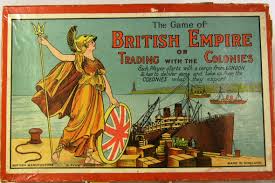

Though empire can start out as private enterprise, for example the East India Company, the scale of its operation means that it usually becomes a matter of state. This represents a very large opportunity cost because it means denying resources to other endeavours that depend on state support. An example of this would be the influx of South American gold and silver to 16th century Spain, which undermined the development of its domestic manufacture, essentially because the wealth both funded increased imports from the rest of Europe and restrained exports through currency appreciation. What empire does is bias the economy in the interests of particular industrial sectors and administrative elites. For example, control of India benefited Lancashire cotton. Without that captive market, the British textile industry would probably have been smaller and may not have been as technologically innovative. The City of London would still have been a great financial centre because of its geographical position relative to Europe and the Americas, but empire undoubtedly boosted its reach across the globe (most notably in the Far East) and the congruence of interests between the two significantly influenced policy in the later Victorian period, specifically the commitment to further expansion and the diversion of investment away from domestic industry to foreign speculation.

The British had to be made into imperialists long after the creation of empire, notably during the period of "New Imperialism" that started under Disraeli in the late-1870s, which in turn reinvigorated an anti-imperial movement that dated back to Adam Smith's attack on mercantilism. As that tradition indicates, free trade was long considered inimical to the cause of empire, which makes the Brexiteers' attempt to urge both free trade deals and a preferential union based on the geographically distant fragments of the old commonwealth (Canada, Australia etc) all the more bizarre. While Britain had been an assertively chauvinist nation since the 1707 Act of Union, the idea of pride in the empire was a late-Victorian invention that sought to define the "role" of the imperial system (aka the "white man's burden") both in the context of "race science" (some people were naturally inferior) and the "social question" (some people were naturally inferior). The two combined in the idea that the empire was a matter of superior loyalty at odds with the advance of democracy and socialism, which led to many on the political right advocating imperial federalism among the white-dominated dominions, the belief being that colonial smallholders and Jingoism could together counter the urban proletariat.

Much of the retrospective justification for empire by partisans like Ferguson focuses on developments that would have occurred anyway, such as the adoption of railways or the development of ports. To claim credit for this is to imply that in a counterfactual, where no European states created empires, the non-European natives would have passed up the opportunity or rejected it out of backwardness. Japan and Turkey offer factual arguments against this. Similarly, the claim (echoing late-Victorian thinking) that the colonies were going to be seized by some power or other, and that it was therefore better to be seized by the "liberal" British, manages the trick of patronising every foreigner. The infrastructural legacy of empire argument also occludes the institutional legacy, which is actually more peculiar to empire. A colony designed for exploitation will inherit the institutional framework of that exploitation at independence. Inertia as much as opportunism means that this will favour those social forces attuned to exploitation. The charge of endemic corruption levelled at former colonies, and in particular the crypto-racist claim that corruption arises from "native culture", are an attempt to disown this institutional responsibility. Idi Amin, in his comic absurdity as much as his viciousness and cupidity, was an accurate reflection of the British Empire (an institution he himself was inordinately proud off).

The post-70s vogue for the rehabilitation of empire, and in particular the emphasis on its supposed virtues in the area of the protection of private property and the enforcement of contract law, are obviously bound up with the advance of globalisation and neoliberalism. Some advocates, such as Ferguson, make the link explicit: "A striking number of the things currently recommended by economists to developing countries were in fact imposed by British rule". Those words were written in 2003, five years before the flaws of the "Washington consensus" - the successor to that London consensus - became apparent to all. While Ferguson believes that empire benefited both Britain and the colonies, he does at least accept that opinion on the subject is divided and that there are many historians who consider empire to have been of marginal benefit to the UK, or even deleterious. The point to take away from this is that Ferguson's case is clearly not irrefutable, and indeed it is worth stressing that he is essentially arguing for the aytpicality of the British empire, not for empire in general, hence the importance of his anglocentric "civilizational apps".

Reduced to its essentials, empire is a project of state. It is hardly a surprise then that it rarely survives the arrival of democracy in the metropole for long. This is not because public opinion turns against the evils of empire, which are often barely discernible from afar (see the complacency of much British and French public opinion as late as the 1950s), but because it sees little popular benefit and wishes to direct state resources to other priorities, such as the welfare state or domestic investment. Few Britons pine over the loss of Ireland, and there are few who would oppose unification if that were the will of a majority in the north. Despite the imperial nostalgia of some leavers, much of the rhetoric of Brexit (e.g. "looking after our own") was solidly in this anti-imperial tradition, as was the upsurge of English nationalism and scotophobia after 2014. The hypocrisy of the NHS £350 million bus was clear from the off because it was being advocated by politicians in the tradition of imperial nostalgia, such as Gove and Johnson, for whom the welfare state was harmful precisely because it sapped the moral fibre necessary to maintain the empire.
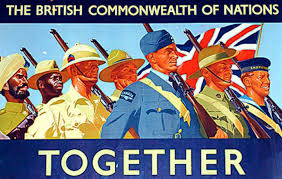

The valorisation of the British Empire is a supporting act to the current talk of a revived "union" with Canada, Australia and New Zealand, which is an attempt both to big-up what would actually be a series of modest trade deals that would come nowhere near to substituting for the benefits of the EU and to reconstruct a superior loyalty that is essentially racial (CANZUK is the old commonwealth - i.e. dominions - less the black-majority South Africa). The absurdity of soi-disant sovereigntists decrying the federal ambitions of the EU while advocating a more impractical federation echoes the incoherence of the "imperial federalism" of a century ago, which fell apart due to the irreconcilable demands of free trade and imperial preference (mirrored today in the issue of the free movement of labour). A dilute version of this fantasy, shorn of most of the racism and the aversion to national states, would eventually reappear as the Commonwealth in 1949. The current attempt will fail for much the same reasons: the former dominions consider the initiative patronising, have greater priorities elsewhere (e.g. in regional trade deals) and find the culture of sentimental loyalism that underpins the proposal increasingly alien (the mawkish monarchism of the UK doesn't travel as well as the British media like to suggest).

The Tory obsession with a superior loyalty is clearly motivated by the dawning realisation that the inheritor of Brexit may be an emboldened Labour Party. Brussels might have been a tyrannical overlord in the eurosceptics' fevered imaginings, but at least it was a bourgeois tyranny. In his Dunkirk review, Ferguson was barely able to contain his anxiety. This is the opening paragraph: "Traditionally, the British have two ways of responding to disaster. The elites are prone to panic. They wave their arms, indulge in lamentations, wish they could turn the clock back, then recommend orderly surrender. Ordinary people, by contrast, tend to make the best of a bad job. This state of mind is often summed up in the Second World War slogan 'Keep Calm and Carry On'." The focus is on elite betrayal and the supposed common sense of the loyal people. What Ferguson doesn't note is that after Dunkirk and eventually VE Day, the British people were more interested in the establishment of a welfare state than the continuation of empire, hence the victory of Labour in 1945 on a manifesto that committed the country both to the foundation of the NHS and the self-government of India.

That Labour hedged its bets in 1945 over India - being committed to self-government but unclear as to how that would be achieved - was typical of its attitude towards empire in the immediate postwar years. Though it had long and sincerely supported the principle of decolonisation, there was also a desire to defer it (justified as "preparing" native society for independence) in the hope that a little bit more exploitation (albet with a friendlier face) would offset the food and Dollar export shortages that were then crippling the UK. It's worth noting that this "third way" between empire and immediate decolonisation was one factor in the Attlee government's reluctance to participate in early moves towards closer European economic union. Its policy between 1945 and 1951 wasn't always principled or pretty, as the partition of India showed. A less tragic embarrassment was the Seretse Khama affair, which was recently portrayed in A United Kingdom, a film unusual for giving as much space to the political dynamic as the emotional drama and landscape. Labour's fudging over self-rule in Africa would lead to the creation of the short-lived Central African Federation under the new Conservative government in 1953, which in many ways was the last hurrah of the imperial federalism that was such a feature of the politics of Churchill's youth.

What Labour's policy in 1945 did display was a clear bias towards the domestic, despite its formal adherence to the dominant internationalist agenda of the time (the UN, NATO etc), which persists today in its Brexit positioning and goes some way to explain its relative popularity. The remainers who criticise Labour's current ambiguity fail to appreciate this historical precedent, and more generally the ebb and flow of isolationism versus internationalism. Leavers have also struggled to land a blow, but more because of their own contradictions than Labour's slipperiness. The irony of euroscepticism is that it exploited a long tradition of anti-imperialism in the form of a distrust of both federal superstates and impediments to free trade (those bendy bananas). What its champions have now realised is that the logical corollary of this is a scepticism about the value of anglophone federalism in general (the CANZUK fantasy) and a suspicion of US motives in particular (those chlorinated chickens).

The film Dunkirk, which omits mention of empire and America and emphasises self-preservation, is closer to Labour's tone than that of the Tories, which perhaps explains why both committed leavers and remainers have struggled to use it as a metaphor beyond an appeal to a weary patriotism or the promise of an eventual return to Europe. Whatever the outcome of the current Brexit negotiations, from a reversal of the referendum decision to a messy walkout that leaves British industry as crippled as it was 70 years ago, the idea that the UK can establish an independent global presence is surely now too ridiculous to entertain, which might allow us to finally consign the myth of the benevolent empire to the darkened corner of the dressing up box of national identity. The final irony is that Brexit represents a greater discontinuity in the consoling tale that Britain tells itself than joining the Common Market ever did, despite Hugh Gaitskell's hyperbole about "a thousand years of history".

Monday, 24 July 2017

The Great Hunger

In a recent New York Times article, Keenan Malik made the claim that "The accusation of cultural appropriation is a secular version of the charge of blasphemy." This might appear a little over the top, but it is a common view among the ex-left-now-militant-liberal commentariat that the concern over cultural appropriation is "a new, weird, destructive form of political correctness" and that its critics are essentially regressive mystagogues betraying the Enlightenment values we hold dear. More revealingly, Malik also frames the issue in terms of property rights and licensing: "In minority communities, the gatekeepers are usually self-appointed guardians whose power rests on their ability to define what is acceptable and what is beyond the bounds. They appropriate for themselves the authority to license certain forms of cultural engagement, and in doing so, entrench their power". His decisive argument against cultural appropriation gone mad is a counterfactual in which Elvis Presley was "prevented from appropriating so-called [sic] black music", presumably by the self-appointed dullards of the Delta Blues appellation d'origine contrôlé association.

Among the "gatekeepers" there is also a tendency to address the subject in terms of cultural production, even if the focus is on exploitation and expropriation. Maisha Z Johnson describes it as "a particular power dynamic in which members of a dominant culture take elements from a culture of people who have been systematically oppressed by that dominant group." This doesn't just reflect contemporary inequities but reaches back into the past and revives old iniquities in a mocking way (think of Queen Victoria and family wearing Highland dress that had been outlawed a hundred years earlier). Though Johnson gets to the heart of the matter - it's a power dynamic, which is why high-profile cases involving thoughtless celebrities are significant - she still frames culture in terms of rights, which raises the question of who the rights-bearers are. For example, she correctly notes that appropriation "lets some people get rewarded for things the creators never got credit for", but are the creators specific individuals, a particular socio-economic group or an entire people going back generations? Once you introduce rights that are anything less than universal, you introduce qualifications.

That can be counterproductive. For example, when you criticise a white woman for wearing a Native American headdress you are recreating the reservation system within the field of culture. You also have the problem of distinguishing between appropriation and export. Few would harangue Bolivian women for wearing bowler hats, presumably because the hats were designed as commodities open to universal purchase rather than as expressions of distinct identity, even though the latter is what they have become in Bolivia. What matters, as Johnson made clear, is the relative power, hence a rich white woman adopting the full ensemble of a cholita would be considered exploitative. Cultural appropriation is therefore less about the indigenous nature of a cultural product and more about its context as a commodity. Societies that appropriate are also societies that have commoditised their own cultural capital to the point of pastiche (i.e. postmodernism). An example of a culture that celebrates its own superficiality, appropriates the cultures of others without the slightest guilt, and has commoditised itself on an industrial scale for consumption by others is Japan. But this, like its polite xenophobia and self-absorption, is a sign of Japan's cultural strength, not weakness.


One country that can consider itself to be an expert in cultural appropriation is Ireland, not least because it built a modern culture on the appropriation of its own, mythical past and did so in the adopted language of its conquerors, producing a rich cultural inventory that has since been commoditised for international export. In this context, artists of Irish heritage born or raised in Britain occupy an interesting position, being the most hybrid versions of what is ultimately a self-consciously hybrid culture in which the echoes of the classical world and the affinity with Europe (notably France) are always partly attempts to avoid the crushing weight of Shakespeare and John Bull's island. If the play-writing and film-making Martin and John Michael McDonagh (In Bruges, The Guard, Calvary) are the leading contemporary lights of this Hiberno-British tradition, Jez Butterworth (who also has Irish parentage) makes a good case for inclusion in their company with his play, The Ferryman, which is currently on at the Gielgud Theatre in London (plot spoilers to follow). The production, starring Paddy Considine as Quinn and Laura Donnelly as Caitlin, is excellent and deserves the plaudits it has received as a piece of theatre, however it has clearly touched some nerves among Irish critics, essentially over the charge of cultural appropriation: namely, that this is an English playwright using Irish tropes without native understanding and thus legitimacy.

The action, set in a farmhouse kitchen in County Armagh, plays out against the wider drama of the last few weeks of the 1981 hunger strike. This coincides with late summer and the seasonal arrival of the Corcoran boys from Derry to help with the harvest. The play centres on Quinn Carney, a former IRA man and now farmer who lives with an extended family of aunts and uncles (essentially personifications of Irish history and culture) and his wife, Mary, and 7 children (essentially a Greek chorus). The body of his brother Seamus, who was "disappeared" years ago by the IRA for an assumed act of treachery, has been discovered in a peat bog south of the border in Louth (the border is also between the living and the dead, hence the title's reference to Charon, who ferried souls to the underworld in Greek mythology). Seamus's widow Caitlin and son Oisin were taken in by Quinn and Mary and now form part of the family, to the point that Quinn and Caitlin's relationship is ambiguous. The IRA commander Muldoon wants Quinn to exonerate the organisation "at this politically-sensitive time" and first sends the local priest, Father Horrigan, to intercede, before arriving himself. Under pressure from Caitlin, who has known of the IRA's culpability all along, Quinn agrees, though in the expectation that they will be left alone. In fact, Muldoon wants Caitlin to move to Derry, essentially as a hostage against Quinn's compliance. So far, so canonical.


Sean O'Hagan was disturbed by the "paddywhackery" of the play's many clichés - the ready recourse to drink, the mad dancing, the prolific swearing -  seeing this as representative of a patronising English sensibility. There's certainly "stage Irish" aplenty: the embittered spinster, the weak priest, the hard men. Patrick Lonergan was more generous, seeing "an English dramatist in very careful dialogue with Irish theatre, and our culture more broadly", though he was dismayed by the predictability of some of the tropes. In part this reflects different backgrounds: O'Hagan is a Northerner with a pedantic concern for accuracy while Lonergan is a Southerner with a professional interest in cultural cross-fertilisation. O'Hagan was sniffy about what he saw as touches of Tarantino and the cinematic McDonaghs in the denouement. Personally, I thought the inspiration for the third act was Sergio Leone, an influence Butterworth appears to share with that other leading English dramatist of his generation, Shane Meadows (who has also done fine work with Paddy Considine). Lonergan, an academic expert on Irish drama, was more impressed with the playwright's skill in constructing a compelling story out of building blocks that could easily have collapsed into parody.

Butterworth has built the play on traditional Irish lines, but that means evoking Greek tragedy in its narrative arc as much as Shaw's witty repartee and O'Casey's demotic raillery. This is audacious in its lack of subtlety but its absolute seriousness, like Butterworth's evocation of Shakespeare in his earlier Jerusalem, makes it work. The sheer profusion of Irish references is exhausting. There are nods to W B Yeats, Brian Friel (notably Dancing at Lughnasa) and Seamus Heaney, among others, though the overriding influence may well be James Joyce (who speaks most clearly through the Virgil-quoting Uncle Pat) and the question of how you can both honour and escape the past. One of the structural threads of the play is music, which is both an Irish cliché in itself (fortunately, no fiddle appears) and yet an example of Butterworth's wit, showing how each generation is trapped in its own era: Maggie Far-Away's ballads; Quinn's sterile Beatles vs Stones vs Led Zeppellin debate with Caitlin; the youngster's Teenage Kicks (O'Hagan, a former NME writer, worries that The Undertones's great 1978 hit was already history in 1981 and even manages an otiose reference to Siouxsie and the Banshees).

The emotional heart of the play is hunger and the fear of sating it, specifically Caitlin and Quinn's suppressed love. This is seen as destructive: Quinn's wife Mary is semi-bed-ridden by a mysterious virus that will only clear when Caitlin moves out. There is a clear parallel in the hunger of republicanism, represented not only by Aunt Pat (the hunger of 1916) and Muldoon (the hunger of 1981) but by the recalled memory of Quinn's own political hunger in the 70s. We also hear of raw sexual hunger - Maggie's reverie about her youthful lust - and see the hunger of the younger children for stories and of the adolescents for recognition and status. Had Butterworth called the play The Great Hunger it might have been seen as too literal by English critics less familiar with Patrick Kavanagh's famous poem about rural "continence and caution". Irish critics might also have bridled at the ironic tone of the adjective if seen as a commentary on the death of Bobby Sands and the other nine (to be fair, Butterworth might also have considered it too close to Hunger, Steve McQueen's film about the 1981 protest).


Though only a supporting character, Tom Kettle (whose name is another reference to Joyce), is the symbolic pivot of the play (he is, arguably, the ferryman), though he also provides a comic analogue to Quinn in his unrequited love for Caitlin. He is an Englishman of obscure origins, supposedly a teenage foundling discovered by Quinn's father down by the river thirty years ago and taken in as a farm labourer. Soft in the head and preserving a perfect London accent despite not having left the area in all that time, Poor Tom is clearly a figure of the faerie world, but one that combines the tropes of Irish and English drama. He has an ability to tame animals (he captures an errant goose, intended for the harvest meal), his pockets are full of windfalls and rabbits, and he wears both the beard of a vegetation deity and a coat trailing the earth's dirt. Apart from Margaret Thatcher's disembodied voice on the radio, denying political status to the hunger strikers, Kettle is the sole representative of England. At the harvest meal, he recites Walter Raleigh's poem The Silent Lover. This is a hint at his love for Caitlin, but it also connects us to Ireland's role as the foundation of the British Empire in Tudor times, and thus links the play to both Spenser's Faerie Queen and Shakespeare's A Midsummer Night's Dream (a key reference in Jerusalem).

It is ironic that an Englishman in a work set in Ireland should represent nature and continuity rather than an invading and disruptive modernity. It's as if the Englishman Haines in Joyce's Ulysses, a condescending prig come to study the native culture, had lost his marbles and turned feral. Kettle is also the deus ex machina who triggers the climax, like a less reclusive Boo Radley. Oisin, mad with rage at his father's death and what he suspects is his mother's betrayal, is misdirected towards the "greater enemy" by the boastful Shane Corcoran, who seeks Muldoon's favour and has already been compromised by providing low-level assistance to the Provos in Derry that earned him the big man's digital watch and a punishment victim's silver crucifix. Oisin threatens Tom Kettle loudly, though perhaps with no real intention of doing him harm. Kettle, who cannot abide noise, seeks to quieten him and in so doing wrings his neck like a goose. Though this is barely credible as an of act self-defence, the family do not recoil from him. Instead he steps back from the action, his semi-divine job done. Quinn, realising that Caitlin's grief will now drive her away, fatally slashes Muldoon's throat, shoots one of the henchmen - using the pistol that has been kept by Aunt Pat in memory of her brother who died at the GPO in 1916 - and tells the remaining goon to return to Derry and warn off the rest of the IRA.

Tom Kettle points to what I think is the real subject of the play - cultural appropriation - and his anomaly feeds the uncertain Irish critical response to it. One way of reading the clichés is that they are an ironic comment by a British playwright who sees their absurdity yet also appreciates their power as part of a dramatic canon that stretches back through Synge via Shakespeare to Aeschylus. Just as Butterworth's Jerusalem was part of the tradition of city-reared writers trying to connect with a more "truthful" but estranged rural heritage (ironically through a boastful liar), so The Ferryman can be read as part of the tradition of the Irish diaspora and its ambivalence towards "oirishry" and the charge of being "plastic paddies". The wider point is that no culture is wholly closed to the world so no cultural product is exclusively native. Likewise, no culture can be precisely defined, despite the attempts of institutional arbiters and curators, so there are no fixed boundaries or property rights. This might seem like grounds to dismiss the concerns of cultural appropriation and back the market free-for-all of militant liberals like Malik, but it's actually a plea for the value of true cultural intercourse over mere exchange. In The Ferryman, the characters are motivated by their relations with each other, not by their relations with things. Ultimately, the Bushmills whiskey, the Colt pistol and the Timex watch are just props.

Thursday, 20 July 2017

From Jupiter to Mars

The resignation of the head of the French military over some relatively modest budget cuts has been greeted by Emmanuel Macron's global fan club as evidence of a firm hand: "I'm the boss". This display of imperium sits alongside the "elegance and discretion" that the French President apparently showed in his recent hosting of Donald Trump on Bastille Day, an event long on symbolism and handshakes but short on policy substance. Both of these pieces of theatre display the "Jupiterian" style that Macron had previously demanded of the presidency, a term that has been widely interpreted to mean a renewed moral seriousness as much as grandeur (le président profond). But it's a word that should also raise an eyebrow, not just for its hint of megalomania but because Jupiter is actually the codename of the bunker at the Élysée Palace from which the President would launch France's nuclear weapons (or "thunderbolts", as we should presumably now call them). In fact, this isn't a novel coinage in French political discourse but a term that was applied to previous presidents, notably Charles De Gaulle and Francois Mitterrand, both of whom are seen as epitomes by Macron, though it's worth emphasising that this earlier usage was both admiring and facetious.

The term "Jupiterian" is ambiguous because it can refer either to a president who enjoys a supportive Legislative Assembly, as Macron does, or one who is obliged to cohabit with a Prime Minister representing a different party, as Mitterrand did on two separate occasions. Jupiter may be aloof because he commands all he surveys and can let the lesser gods execute his will, or he may be aloof because he has been excluded from domestic policy (the French President retains control of foreign and military affairs in a cohabitation). One reason for the apparently friendly relations of Macron and Trump may be the shared interest in how to get your way with a notionally supportive legislature. Just as Trump has discovered that he knows no more about the Republican Party's internal dynamics than he does about the intricacies of healthcare, so Macron may well be wondering how reliable his neophyte La République En Marche deputies will be once his reform programme faces concerted opposition. Given that REM remains as much a bourgeois social movement as a disciplined party machine, and thus prey to special interests and eccentricity as much as factionalism, he has reason to be cautious.

It is easy to laugh at Macron's monarchical pretensions, but this is clearly a considered strategy rather than a personal foible. The aim is presumably to elevate neoliberal reform ("Le Projet") above the political and ideological fray and associate it with French identity ("Nos ancêtres les gaulois étaient des entrepreneurs de le soi"). He must make the project hegemonic to achieve legislative results. Though the "liberal international" are more likely to compare Macron to Barack Obama or Justin Trudeau, the more relevant comparison is with the now somewhat unfashionable Tony Blair in terms of totalising ambition and vulnerability to misplaced certainty. Where they differ is in momentum. Blair not only had 3 years to make the project normative but was building on foundations laid over the preceding decade by Neil Kinnock and John Smith as much as Margaret Thatcher. Macron achieved much the same result in under 2 years having first written off the utility of the Parti Socialiste and against the background of numerous false starts under Chirac, Sarkozy and Hollande. What this suggests is that he considers a performative urgency as fundamental to the success of his presidency. In Napoleonic terms (and he clearly does think this way), he is hoping for a rapid Italian campaign.


While some French presidents have seen international relations as a compensation for domestic weakness, Macron appears to see it as a field of exemplary action (just as Blair enthusiastically did and Obama pointedly didn't). In this context the blunt appraisals of France's role in Algeria (a "crime against humanity") and the Holocaust (specifically the state's part in the Velodrome d'Hiver roundup) are intended to echo the Gaullist ideal of the President as the teller of home truths rather than a distant monarch, even though this means challenging Gaullist orthodoxy (Algeria was a tragedy, Vichy was not France). In this he is aided by the international media's tendency to treat him as the inheritor of the Enlightenment. This is ironic not only because France put "bad faith" at the centre of twentieth century philosophy (and continues to exhibit it in politics, to judge by Mélenchon's comments on Vel d'Hiv), but because the country was central to the creation of liberal interventionism, which has been anything but enlightened in practice. Interfering in the affairs of others is assumed to have emerged during the 19th century as a characteristic of British foreign policy, with its roots in the campaign to end the slave trade, but the French Revolutionary Wars saw the beginning of both internationalism (the attempt to spread specific political practices) and intervention (the attempt to reverse specific political developments), with the First Coalition against France being the original coalition of the willing.

This might appear an odd claim given that it sought to restore Louis XVI and was mostly made up of monarchies considered even more backward than the ancien regime, but it is important to remember that liberal intervention has usually sought the restoration of a status quo ante. In other words, it is generally conservative in practice even when it adopts the rhetoric of progress. Given the dissonance this gives rise to, there is a tendency to focus the justification for intervention on the opponent's bad behaviour. This also applies in the domestic sphere. Neoliberal labour and welfare reforms are always predicated in part on the assumed failings of workers and benefit recipients, even when these are rationalised as the byproduct of a system of perverse incentives rather than moral delinquency. Macron gave an example of how these tropes can overlap in his thoughtless comments on developing nations in Africa when he talked of the need for "a fight against corruption, a fight for good governance, a successful demographic transition when countries today have seven or eight children per woman". The role of France in facilitating corruption and undermining governance in Africa was lost in the ensuing fuss over the "careless breeders" slur.

Writing a few months before the fall of the Berlin Wall, Linda Colley noted (in a June 1989 review of Simon Schama's Citizens and William Doyle's The Oxford History of the French Revolution) that "Before 1789, most Britons had regarded most Frenchmen as sad and suffering creatures oppressed by Catholic priests, exorbitant tax-collectors, and absolute and irresponsible monarchs. So initially many Britons felt only condescending sympathy when the Bastille was stormed. ... But as the Revolution grew in scale and subversion, it became more important for conservatives to undermine this easy sympathy. They did so with stunning success by shifting the public’s attention from the causes of the Revolution to its more unpleasant and violent manifestations. In particular, from Edmund Burke’s Reflections on the Revolution in France onwards, conservatives employed stories of actual or invented human suffering (Marie Antoinette’s plight, for instance) to undermine enthusiasm for any political or social virtues the Revolution might possess". Colley's point was that this approach was still common, though more as a result of the 1970s French revisionist school of history that sought to establish a genealogy between the Terror and Stalin (and even the Holocaust, which echoes in Macron's "daring" on the subject), rather than any particular British perspective.


Within France, this ideological purpose was combined with a desire to reassert the global significance of the country after the Gaullist revival ran out of steam under the twin pressures of post-1973 economic angst and post-soixante-huitard cultural scepticism. A key part of the revisionist case was the claim that ancien regime France, far from being corrupt and inefficient, was actually highly developed and a leader in state-sponsored industrialisation. There is some truth in this (e.g. textiles and armaments), though it requires ignoring the backwardness of French agriculture (food shortages were an important factor in the years leading to 1789), but it is also clear that the argument was exaggerated to suggest that a liberal state could have been achieved without violence (though it wasn't in Britain) and to undermine the Marxist reading of revolution as a superstructural crisis driven by an emergent bourgeoisie where class violence was unavoidable. One flaw in the revisionist argument is the systemic violence of the ancien regime, not just in its apparatus of social control, memorably detailed by Michel Foucault, but in its belligerence towards other countries (France was Europe's leading "rogue state" in the eighteenth century). The political order was not going to go down without a fight.

Macron's project is neoliberal, but with the strong statist bias that is a characteristic of the French political tradition. Many of his centrist supporters outside the country initially thought that he heralded a new phase of liberalism (a "restoration" after the madness of Brexit and Trump), which is why some are distressed by the early signs of authoritarianism. But this is to ignore the sense within France itself that the country has been treading water since the Mitterrand years, which in turn explains some of the attraction of Macron's sense of urgency: France must be forced rapidly through its neoliberal phase if it is to first revive its sense of national purpose and optimism (the Britpop tribute at the recent France-England friendly was revealing) and then provide the motive force for a rejuvenated European Union (in this view, Germany is insufficiently inspiring ). Though Macron's engagement of Trump and Putin recalls the florid but insubstantial "amity" of an earlier diplomatic age, the audience for these rituals is primarily domestic, not international. The aim is to restore the presidency as the irresistible force of French politics.

What Macron is promising is a state-led revolution whose template is the implied counterfactual of that 70s-era revisionist history: an enlightened technocracy delivers a programme of economic and social liberalism, avoiding violence through high seriousness and civic patriotism, while acting as a moral exemplar for all the nations of the earth. The problem is that economic liberalism promotes violence: the "social murder" that John McDonnell was criticised for explicitly naming recently. Macron may acknowledge the mistakes of the state - which is to say, the errors of less capable men - but he will not accept that the violence of the state arises inescapably from the needs of capitalism. That said, he may prove lucky in his timing. Not only has the eclipse of the UK and the incoherence of the US boosted France's international standing, but the prospect of decent Eurozone growth and the attraction of Paris relative to a post-Brexit London means that "reform" might proceed against a healthier economic backdrop. The danger is that slow progress on the domestic front, particularly if it is associated with street protests and strikes, might encourage Macron to attempt decisive action abroad, if only to deflect the violence of the state. He might be cutting military expenditure today, but that could quickly change.