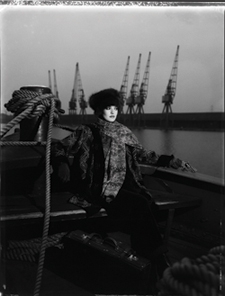
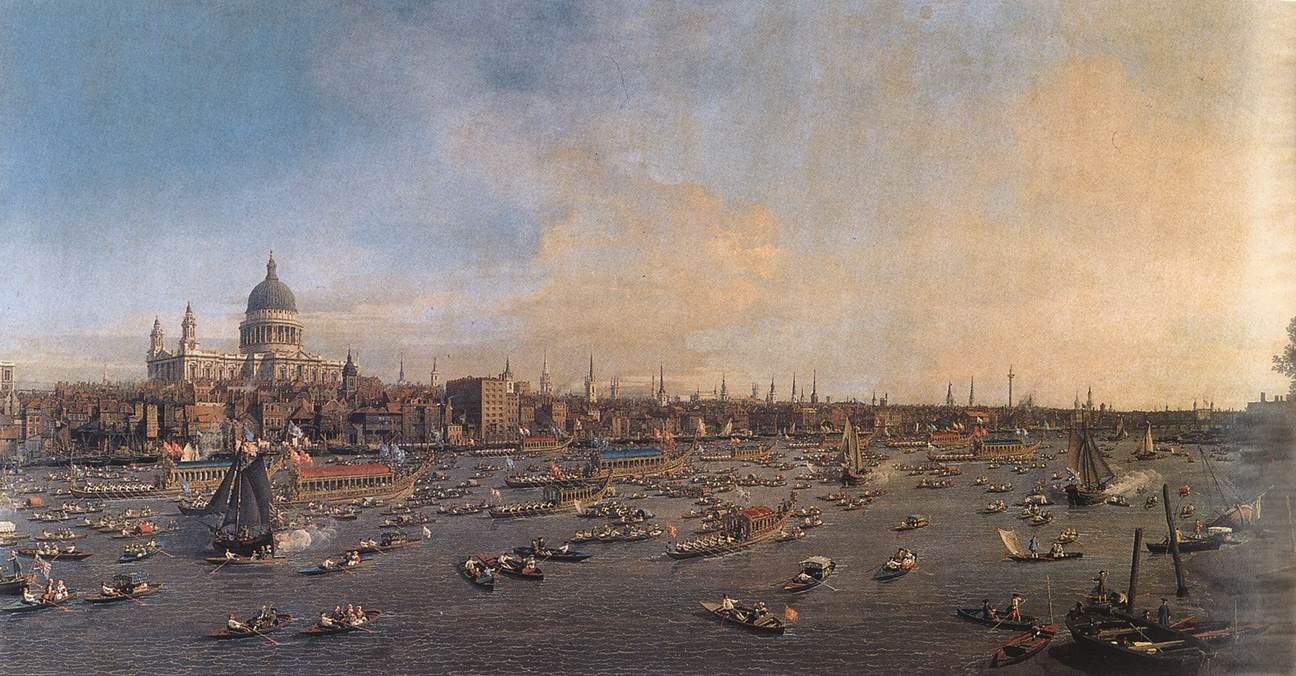
In the opening scene of Civilisation, the BBC's original 1969 series, Kenneth Clark says "I can't define civilisation, but I know it when I see it", upon which he turns his gaze towards Notre Dame de Paris. In the new Civilisations series, the absence of authoritative discrimination implied by the plural might have made providing an updated definition a challenge, but Simon Schama neatly sidesteps this by insisting that "we recognise its opposite" over footage of the iconoclasts of Islamic State at work in Palmyra. This immediately suggests that the new production isn't going to pick a bone with the old, but will instead exercise respectful discretion, which is a disappointment. A far more interesting approach would be a direct engagement with Clark's landmark contribution, which has also been made available in full on iPlayer for the purposes of comparison. I don't mean by this a critique that simply mocked Clark's patrician viewpoint and manner, which would be both easy and redundant, but a discussion of the changing view on what constitutes civilisation and how we should approach its study. The new series certainly attempts the former, notably by splitting authorial and presentational duties between Schama, Mary Beard and David Olusoga, and by expanding its scope beyond Europe, but it does little of the latter.
An example of this is that Clark, in discussing England in the nineteenth century, can both casually dismiss Irish navvies as "ruffians" and sincerely recommend reading Engels, views that would in part or whole irritate a lot of people today. This is the sardonic voice of the nonconformist Tory who lauds humanitarianism while being sceptical of humanity. Schama, as the lead voice of the new series, naturally lauds humanity in the ecumenical way that you would expect, but has little to say about either the relationship of civilisation and political economy (something you could have predicted from his previous academic work, such as The Embarrassment of Riches or Citizens) or the impact of critical theory on cultural studies. If Clark's worldview was essentially antiquarian and anglocentric, and in stark contrast to the new thinking in art history that emerged in the 1960s, Schama's worldview remains heavily influenced by the English and French traditions of social history (which downplayed class) and transatlantic in both politics and style (throughout the new series, he has an annoying habit of pronouncing "mountain" to rhyme with "pain" rather than "pun").
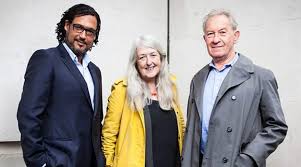
In theory, Beard and Olusoga should provide a diversity of perspective, but the unequal airtime (Schama presents every other programme, from first to last, which means five in total while Beard and Olusoga present two each) means that their minority reports struggle to get beyond setting the scene and asking some obvious questions. To give her her due, Beard does smuggle in one amusing moment when she discusses the iconoclast assault on Ely Cathedral made by Cromwell's troops in the English Civil War, which destroyed the stained glass but illuminated the interior architecture, suggesting that Schama's simple definition by opposition has its flaws. Clark was sophisticated but anti-intellectual, in that classic English manner borne of aristocratic entitlement. He recognised a plurality of opinion, but was patronising because he remained ever the comfortable spectator, not to mention the monopoliser of voice. Schama, who remains a 1950s schoolboy at heart, is enthusiastic, reverent and slightly too emphatic. As he has proved over the years with his political interventions, he favours authority over plurality while claiming to speak to common humanity.
Clark spoke in the shadow of Auschwitz about the resilience of civilisation: high art was evidence of the triumph of good over evil. The plurality of the new series has no comparable moral or historical arc - not even the consolation of a Pinkeresque "things can only get better" - leaving us with little more than a eulogy to humanity's vital spark. What this highlights is an uncertainty in the relationship of civilisation and culture. What we know is that culture is organic and contingent, but that civilisation is discriminatory and programmatic: cultures happen, civilisations are built, albeit the results don't always match the blueprint and there are often competing builders. This should prompt questions about how certain cultural goods are elevated to the status of civilisation, but instead the new series simply (and perhaps unconsciously) reflects, rather than interrogates, the change in discrimination over the last 50 years. For example, the original series was more focused on architecture as an expression of civilisation and the preservation of values, with most of the art being adornments of buildings. The new new series places a greater emphasis on other plastic arts ("we are the art-making animal", according to Schama), but with no discussion as to what this change in emphasis means, or why whole art-forms such as music and cinema are excluded.
Another example would be the changing perception of the heroic artist, which has always been central to the concept of civilisation since the Renaissance. In an anecdote about Michelangelo, Schama emphasises "ars" as physical skill, but the story is part of a profile of "il Divino", featuring tales of his heroic determination, privation and admirable respect for the workers. This is little advance on Vasari's hagiography. In the neoliberal era, the heroic artist of the past has been recast as a "superstar"; his networking for commissions is now entrepreneurialism, his reliance on a studio (i.e. a production line staffed by others following his designs) evidence of a good business brain. For all the lip-service paid to labour, this is a world in which that other C-word, "capitalism", is notable by its conceptual absence. The series ends with Schama ligging with various contemporary artists, but his search for the vital spark means he misses the logistical reality. The Ghanaian artist El Anatsui's use of thousands of flattened bottle tops connects with the past of West African fabrics, but it should also remind us that it takes an industrial process to flatten all those bottle tops. Art is hugely expensive to make (modern studios are increasingly factory-scale), not because expense is unavoidable, but because that is what the elite art market demands of it.
The original series was an interpretation of Western civilisation through the curation historically undertaken by people like Clark himself. This emphasis inevitably gave it a conservative tenor, focused initially on the decline of the Classical world and the defence of its precious legacy against the external threat of "barbarians", the "destructive force of Islam" and the "Dark Ages". As he rhapsodised the early Christian monastic settlement of Skellig Michael, Clark didn't stop to wonder at the civilisation of mainland Ireland that produced the food and other material goods on which those early monks depended. The new series doesn't make the same mistake, not only dethroning Classical Greece as the year-zero of civilisation but casting the net wide to other parts of the globe far beyond the Mediterranean, but it missed a trick in failing to address the role of cinema, not least because it could have used clips from The Last Jedi to show how Skellig Michael might have been less a beleagured outpost of civilisation (the first episode of the 1969 series was entitled The Skin of Our Teeth) and more a bolthole for an early medieval equivalent of ISIS
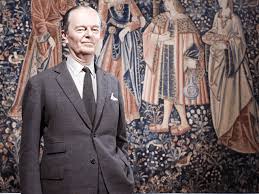
Clark was a conservative pleading for moderation in the face of modernity. Schama is a liberal pleading for humanity in the face of real people. This evasion avoids the prejudices of Clark, which have been made to look silly by the passage of time, but it means that the new series doesn't advance a theory of civilisation beyond the superlative: the exquisite, the remarkable, the emotionally arresting etc. Mary Beard is much more attuned to the uncertainties of history, operating as she does in a period that lacks the wealth of data available to historians of later periods, like Schama, and she is also more attuned to the social role of art and thus how it reflects struggle and compromise, not least in respect of gender (I'd quite like to see her take on Jordan Peterson's claim that order, and thus culture, is male and that chaos is female). This makes her more willing to pose questions rather than make confident assertions in the manner of Schama, but its also means that she can do little to slow the juggernaut of his conventional art-history.
Her first episode, How Do We Look?, clearly owes much to John Berger's seminal TV series, Ways of Seeing, and to feminist writers like Laura Mulvey, the author of the "male gaze". Her tale of how the works of civilisation can be misinterpreted and yet remain of value because of those misinterpretations, which she illustrates through Roman stories about the statues of Amenhotep III at Karnak, is the closest the series comes to a post-structuralist sensibility and the idea that meaning is never fixed. This suggests that civilisation is just another manifestation of the grand narrative of progress, and so ripe for critique as a social construct, but the limits of the form (i.e. a BBC feelgood series and the scant time afforded her) mean that Beard doesn't press the point. To make matter worse, in her second episode, The Eye of Faith, she concludes by defining civilisation as "an act of faith" - in other words, a secular impulse towards wonder and aesthetic solace that substitutes for religion. This is not just nonsense of the "Beauty is truth, truth beauty" sort, it also collapses civilisation back into the jumble of consolatory art presented by Schama. This is a pretty abject surrender.
While both Schama and Beard dutifully cross the globe to emphasise the heterogeneity of civilisation, David Olusoga is tasked with disentangling it from imperialism and slavery. This doesn't start well. His episode First Contact sounds like an SF trope, centred as it is on exogenous shocks like the Columbus moment and the potential for conflict. He does offset this with the tale of how the Portuguese encounter with West Africa in the 15th century was more a meeting of equals that led to integration through trade (by the early 1500s, 10% of the population of Lisbon was black), but this suggests that the sin of empire was exploitation and that trade was a force for good. To a degree, he has a point. In Radiance, the episode sandwiched between Olusoga's brace, Schama discusses various example of fruitful exchange: the influence of colour in Eastern art on the painters of Venice, the inspiration that Japanese woodcuts provided for the Impressionists, and the debt Matisse owed to Islamic art and design, but it's all unidrectional with Europe extracting and using. What Olusoga does better is to note the tensions and costs involved in this exchange, such as in North America and New Zealand, and how other societies can absorb and repurpose European culture.
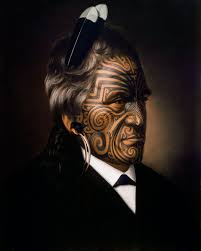
In his episode on imperialism, modernity and World War One, The Cult of Progress, Olusoga dwells on the false dichotomy of barbarism or civilisation. While he rightly picks apart eurocentric hypocrisy, from Orientalism to the systematic destruction of native culture, he avoids the question implied in that other well-known phrase, barbarisme ou socialisme. As with the series as a whole, there is an assumption that civilisation exists independently of political economy. The role of trade is conceded, religion and humanism are given their due, and Olusoga in particular spells out the nature of art as a commodity, but there is no attempt to explain civilisation as a theory of society. Instead it is a given, even perhaps an arbitrary gift of the gods, which leads to the very old idea (immediately familiar to Kenneth Clark) that it can be lost through human catastrophe. In other words, civilisation is always under threat from aberrant society, which returns us to the trope of the Dark Ages. This results in Schama brooding on Goya's The Dog, which is held to represent the painter's despair. He explains the metaphor like a GCSE Art teacher: a dog without its master; Spain without its god; humanity without its civilisation.
Schama opens the last episode with the question, What can art do when horror comes calling; when civilisation itself is lost? Theresienstadt is offered not only as an example of that horror but as evidence that art can console, even though the reality was of art being used as propaganda, to delude and distract. Schama sees in art the light from humanity's vital spark and promptly goes looking for it among the superstars of the contemporary art scene. The Chinese artist Cai Guo-Qiang's use of gunpowder is a process that could have featured in a Joseph Wright of Derby painting, but Schama doesn't see the marriage of technology and industrial production so much as a tribute to Chinese history and persistent ingenuity. In contrast, Ai Weiwei's focus on the refugee crisis is resonant because it challenges the idea that "civilisation assumes a settled city population", and also because it implicitly debunks the idea that migration (as distinct from colonisation) is a threat to civilisation, the framing of the "barbarians" from Gibbon onwards. We are living through the greatest era of migration: from rural to urban areas (albeit mostly to small towns), and from the developing to the developed world (largely to replenish population rather than to flee persecution).
We also live in an age when two-thirds of the global population has a mobile phone and a lot of them have seen at least one Star Wars film. This fluidity and commonality is surely key to any understanding of what civilisation means today. For all the nationalist talk of exceptionalism, should we really be thinking of a single global civilisation, or is that simply another vector of neoliberal hegemony? Schama ends the series with the idea of art as marks made to speak to the future, which makes it enduring and profound. This is romanticism. No one today seriously believes that civilisation retains its original meaning of urbanity, and historians like Beard have long shown that historic civilisations such as Rome were multifarious and the "barbarians" no less cultured. Equally, few would now claim that it is the elite production of a historically-specific culture, though the usual suspects will try (in his rancid Daily Mail review, Quentin Letts revealed his true self by marginalising Olusoga and calling him "Henry"). But surely the idea that civilisation and art are synonymous, and therefore a matter of socially-constructed taste and distinction, is just as ripe for critique? Schama ends on a democratic note - "something for everyone", "our shared humanity" - but the series is dominated by elite art and elite opinion. For all the nods to modern pieties, this isn't much advance on Clark's magnum opus.
An example of this is that Clark, in discussing England in the nineteenth century, can both casually dismiss Irish navvies as "ruffians" and sincerely recommend reading Engels, views that would in part or whole irritate a lot of people today. This is the sardonic voice of the nonconformist Tory who lauds humanitarianism while being sceptical of humanity. Schama, as the lead voice of the new series, naturally lauds humanity in the ecumenical way that you would expect, but has little to say about either the relationship of civilisation and political economy (something you could have predicted from his previous academic work, such as The Embarrassment of Riches or Citizens) or the impact of critical theory on cultural studies. If Clark's worldview was essentially antiquarian and anglocentric, and in stark contrast to the new thinking in art history that emerged in the 1960s, Schama's worldview remains heavily influenced by the English and French traditions of social history (which downplayed class) and transatlantic in both politics and style (throughout the new series, he has an annoying habit of pronouncing "mountain" to rhyme with "pain" rather than "pun").
In theory, Beard and Olusoga should provide a diversity of perspective, but the unequal airtime (Schama presents every other programme, from first to last, which means five in total while Beard and Olusoga present two each) means that their minority reports struggle to get beyond setting the scene and asking some obvious questions. To give her her due, Beard does smuggle in one amusing moment when she discusses the iconoclast assault on Ely Cathedral made by Cromwell's troops in the English Civil War, which destroyed the stained glass but illuminated the interior architecture, suggesting that Schama's simple definition by opposition has its flaws. Clark was sophisticated but anti-intellectual, in that classic English manner borne of aristocratic entitlement. He recognised a plurality of opinion, but was patronising because he remained ever the comfortable spectator, not to mention the monopoliser of voice. Schama, who remains a 1950s schoolboy at heart, is enthusiastic, reverent and slightly too emphatic. As he has proved over the years with his political interventions, he favours authority over plurality while claiming to speak to common humanity.
Clark spoke in the shadow of Auschwitz about the resilience of civilisation: high art was evidence of the triumph of good over evil. The plurality of the new series has no comparable moral or historical arc - not even the consolation of a Pinkeresque "things can only get better" - leaving us with little more than a eulogy to humanity's vital spark. What this highlights is an uncertainty in the relationship of civilisation and culture. What we know is that culture is organic and contingent, but that civilisation is discriminatory and programmatic: cultures happen, civilisations are built, albeit the results don't always match the blueprint and there are often competing builders. This should prompt questions about how certain cultural goods are elevated to the status of civilisation, but instead the new series simply (and perhaps unconsciously) reflects, rather than interrogates, the change in discrimination over the last 50 years. For example, the original series was more focused on architecture as an expression of civilisation and the preservation of values, with most of the art being adornments of buildings. The new new series places a greater emphasis on other plastic arts ("we are the art-making animal", according to Schama), but with no discussion as to what this change in emphasis means, or why whole art-forms such as music and cinema are excluded.
Another example would be the changing perception of the heroic artist, which has always been central to the concept of civilisation since the Renaissance. In an anecdote about Michelangelo, Schama emphasises "ars" as physical skill, but the story is part of a profile of "il Divino", featuring tales of his heroic determination, privation and admirable respect for the workers. This is little advance on Vasari's hagiography. In the neoliberal era, the heroic artist of the past has been recast as a "superstar"; his networking for commissions is now entrepreneurialism, his reliance on a studio (i.e. a production line staffed by others following his designs) evidence of a good business brain. For all the lip-service paid to labour, this is a world in which that other C-word, "capitalism", is notable by its conceptual absence. The series ends with Schama ligging with various contemporary artists, but his search for the vital spark means he misses the logistical reality. The Ghanaian artist El Anatsui's use of thousands of flattened bottle tops connects with the past of West African fabrics, but it should also remind us that it takes an industrial process to flatten all those bottle tops. Art is hugely expensive to make (modern studios are increasingly factory-scale), not because expense is unavoidable, but because that is what the elite art market demands of it.
The original series was an interpretation of Western civilisation through the curation historically undertaken by people like Clark himself. This emphasis inevitably gave it a conservative tenor, focused initially on the decline of the Classical world and the defence of its precious legacy against the external threat of "barbarians", the "destructive force of Islam" and the "Dark Ages". As he rhapsodised the early Christian monastic settlement of Skellig Michael, Clark didn't stop to wonder at the civilisation of mainland Ireland that produced the food and other material goods on which those early monks depended. The new series doesn't make the same mistake, not only dethroning Classical Greece as the year-zero of civilisation but casting the net wide to other parts of the globe far beyond the Mediterranean, but it missed a trick in failing to address the role of cinema, not least because it could have used clips from The Last Jedi to show how Skellig Michael might have been less a beleagured outpost of civilisation (the first episode of the 1969 series was entitled The Skin of Our Teeth) and more a bolthole for an early medieval equivalent of ISIS
Clark was a conservative pleading for moderation in the face of modernity. Schama is a liberal pleading for humanity in the face of real people. This evasion avoids the prejudices of Clark, which have been made to look silly by the passage of time, but it means that the new series doesn't advance a theory of civilisation beyond the superlative: the exquisite, the remarkable, the emotionally arresting etc. Mary Beard is much more attuned to the uncertainties of history, operating as she does in a period that lacks the wealth of data available to historians of later periods, like Schama, and she is also more attuned to the social role of art and thus how it reflects struggle and compromise, not least in respect of gender (I'd quite like to see her take on Jordan Peterson's claim that order, and thus culture, is male and that chaos is female). This makes her more willing to pose questions rather than make confident assertions in the manner of Schama, but its also means that she can do little to slow the juggernaut of his conventional art-history.
Her first episode, How Do We Look?, clearly owes much to John Berger's seminal TV series, Ways of Seeing, and to feminist writers like Laura Mulvey, the author of the "male gaze". Her tale of how the works of civilisation can be misinterpreted and yet remain of value because of those misinterpretations, which she illustrates through Roman stories about the statues of Amenhotep III at Karnak, is the closest the series comes to a post-structuralist sensibility and the idea that meaning is never fixed. This suggests that civilisation is just another manifestation of the grand narrative of progress, and so ripe for critique as a social construct, but the limits of the form (i.e. a BBC feelgood series and the scant time afforded her) mean that Beard doesn't press the point. To make matter worse, in her second episode, The Eye of Faith, she concludes by defining civilisation as "an act of faith" - in other words, a secular impulse towards wonder and aesthetic solace that substitutes for religion. This is not just nonsense of the "Beauty is truth, truth beauty" sort, it also collapses civilisation back into the jumble of consolatory art presented by Schama. This is a pretty abject surrender.
While both Schama and Beard dutifully cross the globe to emphasise the heterogeneity of civilisation, David Olusoga is tasked with disentangling it from imperialism and slavery. This doesn't start well. His episode First Contact sounds like an SF trope, centred as it is on exogenous shocks like the Columbus moment and the potential for conflict. He does offset this with the tale of how the Portuguese encounter with West Africa in the 15th century was more a meeting of equals that led to integration through trade (by the early 1500s, 10% of the population of Lisbon was black), but this suggests that the sin of empire was exploitation and that trade was a force for good. To a degree, he has a point. In Radiance, the episode sandwiched between Olusoga's brace, Schama discusses various example of fruitful exchange: the influence of colour in Eastern art on the painters of Venice, the inspiration that Japanese woodcuts provided for the Impressionists, and the debt Matisse owed to Islamic art and design, but it's all unidrectional with Europe extracting and using. What Olusoga does better is to note the tensions and costs involved in this exchange, such as in North America and New Zealand, and how other societies can absorb and repurpose European culture.
In his episode on imperialism, modernity and World War One, The Cult of Progress, Olusoga dwells on the false dichotomy of barbarism or civilisation. While he rightly picks apart eurocentric hypocrisy, from Orientalism to the systematic destruction of native culture, he avoids the question implied in that other well-known phrase, barbarisme ou socialisme. As with the series as a whole, there is an assumption that civilisation exists independently of political economy. The role of trade is conceded, religion and humanism are given their due, and Olusoga in particular spells out the nature of art as a commodity, but there is no attempt to explain civilisation as a theory of society. Instead it is a given, even perhaps an arbitrary gift of the gods, which leads to the very old idea (immediately familiar to Kenneth Clark) that it can be lost through human catastrophe. In other words, civilisation is always under threat from aberrant society, which returns us to the trope of the Dark Ages. This results in Schama brooding on Goya's The Dog, which is held to represent the painter's despair. He explains the metaphor like a GCSE Art teacher: a dog without its master; Spain without its god; humanity without its civilisation.
Schama opens the last episode with the question, What can art do when horror comes calling; when civilisation itself is lost? Theresienstadt is offered not only as an example of that horror but as evidence that art can console, even though the reality was of art being used as propaganda, to delude and distract. Schama sees in art the light from humanity's vital spark and promptly goes looking for it among the superstars of the contemporary art scene. The Chinese artist Cai Guo-Qiang's use of gunpowder is a process that could have featured in a Joseph Wright of Derby painting, but Schama doesn't see the marriage of technology and industrial production so much as a tribute to Chinese history and persistent ingenuity. In contrast, Ai Weiwei's focus on the refugee crisis is resonant because it challenges the idea that "civilisation assumes a settled city population", and also because it implicitly debunks the idea that migration (as distinct from colonisation) is a threat to civilisation, the framing of the "barbarians" from Gibbon onwards. We are living through the greatest era of migration: from rural to urban areas (albeit mostly to small towns), and from the developing to the developed world (largely to replenish population rather than to flee persecution).
We also live in an age when two-thirds of the global population has a mobile phone and a lot of them have seen at least one Star Wars film. This fluidity and commonality is surely key to any understanding of what civilisation means today. For all the nationalist talk of exceptionalism, should we really be thinking of a single global civilisation, or is that simply another vector of neoliberal hegemony? Schama ends the series with the idea of art as marks made to speak to the future, which makes it enduring and profound. This is romanticism. No one today seriously believes that civilisation retains its original meaning of urbanity, and historians like Beard have long shown that historic civilisations such as Rome were multifarious and the "barbarians" no less cultured. Equally, few would now claim that it is the elite production of a historically-specific culture, though the usual suspects will try (in his rancid Daily Mail review, Quentin Letts revealed his true self by marginalising Olusoga and calling him "Henry"). But surely the idea that civilisation and art are synonymous, and therefore a matter of socially-constructed taste and distinction, is just as ripe for critique? Schama ends on a democratic note - "something for everyone", "our shared humanity" - but the series is dominated by elite art and elite opinion. For all the nods to modern pieties, this isn't much advance on Clark's magnum opus.