Search

Thursday, 7 July 2016

Clueless

The slang term "whatever", meaning "I don't care", is thought to originate in a minor 1965 US TV sitcom, My Mother the Car, though it carries an obvious echo of the song Que sera, sera, which was a hit for Doris Day in 1956. It achieved mass popularity (along with its "W" hand-gesture) in the 1995 film Clueless, which brings us neatly to Tony Blair. That's not an entirely cheap shot, for reasons that will become apparent. Clearly, il maestro did not use the word in this dismissive sense in his now notorious and abbreviated promise to George W Bush, but what then is implied by his statement, "I will be with you, whatever"? Did he mean whatever the views of others, whatever the consequences for Iraq, or whatever the personal cost to himself? All of these readings are possible considering the text of the memo, not to mention subsequent events.

It is also worth noting that at this time (July 2002, eight months before the invasion of Iraq) Blair appeared to believe that Saddam might have WMD, which reinforces the conclusion that while the British Prime Minister may have subsequently been economical with the truth, he started out credulous rather than cynical. He lied, but primarily to himself. In contrast, we know the neocons in the Bush Administration were looking towards regime change in Iraq before 9/11, considering it unfinished business from the first Iraq War. This takes me back to Clueless, not merely in the suggestion that Blair was played for a schmuck by the Americans, but in recognition that the film's plot was loosely based on Jane Austen's Emma, which as Wikipedia notes is a novel about "youthful hubris and the perils of misconstrued romance". It adds to the poignancy to learn that Austen's intent was to write a novel about "a heroine whom no one but myself will much like".

Blair has form with the easy employment of "whatever", though he usually manages to develop it into a subordinate clause. Celebrating third-way politics in 2014, he said: "In foreign policy, whatever you think of the controversies post-9/11 and particularly Iraq, we led in the world: strong alliances in Europe; closest ally of the USA; leaders in development with a tripled aid budget; and putting climate change at the top of the world’s agenda". Moments later he insisted that "Third way politics begins with an analysis of the world shaped by reality not ideology, not by delusionary thoughts based on how we want the world to be, but by hardheaded examination of the world as it actually is". Whenever anyone rejects ideology, they are usually in the grip of it. Chilcot shows that Blair was motivated by belief, not facts, but he also shows that this sprang from an eagerness to please the US rather than any specific conviction. In other words, Blair's ideology centred on national status. His reimagining of the UK as a "young country" was an attempt at restoration and thus part of the elite tradition that has long obsessed over "decline".

Though the initial reaction to the Chilcot Report has understandably focused on personal blame and institutional failure, the historical significance is what it tells us about the relationship of the UK and the US. Blair was hardly the first PM to harp on about the special relationship, and not even the first to sincerely believe in it (Margaret Thatcher was notoriously soft on this point as well, though she never underestimated US instrumentalism, as in Grenada), but his emotional investment, which predated al-Qaeda's attack on the World Trade Centre, was close to infatuation. For Blair, "punching above our weight" was synonymous with advancing US interests, which made him a more committed Atlanticist than even Thatcher. Indeed Blair appears to have been the more demanding partner over the intervention in Kosovo in 1999, when Bill Clinton was in the White House, and his unconcealed admiration for George W Bush clearly owed a lot to finding a kindred spirit.


The special relationship, by emphasising British delusions in respect of the "top table" and the power of personal charisma, has helped corrupt British governance ever since Suez. That earlier debacle was the moment when the UK was obliged to acknowledge its inferiority in the relationship and formally cede its historic role as the world's policeman to the US (a reality since 1941). Iraq has shown us to be incapable of even functioning as a "hobby bobby". The need to keep the US sweet has long been used in domestic politics to marginalise critics of UK policy, from trade to defence. This has reinforced the elite idea that there are strategic interests above democracy, which was further amplified by neoliberalism. Blair's "sofa government" was an extension to the cabinet of the instrumental attitude that the leadership took towards the party membership in the 1990s, excluding it from policy formation and insisting that it provide unqualified support.

The original expectation of the current government appears to have been that publication of the report at this time would exacerbate Labour's internal tensions and draw attention away from Tory squabbles following a narrow victory for remain in the EU referendum. In the event, Chilcot appears to have boosted respect for Corbyn (at least outside the PLP) and emphasised that his demand for a "new politics" can best be understood by what it stands against: Blairism. Iraq saw expertise abused and the idea of government probity undermined. A defence of one's actions based on the grounds of sincere "belief", which Tony Blair has once more made, looks less acceptable at a time when Leavers are bring criticised for having believed obvious lies. Saddam's WMD was no more credible than the £350 million claim, and there is a direct line from the "dodgy dossier" to "breaking point". If we are living in an era of "post-truth politics", that owes much to the Iraq War.

The ironic consequence of Brexit is that London's influence in Washington will decline. It was always more dependent on the indirect influence that the US could exert on the EU (and vice versa) than on any sentimental affection for Magna Carta or Scottish golf courses. The UK's influence on Commonwealth countries has long been a dead letter, and now its role as a bridge between the US and Europe will dwindle. This is the end of the special relationship. The warning by Obama that Britain would henceforth be "at the back of the queue" was not scaremongering. In Washington, the views of Berlin and New Delhi will now count for more than the views of London, and they will be sought directly. The historic irony is that the special relationship's greatest champion has, through his desire to cleave to the US and thus maintain the UK as a global "playa", helped undermine trust in government to such an extent that the people have voted to opt-out: "stop the world, I want to get off".

Some Brexiteers will still insist that the UK can play a leading role on the world's stage, but Blair and others in the establishment know that this was only possible if it remained within the political institutions of the EU and thus useful to the US as a sympathetic agent. Membership of NATO counts for little since that organisation's eastward expansion and the end of Britain's pre-eminent role as Airstrip One. With a limited military capability (all too obvious in Iraq), dwindling influence in Asia and Africa, and a semi-detached relationship with Europe, the UK will increasingly look like Canada with rockets. That's not a bad thing, particularly if we see sense and junk the rockets, but it does represent a fatal blow to the establishment's self-image. The judgement of history will not be written by the protesters who marched in 2003, let alone those who protested this week, but by that same political establishment. For them, Blair's legacy is increasingly looking like "Fool Britannia".

Sunday, 3 July 2016

This is Not a Popular Drama

Whether through half-remembered Shakespeare, or TV series such as House of Cards and Game of Thrones, the tendency to explain politics by dramatic analogy is both an admission of ignorance about people's true motivations and an unwillingness to address the social forces at work. A focus on the players, rather than the groundlings, is one way of reasserting Parliamentary sovereignty. Casting Boris Johnson as a clueless Caesar, the Goves as incompetent MacBeths, or Corbyn as a half-mad Lear exposed on Highbury Fields is wryly amusing, but it serves to diminish politics to the level of entertainment, which is what gave us the Johnson phenomenon in the first place. When politicians discuss themselves in analogous terms, such as Gove expressing sympathy for a clever but unloved dwarf or rooting for the Spartans at Thermopylae, you know that schoolboy fantasy has triumphed over schoolboy wit.

Crafting a life-story congenial to an intended audience is routine in the era of the personal brand, and this means delving into the dressing-up box of the collective mind. For example, Theresa May's pitch, that as the daughter of a vicar and the granddaughter of a regimental sergeant major she has public service written in her DNA, is clearly intended to reassure Conservative Party members that she is straight outta' Middle England, rather than the Old Etonian establishment or the too-clever-by-half metropolis, but it also serves to conjure an image not a million miles away from the exclusively white milieu of Midsomer Murders, which will placate those worried that there might be backsliding on the party's commitment to halting or even reversing immigration. This isn't just an appeal to Tories, but to Kippers as well.

The failure of Johnson and Gove might look like a defeat for newspapermen, but what it really reveals is that vain and inconsistent columnists are mere instruments for proprietors, which should hardly surprise us. Nothing has been more ridiculous than the claims that various Tory politicians (and spouses) have fallen out with each other recently, as if this were a high-toned soap opera in which everyone is shocked by enmity and personal betrayal despite it driving the plot week after week. These people are no more genuine "friends" than those who swap recommendations on LinkedIn. The relationships are cold-blooded and calculating. The claim that Michael Gove's political career is now toast because of his "back-stabbing" should be taken with a pinch of salt. This is the party of Macmillan and Heseltine, not to mention more recent wielders of the knife like Iain Duncan Smith.

Conservative politics is about the defence of status and Tories who claim to be radical reformists are usually desperate to acquire it. The "Maoist" Gove was neatly characterised by Ian Leslie last year: "The vividly drawn persona we are familiar with today emerged, fully formed, at school, in an act of audacious self-invention. The young Gove sought not merely to fit in with his socially superior peers, but to stand out from them. He rode an old-fashioned bicycle to school, wore suits, recited poetry and starred in debates ... Precocious children often grow into adults with something of the child about them, and there is something eternally schoolboyish about Gove. The reflected admiration of his parents, teachers and classmates still radiates from his smooth-cheeked face". Leslie also noted the pathological nature of Gove's alleged charm: "Politeness comes at a cost to authenticity: it is, by definition, a formal mode of expression, used to conceal what we really feel".


This lack of authenticity is not a problem for Gove or any other Tory. What matters is the tribute paid to status, even if it takes the ridiculous form of Fogeyish affectations. The reason he is unlikely to become party leader is not that he has proven duplicitous but that he has proven to be as cack-handed as Johnson in the execution of his schemes (his Queen leak may have pleased Murdoch but it upset Conservatives). For this same reason I was never convinced that the former Mayor of London was a shoo-in as Cameron's successor, even before the 23rd. His pitch to Tory MPs was that his media profile would secure enough votes to win general elections (and it may well have been material to the referendum result), but his executive incompetence (all too obvious in London where MPs spend the week) pointed to disarray in office. With the enormity of the Brexit task ahead of them, I suspect that many (and not just Gove) decided he was simply not up to the job. The ultimate betrayal here may be that City grandees dropped their erstwhile champion. Andrea Leadsom's sudden elevation is not because she was convincing in debates.

That same assessment of incompetence is at the heart of the PLP revolt against Jeremy Corbyn, but in contrast to the Tories, it is authenticity that has prevented the coup reaching a climax. With the exception perhaps of George Lansbury, Corbyn is unusual among Labour leaders in being a typical party member. He has the same concerns for fairness and justice, and the same instincts of activism and solidarity, that distinguish the footsoldiers of the CLPs, and it is these very qualities that make it unlikely he will resign. Party membership selects for people who disagree with the claim that resistance is useless. Paradoxically, that he is typical is held up as evidence of his naivety and unfitness for the job. This leads to a surreal situation in which he is charged with simultaneously having insufficient enthusiasm for Remain while being unable to connect with Northern and Midland voters who chose Leave.

Representative democracy assumes a tension between policy correctness and effectiveness, between the ideal and the electable, but this dichotomy is itself ideological, suggesting that there must always be a gap between what people want and what they can reasonably expect, and that this gap must be mediated by a political class. What the EU referendum has shown is that the people will chose the ideal, even if it is impractical or contradictory, because they value the opportunity of unmediated expression. They didn't reject expertise so much as articulate long-held prejudices developed in defensive reaction to social and economic change and fanned by unscrupulous newspapers. The idea that this could be turned round by a few facts and some stardust was foolish. Ironically, Leavers are now being berated for their credulity in believing the promises on NHS funding and immigration by the same people who have long mocked the left for its focus on false consciousness.

The "We are the 48%" demonstration yesterday was almost tailor-made to prompt sneers about self-regarding metroplitan liberals. Organising a march to Westminster was pointless in a week when the government had largely evaporated. They would have done better to march through the streets of Bexley or Stoke-on-Trent, though claiming "This is what democracy looks like" might have prompted a less than sympathetic response. The referendum result will not be reversed any time soon, if ever, and the idea that we can somehow finesse it into "staying put" with EU agreement and popular acquiescence is for the birds. The nation is divided and it will take decades to shift popular opinion far enough to guarantee re-accession, and that's assuming there is still a recognisable EU to join. Ironically, the best hope of British europhiles is that the common currency fails in the next few years, leading to a general reset that can be sold as congruent with UK preferences. Don't hold your breath.

Wednesday, 29 June 2016

Plato on Wearside

In The Republic, Plato had two fundamental arguments against democracy. The first was that the mass of the people lacked the expertise to direct the state (sections 488a-e). The analogy he used was a "ship of fools" whose course could not be decided upon by a squabbling crew. It needed a navigator (a philosopher) to provide direction to a captain (the ruler) if the ship were not to founder. The choice of metaphor owed much to Plato's irritation that philosophers were dismissed as "star-gazers" when that was the precise skill required of a navigator. The second argument was that responding to the people's wishes ignored what was ultimately good (493a-c). The analogy he used was taming a wild beast by satisfying its desires, the "tamers" being populist politicians adept at winning elections but lacking in real judgement. These two fundamental criticisms - that the people lack technical competence (i.e. virtue/excellence) and that they cannot know what is best for themselves (i.e. the good) - underpin much of anti-democratic theory down the centuries.

Far from dying out as democracy has advanced over the last 100 years, Plato's attitudes continue to colour public discourse. This is apparent not only in the growth of a technocratic political and media class that seeks to separate politics from the people, but in the insistence on contingent ignorance as fundamental to the human condition. Opinion polls, the quantified self, the media focus on health and diet, and the spread of self-help and pop-psychology all reinforce the idea that we must treat ourselves as objects for inspection and control. We don't know who we are or what we really, really want, so must seek guidance. It is no coincidence that as politics has been drained from the economic sphere, corporate ideology has become more "Platonic", emphasising the visionary and virtuous CEO, the technical mysteries of finance and a style of personnel management that denies the ability of workers to articulate their own interests. We are living in an era that distrusts democracy outside of the tightly-controlled theatre of TV popularity contests.


It should therefore come as no surprise that the initial reaction to the EU referendum result was heavily tinged with contempt for "their" stupidity, selfishness and vandalism, which in its unthinking bigotry is as bad as Nigel Farage claiming a victory for "decent people". It cannot be stressed enough that while the agents of reaction come from the right, the popular advance of authoritarianism depends on the political centre becoming disillusioned with democracy, both in terms of its technical limitations and the perversity of the people. I'm not suggesting that a junta is imminent in the UK, though we can expect both genuine Fascists and casual bigots to be emboldened by the result, but that we shouldn't be shocked if centrist politicians start to demand a state of exception, as appears to be the case with the Parliamentary Labour Party. In justifying the denial of legitimacy to a popular vote, whether a national referendum last week or a party leadership contest last September, a variety of claims will be deployed, many of which bear the imprint of Plato's thought.

The victory for leave has been explained through a number of demographic dimensions familiar from the simplistic sociology employed by the media. For many this is the latest installment in the war of the generations, with baby-boomers trashing the future of their grandchildren. Though there is a correlation with age, this tells us little. Older voters are generally more xenophobic and nostalgic, but we also know that better-off areas with relatively few youngsters, such as Chiltern and Winchester, voted remain. We also know that the cutover point appears to have been closer to 45 than 65, suggesting that the pivotal voters may be parents with kids in their teens or early twenties rather than OAPs. This hasn't stopped Remainers bitterly complaining about selfish coffin-dodgers or Leavers sneering at lazy students. Articles about family rifts reinforce Plato's idea that democracy fosters avoidable antagonism. In reality, falling out with your parents is a micro-drama of social progress. The alternative is the Burkean tyranny of the past, which is no better than a tyranny of the future that denies the vote to oldies on the grounds that they won't have to live with the consequences.

The trope of generational inequality has often been used to obscure class differences, so perhaps the referendum is best understood as the working class revolt that The Guardian has regularly forecast (Plato's "beast" stirs), but this requires dismissing the pro-EU working class of Scotland and Northern Ireland as exceptional. What the media can't so easily ignore is that London, which has turned increasingly "red" in recent years with the growth in its working class population in the outer boroughs, broke 60/40 for remain. The leave vote increases as you head beyond the capital, with the balance flipping around places like Epping Forest, Bexley and Reigate. These are not working class redoubts. Nationally, Labour voters went 2:1 for remain, and there aren't enough middle class lefties to explain that away. The liberal media's failure to find lots of pro-remain working class voices was due to a lack of interest in finding them. While there is a class correlation with the result, this can largely be explained by working class Tories. You don't have to assume that UKIP is supplanting Labour.

Paralleling the class analysis (and treating class in cultural and geographic terms), is the claim that "the North outvoted the South". Some commentators have seen this as the fruit of a decade of austerity, while others source the problem back to Thatcher and the deindustrialisation of the 1980s. Again, this is substantially true, but the focus on "damaged" communities absolves others of responsibility. The vote isn't really a story of history's losers becoming accidental winners (a story in turn being undermined by the meme of "buyer's regret"). Though the economically depressed estuaries and river valleys of Eastern England saw the highest leave votes, the picture nationally shows that the strongest support for leave was often in relatively well-to-do areas outside the big cities (turnout was highest in the Home Counties and the better-off parts of the Midlands). For example, though London voted Remain 60/40, the South East voted Leave 52/48, mirroring the national average. These voters aren't the "left behind", any more than coastal towns like Hastings and Clacton, which enjoy disproportionate media exposure, are representative of the region.

Another popular interpretation is that the vote reflected education, with the implication being that the stupid voted leave and the intelligent voted remain (as would any Platonic philosopher-king). There is a correlation between university towns and remain, and between areas with low numbers of graduates and leave, but a moment's thought tells you that this reflects economic circumstance rather than average intelligence. Areas of high unemployment, or without many skilled jobs, don't tend to hang on to graduates. Similarly, university towns tend to be better-off than depressed, former industrial towns because they get an economic boost from the business of higher education and its spillovers. Redbrick university cities tend to be liberal if they've enjoyed urban regeneration (Manchester voted remain) and conservative if they haven't (Nottingham voted leave). We should also remember that graduate density is very different between the cohorts that finished school in the 70s and those that did so in the 00s, due to the expansion of further education in the 90s, so the correlation with education is as much about age as intelligence.

A related claim is that the electorate was denied the necessary facts to make an informed choice. Voters who insisted that Parliament should have taken the decision on EU membership were often making a point about politicians shirking their duty, not about their own incapacity, but the media span this as a Platonic criticism of the electorate's incompetence. There was also a suggestion that the two campaigns' reliance on hyperbole and lies was an example of politicians "feeding the beast", and that what was missing was respect for the "experts" (i.e. philosophers in Plato's wider sense). But this was not a campaign in which voters were keen to be swayed by either cogent argument or convincing passion (if it had been, turnout would have been lower due to uncertainty). Despite not being a vote that followed traditional party lines, over half the voters on either side claim to have made up their minds before the start of the year. That may have been on the basis of decades of propaganda, particularly around immigration, but that would be an argument for not holding a referendum on such a misrepresented subject. This was a technocratic misjudgement of epic proportions.

The most self-serving myth that has arisen is that this was a failure of the Labour leadership, and thus justification for the unfolding coup. As already noted, most Labour voters went for remain. In saying he was 70% for staying in the EU, Jeremy Corbyn was pretty accurately reflecting sentiment both among party members and Labour voters. Much of the PLP's antipathy towards Corbyn arises from his belief that he is a representative leader, which is at odds with the Platonic model adopted by Blair: a "strong" leader supported by sophisticated advisors. The idea that a different leader (even with sympathetic media) would have swung a million votes from leave to remain requires us to believe either that he could have increased the remainers among Labour supporters to levels well in excess of the europhile LibDems and Greens, or that he could have persuaded a substantial number of Tory voters to switch. If David Cameron couldn't persuade more Tories, or Gordon Brown more Labourites, why would Chuka Umunna have done any better?
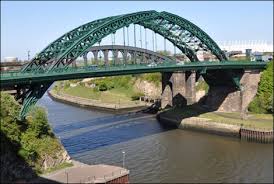

What seems to have swung it for leave were three things: 60% of Tory voters (i.e. excluding those who had already defected to UKIP in 2015) ignored their party leadership and voted out; around a third of Labour and LibDem voters opted for out; and the increased turnout (to 72%) appears to have skewed heavily to leave (the irony of the Leave camp's protest at the extension of the voter registration deadline is that many of those who benefited from this slippage may have been Brexiteers). We can see this more clearly if we examine a specific local authority area. As it was an early and strong result (62/38 for leave), I'm going to look at Sunderland in more detail. This comprises three parliamentary constituencies: Sunderland Central (an unhip small city), Washington & Sunderland West (a 70s new town and the Nissan car works), and Houghton & Sunderland South (a group of former pit villages).

Assuming the split in local sentiment matched YouGov's national exit poll (i.e. Labour votes broke 65% for remain while Tories broke 61% for leave), the 2015 General Election result would have predicted a total remain vote of 55,996. The actual vote was 51,930, suggesting Sunderland was marginally more leave than the rest of the country, which is credible. The projected leave figure on the same basis would have been 61,502, so Sunderland was already due to deliver a 52/48 leave vote based on the opinion polls (i.e. 62k to 56k). The actual leave vote was a stonking 82,394. The reason the final result saw a further 10% swing to 62/38 was partly due to the demographic factors emphasised by the pollsters and media - i.e. being in the North, poorer and less educated - but this only explains 4k out of a 21k increment. The reason leave won handsomely was because they captured most of the increased turnout, which went up 19k from 56% in 2015 to 65% (so 62 + 4 + 16 = 82).

In other words, Labour appears to have been successful in getting out the bulk of its "core" vote, if by that we mean those who have reliably voted for it over the last 15 years. The "Sunderland problem" is that Labour's combined vote across the 3 constituencies dropped from 85,187 in 1997 to 63,234 in 2001 (it was 62,655 in 2015), reflecting a decline in turnout from 60% to 49%. Nationally, Labour's vote went from 13.5m to 10.7m between the two general elections as turnout crashed from 71% to 59%. There has been a gradual recovery since, to 66% nationally and 56% in Sunderland (being safe seats, turnout tends to be lower that the national average). The 22k voters that went missing in 2001 appear to have initially abstained and then gradually drifted to the Tories and UKIP over the course of the 00s (the non-Labour vote grew from 35k in 1997 to 55k by 2015). Had they stayed with Labour and mirrored the polls, remain would have won. Insofar as there is a Labour "contribution" problem, this stems from desertion after 1997, not Corbyn's qualified enthusiasm.

The most striking correlation of the vote is with social attitudes. Leavers unsurprisingly regard immigration as a bad thing, but also multiculturalism, liberalism and feminism, and they are mostly nostalgic about the past and pessimistic about the future. In other words, they tend to be conservatives or even reactionaries. I'm dealing in net figures here, so it would be wrong to conclude that there are twenty thousand people in Sunderland who had their hopes of a revived social democracy dashed by Blair and consequently drifted to the political right thereafter. However, there is probably some truth in that story if we remember that the Labour Party was not particularly liberal in its social attitudes until the 1980s and that those influences didn't fully penetrate the North East until a decade or more later. Nationally, we can also surmise that the recovery to a turnout level last seen in the 90s was helped by the return of the four million conservative and reactionary voters who deserted the Tories in 1997 (from 14m in 1992 down to 9.6m) and who had yet to fully reappear in subsequent general elections.

The conclusion is that Labour has lost a chunk of its "traditional support" in the North and Midlands, but that this loss occured around the millennium and has little to do with either Ed Miliband or Jeremy Corbyn. Assuming this is a socially illiberal tranche, the idea that it can be won back by pandering to xenophobia or reviving some notion of social authoritarianism is delusional (it didn't work in the Blair years). Nothing short of severe immigration controls and the suspension (or even reversal) of liberal social reform is likely to satisfy, which risks alienating Labour's actual "core" support, and it's probable that both of these approaches will be adopted with greater vigour and credibility by whatever political formation arises out of the Tory/UKIP right. A further conclusion is that the neoliberal makover of the Conservative Party, marrying economic and social laissez-faire, has failed (David Cameron implicitly recognised this in his valedictory comments on gay marriage this week).

The right can now see a route to power by energising those millions who deserted in 1997 and have since only reluctantly returned to the Tory fold or who have preferred exile in UKIP. But this will lead to countervailing losses. Big capital and liberal Tories are likely to seek common ground with other centrists, a thought that presumably excites Blairites who, thinking they have learned the lesson of the 80s, hope to do a reverse-SDP in which the left is expelled from the Labour Party on the grounds of deviationism, (unfounded) antisemitism and online incivility (Corbyn is presumably sitting tight not just to defend the will of party members but to resist the purge). The lasting legacy of Cameron, "the heir to Blair", might not be gay marriage but the revival of the Whigs. If both the Conservative and Labour parties split, the clamour for proportional representation (the technocrat's preference) will be deafening, which will please those perversely arguing that PR would have prevented the disaster of a perfectly proportional vote.

To this end, we can expect the liberal assault on "vulgar democracy" to continue. In today's Guardian, David Van Reybrouck advocates sortition (appointment of representatives by the drawing of lots) rather than the popular vote ("a blunt axe, wielded by disenchanted and poorly informed citizens"), citing ancient Athens as an ideal. What he fails to note is that the demos of Athens excluded women, slaves and immigrants, and only men over 30 could be office-holders (the electorate was around 10% of the population of Attica). As ever, this is the democracy of the better sort. Plato considered sortition a necessary evil ("in the hope of escaping in some degree from factions ... we are obliged to use the equality of the lot" - from Laws book 6), but he always insisted that politics should be based on the "distribution of natural equality among unequals" and so employ a method that "gives to the greater more, and to the inferior less". Little has changed in the attitude of the bulk of the political class.


Wednesday, 22 June 2016

That EU Vote - 3. Sovereignty

Sovereignty comes in two forms. Internal sovereignty refers to the ultimate authority of the state: who is in charge. External sovereignty concerns the exchange of rights and obligations between states: what they grant each other. One is foundational, the other contingent. Outside of the single market, the UK has pooled relatively little sovereignty in the EU. While the free movement of labour is an issue of external sovereignty (i.e. the rights accorded citizens of other states), the language used in the referendum has focused on internal sovereignty: "taking back control". This echoes the concerns of the Out campaign in 1975 for whom continued membership of the EEC threatened parliamentary sovereignty and therefore (in the eyes of the left) the ability of a future government to implement socialist policies. While the current Leave campaign talks in more cartoonish terms ("Brussels makes most of our laws"), the issue remains the same: there should be no constraint on the "elective dictatorship" of the Commons.

In most countries, there is a distinction between the sovereign (whether the people or a constitutional monarch) and the legislature, which easily maps onto the distinction between internal and external sovereignty. The government can freely negotiate matters of external sovereignty, subject to electoral approval, without compromising internal sovereignty. The peculiarity of the UK system is the idea of parliamentary sovereignty, "the Crown in Parliament", which locates the ultimate authority of the state in the legislature and thus combines the external and the internal. This is a relic of Britain's incomplete revolution in the 17th century, which has left us with an essentially aristocratic form of government onto which representative democracy has been grafted but without any concept of popular sovereignty. One consequence is that British politicians have traditionally regarded national referendums as foreign to the UK system, being by definition a challenge to parliamentary sovereignty.

Paradoxically, just as the UK system means that we do not need a referendum to endorse any act that cedes sovereignty (e.g. the Maastricht Treaty), so we cannot cede sovereignty in perpetuity because Parliament can always repeal any prior act. When EU law has been accepted as superior by the UK courts, this has been on the basis that a UK law has mandated that superiority. Contrary to the claims of the Leave campaign, not only has external sovereignty not been irrevocably ceded, but internal sovereignty has not been compromised. For the same reason, the government will not be legally bound by the referendum decision, whichever way it goes, because that would be a constraint on parliamentary sovereignty. Of course, in the event of a Leave vote, any government attempt to delay Brexit could prompt a motion of no confidence, leading to a General Election, and a new Commons majority (potentially) willing to enact the decision.
 
The Leave campaign's criticism of the EU's dilution of national sovereignty associates the general erosion of democratic control during the neoliberal era with a single political structure. Ironically, the EU is one of the more democratic neoliberal institutions. With no sense of absurdity, the Leave campaign offers up other, non-democratic supranational bodies to whom we have ceded external sovereignty, such as the WTO and NATO, as reasons why we don't need the EU. Neoliberalism has reduced popular sovereignty both by transferring public goods to the private sphere and by privileging the rights of international capital. In doing this it has effectively raised the market to the status of a sovereign, justified not on the basis of any a priori claim to legitimacy but on a utilitarian assumption of efficiency.


In contrast, popular sovereignty holds that the people are right even when they are wrong and that optimality is not an adequate reason to usurp the general will. We've all had a laugh at Michael Gove's contempt for experts, but most people fail to see that he is thereby challenging parliamentary sovereignty, which is potentially revolutionary. That he is Lord Chancellor only makes it more surreal. What is in play on Thursday is not just our continued membership of the EU but the constitution of the state. Devolution created the concept of popular sovereignty in Scotland, and the SNP has thrived by seeking to embody it in the absence of a Scottish constitution. When Cameron promised "English Votes for English Laws" in the wake of the Scottish independence referendum, he was seeking to placate the demand for English popular sovereignty through a fudge of parliament. But this cannot work: parliamentary sovereignty and popular sovereignty are mutually-exclusive.

If we vote Remain on Thursday, it is highly unlikely we will see any further significant pooling of external sovereignty in the EU by the UK. This is because major EU initiatives (if any) are likely to bias towards the Eurozone core, and because the closeness of the referendum outcome will constrain UK governments for a generation. No one is going to risk a substantive concession for fear of invoking demands for a further referendum. The precedent has now been established and, when you consider the triviality of the "renegotiated terms" that we are supposedly voting on, the bar has been set very low. If we vote Leave on Thursday, few of the concessions of external sovereignty that we made to the EU down the years are likely to be reversed, simply because we will need to offer them again to secure advantageous trade terms. The "bonfire of red tape" will concentrate on internal regulations that don't impinge on trade, such as workers' rights and consumer protection.

UK referendums are failures of parliamentary sovereignty because they hold out the prospect of popular sovereignty. This would be a good thing if it led to a new constitutional dispensation, starting with the abolition of the House of Lords and the declaration of a republic, but the 2016 referendum, with its lies and xenophobia, looks more like the early days of a plebiscitary dictatorship, which is significantly more dangerous than an elective dictatorship. Geoffrey Wheatcroft recently quoted Attlee's antipathy to referendums in 1945: "I could not consent to the introduction into our national life of a device so alien to all our traditions as the referendum, which has only too often been the instrument of Nazism and fascism". But Attlee made a mistake in the postwar years in not seizing the moment to advance popular sovereignty through constitutional reform. Labour's ongoing failure, for which Tony Benn was as guilty as Tony Blair, has been to champion parliamentary sovereignty in the hope of exploiting "elective dictatorship".

To conclude. Were Brexit to happen, the economic impact would be negative, though most of the downsides, such as lower foreign direct investment and a doubling-down on our lopsided economic profile, will largely be the result of political judgements by foreign and domestic capital rather than inexorable economic logic. As we've got closer to the vote, it has become clear that the issue of immigration is a mess. Newspapers have whipped up expectations, of better public services and higher wages, that cannot be satisfied. The political response, whether advocating a points system or greater understanding, has been incoherent at best and craven at worst. Xenophobia has been normalised and political assassination has visited our streets. The issue of control is really about the lack of English popular sovereignty rather than the loss of power to Brussels. I will vote remain, but with little optimism that the EU will be reformed along social democratic lines. Ironically, I have more optimism that the vote may lead to constitutional reform in the UK, and that doesn't actually depend on the result.

Saturday, 18 June 2016

The Politics of Hate

The Sun newspaper decided on Friday that the killer of Jo Cox was a "crazed loner". While both adjective and noun were not inappropriate, this hardly sufficed as an explanation of the man's motives. The fact that at his arraignment today, Tom Mair responded to the request to confirm his name with "death to traitors, freedom for Britain", while the prosecution alleged that he claimed on arrest to be a "political activist", suggests his act was political and the timing was influenced by the EU referendum next week. Whether he was influenced by the recent tone of the leave campaign - not just its fear-mongering over immigration and dismissal of expertise, but its depiction of a shadowy and malign "establishment" that doesn't include Boris Johnson and Michael Gove - is another matter, though I suspect there is a higher probability of this than that the killing was a false flag operation by the Remain camp. Today, The Sun led with "Nazi mania of Jo killer", suggesting (along with the Daily Mail) that the root cause of this tragedy was a twisted mind rather than twisted politics.

Had the killer been a Muslim, you can imagine the op-ed onslaught about the culpability of Islam and the responsibility of the killer's "community". This appetite for simplicity was illustrated by the way the killer in the Orlando mass-shooting flipped from a self-radicalised Jihadi to a self-hating closet homosexual inside 24 hours, though more sober judgement was that this was another example of insane gun laws as much as an insane perpetrator. The anxiety of the Leave camp at the suggestion that Mair was politically motivated (and therefore complex) is understandable. Janet Daley insists "It must be made absolutely clear by everyone of good conscience that acts of violence by unstable individuals have nothing to do with political discourse and cannot rewrite its rules". This is patently false: nutters are just as entitled to a political opinion, and likely to act upon it, as the rest of us. You cannot dismiss Nazism as a political phenomenon by reference to Hitler's psychopathy. Daley's anxiety doesn't just betray a fear that the public reaction to the killing may prove pivotal to next Thursday's result, but a desire to put distance between the rhetoric and the act, in other words, to absolve the press.

This is a view shared even by the pro-Remain newspapers, where liberal commentators like Jonathan Freedland and Polly Toynbee have been decrying the growing contempt for politicians but insist on attributing it to a general coarsening of society driven by social media (one amusing exception is Martin Kettle, who is too Olympian to care about Twitter but nostalgic for the historic power of the press). In other words, the problem is the common herd, with their lack of civility and respect for their betters (to this end, Jo Cox has been promptly beatified, with the focus on her acts of charity and personal perfection showing the continuing influence of religious tropes), not the paid propagandists of the national media. But this stance requires the mental division of society into two parts: the decent and the indecent. For both conservatives like Daley and liberals like Freedland and Toynbee, this means emphasising a core social personality that is "calm, rational, tolerant, grown up, undaunted, and quietly brave". In other words, middle-class.


In Britain, Fascism has always been a product of newspapers. Oswald Mosley could not have thrived without the support of the Daily Mail, and that paper's adulation of Mussolini played a significant role in determining the style of the British Union of Fascists in the 1930s. Similarly, the press coverage of race relations and immigration in the 1970s (e.g. the prominence of "black muggers" and the race-inflected reporting of drugs and prostitution) helped define the tone of the National Front. In the 1990s the BNP deliberately adapted its message to fit the wider media narrative about "bogus asylum-seekers", before going large on the "threat" of Islam after 2001. Since 2010, the EDL and Britain First have been only too happy to indulge Islamophobia and xenophobia, amplifying media tropes about crazed Jihadis and "migrant invasions". While these marginal groups are dismissed as lumpen thugs, the racist message they are responding to is contextualised by mainstream xenophobic propaganda.

In respect of immigration, Jo Cox's husband has said that mainstream politicians "are clueless on how to deal with the public debate. Petrified by the rise of the populists they try to neuter them by taking their ground and aping their rhetoric. Far from closing down the debates, these steps legitimise their views, reinforce their frames and pull the debate further to the extremes". This is true, but the idea that politicians are "clueless" excuses them of responsibility through a charge of stupidity. Just as the far right have parasitised media narratives on migration and multiculturalism, so political parties have willingly signed a Mephistophelian pact that requires them to indulge soft xenophobia in support of a media-defined nationalism. This has become toxic precisely because the referendum campaign has been cast as an issue of  national integrity, both in terms of the presumed existential threat of immigration (Farage's "breaking point" poster) and the erosion of a nebulous sovereignty.

The Institute for Economics and Peace publishes a Global Terrorism Index. While this is a typical neoliberal artifact of national classification, the raw facts are still startling: "Seventy per cent of all deaths from terrorism in the West since 2006 were by lone wolf terrorists ... Eighty per cent of deaths by lone wolf terrorists in the West were driven by right wing extremism, nationalism, antigovernment sentiment and political extremism and other forms of supremacy". The point is not that there is more right wing terrorism than left wing terrorism (or Islamic terrorism or Irish Nationalist terrorism etc), though there is, but that lone wolf terrorism tends to be right wing. The reason for this is not that neo-Nazis or militant racists are particularly antisocial ("somebody who sat alone in front of a computer all day", as Janet Daley puts it - I don't imagine she crafts her journalistic pearls in an open-plan office, though I may be wrong) but that an individual can more easily develop their belief system if it can be rationalised as a logical extension of received wisdom. The dominance of right wing terrorism reflects the dominance of a right wing press.