Apparently, the anticipated release of the iPhone 5 later today is going to boost the US economy, possibly by as much as 0.5% of GDP. As the Washington Post claims, "That could mean the difference between a disappointing economic expansion and a half-decent one". This story originated in a JP Morgan analyst report and now appears to be have spread like wildfire. The analyst calculations are speculative as the retail price of the device, the release date, new features, and the components that will count as imports (and thus not contribute to GDP) are all unknown at this time. The boost scenario also relies on zero substitution - i.e. the belief that people won't spend the money they've been carefully collecting in their piggy-bank on something else. The money has been earmarked for a new iPhone so only a new iPhone can produce the increment in GDP. The analyst report even posits a "hedonic premium", the idea that because the new phone will have better features, this will make people happier and more productive, leading to greater GDP growth. It's utter cobblers, of course.
The significance of this is not that it might be true but that so many are willing to believe it, or more accurately to suspend disbelief. There is a palpable desire for good news, and specifically for a story that has an element of "market-making" about it. While this will be the first big product announcement (assuming the iPhone 5 actually is announced) since Steve Jobs's death, there remains an expectation that this will be the same old time religion, a fanfare followed by the waving of a magic wand. This is what Keynes termed "animal spirits", an "urge to action rather than inaction" that is "characteristic of human nature". Personally, I've always thought that this urge was driven as much by boredom as positivity, but "spontaneous optimism" sounds nobler than "I'm bored, let's do something", which calls to mind the Scouse vultures in Disney's The Jungle Book.
When companies retrench and reduce expenditure, a point eventually comes when their operational management find that they have finished the "cutback" project and start to look around for what to do next. A certain amount of maintenance and housekeeping will keep them occupied for a while, but this quickly palls. Gradually, the gripes and suggestions start to filter up: "we need to do something about X", "we've been meaning to do Y for ages; now would be a good time" etc. If the suspicion that businesses have been hoarding skilled labour during this recession is true, then the bounce-back to launching new projects may happen quite quickly. However, by the same token, this may not lead to a rapid expansion in employment because there is plenty of spare capacity.
Boredom also affects the way the economy is reported. Analysts get bored of worrying about a Chinese hard landing, journalists get bored of the Eurozone crisis. A "good news" story (and Apple product launches have been the acme of this over the last decade) is doubly attractive in the current climate because it provides variety. The iPhone story is indicative of two beliefs. First, the idea that if we could all be positive then we might beat this recession. This is the "confidence fairy" criticised by Paul Krugman, but it also echoes the modern notion that positive thinking alone can beat cancer. It's the power of secular prayer. Second, the failure to account for substitution shows a belief that many of us, i.e. individual consumers as well as businesses, are sitting on a (modest) cash pile. Demand is latent and just waiting for the right product to come along.
Household debt levels have dropped in the US following the sub-prime shakeout (i.e. due to defaults and foreclosures), however this is not grounds to believe that people have spare cash or are willing to incur debt to get a new phone. In the UK, household debt has not come down, in no small part due to bank and building society forbearance as property prices have remained high. Again, there is no evidence that people have money burning a hole in their pocket or are keen to cane the credit cards once more. It is possible that a seriously innovative and desirable iPhone 5 might perk up demand a bit, but it would have to be a game-changer to produce the sort of boost being talked about. A replacement for Google Maps isn't going to rock your world.

Wednesday, 12 September 2012

Monday, 10 September 2012
How are we to live?
In an otherwise blameless review of a book on urban transport systems, I came across another sighting of one of the most persistent misattributed quotes of modern times, the claim that "Margaret Thatcher once declared that 'a man who, beyond the age of 26, finds himself on a bus can count himself a failure'." The quote is thought to have originated with the minor British poet Brian Howard, a part-model for the character of Anthony Blanche in Evelyn Waugh's Brideshead Revisited, and was given currency in the memoirs of Loelia Ponsonby, Duchess of Westminster. The remark's tone of Lady Bracknell-like condescension is what you would expect from some called Loelia Ponsonby. What is baffling is why anyone would expect such an aphorism to drop from the lips of Margaret Thatcher.
For many, Thatcher's chief feature was her utter lack of empathy and corresponding lack of a sense of humour (conspicuous by its absence in her actual quotes). Though her martial spirit at the time of the Falklands and during the Miners' Strike earned her plaudits from many, those on the receiving end saw her as "unfeeling" and "cruel". I've often wondered if she wasn't actually on the mild end of the autistic spectrum. Her exceptional status as a woman meant that she was easily treated as a collection of props (the handbag, the hairdo, the haughty disdain), which deflected attention from the emotional void. Even the Soviets labelling of her as "The Iron Lady" is a literally superficial description, as well as a sarky reference to Stalin, the man of steel.
What got me thinking about the old bat, in a roundabout way, is the current BBC adaptation of Ford Madox Ford's Parade's End. In a review, the historian David Priestland focused on the lead character, Christopher Tietjens. Priestland has a book to sell, which attempts to interpret history through competition between three "castes": warrior aristocracy, technocratic sages and commercial merchants (with the workers largely off-stage). This substitutes boring old economic classes with modern personality types (Which one are you? Take our quick test!) Tietjens in this reading combines warrior and sage (he quits his job as a statistician for the trenches), while the target of Ford's satire is the unprincipled and venal political establishment, a Liberal administration that represents the commercial interest.
Priestland sees the success of the adaptation, and that of Downton Abbey, as a longing for "gentle Toryism" and claims that "the last time we saw such an epidemic of Tory nostalgia was in the 1930s. After the merchant-driven Wall Street crash of 1929, the conservative-voting middle classes faced a frightening world of social and international conflict. They rejected a failed commercialism, and sought instead a return to an imaginary world of idealised hierarchy – paternalistic, yet free of the old aristocratic warmongering that had brought them the suffering of the trenches". But the "last time" was surely the early 1980s under the first Thatcher administration, and specifically the success of Brideshead Revisited. This caught the zeitgeist in part because of the contrast between Charles Ryder and Sebastian Flyte. Not just the tension of class, middle versus upper, but Tory fogeyism versus amoral hedonism. Sebastian's aesthete crowd (including Anthony Blanche) may have been a bunch of arty poseurs of flexible sexuality, but they also exhibited a cupidity and taste for champagne that foreshadowed the coming house style of the City. Even Harry Enfield's "loadsmoney" plasterer had some common DNA. The unrepentant disregard for the working class, and the revelling in the material trappings of wealth, were what made Brideshead a TV hit, not the Catholic notion of divine grace.
There is a thread that runs from Ford's Tietjens in the 1920s to three characters published in the 1950s, just before the apotheosis of the bus in the form of the Routemaster. Evelyn Waugh's Guy Crouchback, the hero of the Sword of Honour trilogy, is the closest in style and mood, even sharing multiple plot similarities. At the extremes are the bathetic Jim Dixon of Kingsley Amis's Lucky Jim and the caricature of Ian Fleming's James Bond. The common theme is that breeding and conservative principles are a bulwark against a changing world, though this outlook is presented through the virtues of authenticity and anti-pretension in the case of Dixon. These characters are all variations on the theme of powerlessness, with Bond's superiority in violence, tailoring and means of transport a compensatory daydream. Coincidentally, Fleming was a friend of Loelia Ponsonby and used her name for Bond's personal secretary in the earlier novels.
Benedict Cumberbatch is physically wrong for the part of Tietjens - too feline, not stolid enough, not enough of an Eeyore. The direction makes him look bigger, as it makes Stephen Graham (Combo in This is England) look smaller - a preening mouse. Rebecca Hall looks like a sleek thoroughbred - Tietjens loves horses and finds them more congenial than most people, a classic romantic Tory trope. It is a well-written, directed and acted production. The need to compress 3 out of the 4 books into a total of 5 hours produces a rapid series of miniatures: beautifully-shot scenes, witty dialogue, heightened emotion. You are never less than entertained. But what (if any) is the message? After 3 of the 5 episodes, it looks like it will be the consolations of love, even though the omitted fourth volume's coda concerns the practicalities of life: "How are we to live?" Ultimately, I think Ford's point is that "gentle Toryism" is not enough and leads to a retreat into the cultivation of one's garden. As we look forward to a decade of austerity, nostalgia looks as irresponsible and selfish now as it did in the 1980s.
Thursday, 6 September 2012
A plan for growth (in your back garden)
The government's plan for growth now appears to be centred on home extensions. Invest in RSJs now. The announced easing of planning restrictions will cover business premises too, and will also allow builders to sidestep the affordable homes quota currently needed to secure planning permission for large housing schemes. There will also be more money to help first-time buyers, and a further £40bn for "shovel-ready" infrastructure projects. This is pitiful. The extra infrastructure money is in the form of guarantees, not cash (so it doesn't count as public debt), and the FirstBuy scheme largesse (actually loans) will help only 16,500 buyers (there are usually 1 to 1.5 million house sales per year, with 869,000 in 2011).
Longer-term infrastructure projects, such as HS2 or more airport runways, won't have an impact till well beyond 2020. Even a commitment to other major projects that could start soon, such as fibre to the home and upgrading sewers, would have only a weak effect on growth over the next 5 years. It is a popular myth that infrastructure projects provide growth themselves, as opposed to providing the base for future growth. The experience of the public works programmes in the USA in the 1930s is illustrative. Despite a huge investment in both short (WPA) and long-term (PWA) projects, the immediate impact was palliative at best, shown by the recession that resulted after the premature scaling back of investment in 1937. The real benefit was that the WPA schemes tided workers over till the rearmament boom in the late 30s created new jobs, while the big PWA schemes (roads, schools, dams and bridges) provided the world-class infrastructure that underpinned the US boom in the 40s and 50s.
The other major pillar of the government's strategy is to allow the Bank of England to continue with quantitative easing (QE). There is every reason to believe that this was the right monetary policy intervention in 2009, when it put a floor under the crash by repairing bank liquidity, but the evidence is mounting that it is ineffective at stimulating growth (because businesses are reluctant to borrow and the banks are reluctant to lend), which makes Mervyn King look increasingly like a "one club golfer". What QE has done is protect the value of specific asset classes, notably property and shares. While the BoE claim this is to everyone's indirect benefit, it is clearly biased in favour of those who already own those classes of asset, while it is punishing savers and new pensioners buying annuities
QE is pretty much the only club available to Mervyn King because the traditional lever, the interest rate, is currently stuck to the floor. It cannot go any lower to stimulate borrowing and investment. If monetary policy is ineffective, then focus should turn to fiscal policy (i.e. tax and spend), which is the central argument of Keynsians like Paul Krugman, but the government is hemmed in by their demonisation of debt (whose defeat is the core rationale for the coalition) and the popular unpalatability of further tax cuts for the self-proclaimed wealth creators. This is why so much angry energy on the right has turned to supply side reform, notably slaying the dragon of regulation around hiring and firing. Unhelpfully, the free-market World Economic Forum (the Davos crowd) has just issued a report ranking the UK as highly competitive and singling out its flexible labour market for particular praise.
The Tory strategy for growth, insofar as they can be said to have one, appears to be based on looser employment law, easier planning permission, fewer graduates, lack of credit (though combined with cheap money), minimal government pump-priming, and financial services still preferred to manufacturing. You can therefore see why a free-for-all in home extensions looks attractive. It has the merit of appealing to their core constituency (home owners with cash to spare or access to credit), it can have a near-immediate impact, it doesn't obviously benefit bankers, and it isn't premised on a fantasy.
Unfortunately, the results will will be minimal in terms of GDP growth, and may even be counter-productive. There are some home-owners who may now decide to extend rather than move, which means the rate of churn in housing stock might decrease. This will serve to keep prices up, which will please asset owners but won't help first-time buyers. Most businesses are not champing at the bit to expand their premises because they face a lack of demand. A change in the planning regs will only embolden the already confident. Those businesses struggling to get loans won't be any better off either, though presumably the banks may look more kindly on builders who specialise in extensions and loft conversions (so happy days for some).
A more courageous short-term strategy would, I'd suggest, do three things. First, introduce a land value tax. This would penalise builders who have banked land (waiting for higher prices) and so stimulate housing. It would also be a far more effective wealth tax than a "mansion tax" or a one-off Clegg-style levy. Second, introduce higher tax rates for financial businesses and speculative activities (i.e. a Tobin tax and more), to encourage investment into other sectors. Third, reduce VAT. The more money we put into the pockets of the less well-off, the better the multiplier effect will be on the general economy. This could be a fiscally neutral strategy.
A more courageous medium-term (5-10 year) strategy would include the likes of a basic income (so people were emboldened to start businesses), an education and qualifications system geared to developing potential and social mobility, the abolition of UK tax havens (including the introduction of a general avoidance principle), and a massive council house building programme to overcome engineered scarcity and so start to push down property prices (which we all know has to happen sooner or later). But that would require a change of government, not to mention a revolution within the Labour party.
Wednesday, 5 September 2012
Change here for Heathwickton
The demotion of Justine Greening is being taken as evidence that the Cameron-Osborne buddy act are now committed to a third runway at Heathrow, something that the astute self-publicist Michael Ryan (now champion of Stansted) has conceded. That other noted self-publicist, Boris Johnson, has stuck his ample oar in, favouring as he does "Boris Island", a vanity project on a par with his hero Churchill's disastrous Dardanelles plan, though hopefully with less scope for casualties.
The idea of an airport in the Thames Estuary was first mooted back in the 1940s. This is not some brilliant new idea that Boris has come up with, any more than the "Boris Bike" scheme was. The reason it has never got off the ground is not because of worries about birds nests being trampled but because of more fundamental issues, namely: the increased likelihood of bird-strikes and fog in an estuary; the remoteness of the site from London (the idea’s reappearance owes much to the presumed handiness for the High-Speed 1 line at Ebbsfleet); and the fact that users would generally prefer to go via Heathrow, or any other airport nearer Central London.
The problem with airport capacity is not primarily that we are travelling more (the big increase in domestic use happened decades ago), but that the rest of the world is doing more travelling, most of which has to connect via a small number of international hub airports. London is one of the world's primary hubs, offering a connection between the western and eastern hemispheres, as well links between Africa and Europe, and polar routes to the Far East. It is vulnerable to competition from Paris, Amsterdam and Frankfurt, but it is better positioned for intercontinental travel and, Britain being an island, there will always be significant domestic traffic to build on.
The ideal location for London Airport is to the south, giving easy access west, south and east, with only the smaller volume of traffic to the north flying over the capital itself. Today, the bulk of traffic flies over the city, most of it along the Thames. London's first major airport was to the south at Croydon. The decision to relocate to the west was a mixture of poor planning (expansion land around Croydon was built over in the 1930s) and opportunism (a large military runway had been built at Heathrow in 1944). An eastern position would be next best, however that would be costly because of the need for additional transport infrastructure, and would only be viable if Heathrow and probably one other airport closed altogether (i.e. 3 runways replaced by 4). There isn't a lack of capacity across the London airport system as a whole, just a bottleneck at Heathrow. Boris Island's 4 runways would actually deliver over-capacity, which is why the economics don't stack up.
The problem with the London area is the poor rail connections between the airports, which makes it difficult to disperse connecting traffic to other runways with available capacity, produing the Heathrow bottleneck. It's worth remembering that the London area has 7 runways spread over 6 airports: Heathrow (two), Gatwick, Luton, Stansted, Southend, and City; and that's without counting the currently non-commercial runways at Northolt and Biggin Hill. The idea of linking Heathrow and Gatwick by a high-speed rail link, creating a single virtual "Heathwick", has been mooted, however this is less popular with the airlines. They'd rather expand Heathrow and keep low-cost flights running out of Gatwick.
In fact, there's an argument to increase the virtual airport to include Luton (Heathwickton, perhaps). Not only does this increase capacity (assuming low-cost flights migrate to Stansted), but it means that further runway growth can potentially occur in two locations before Heathrow need be considered. This becomes even more compelling if the HS2 link is diverted to run via Luton airport, thus providing fast access to Birmingham as well as London. (There is also a case to be made for extending Crossrail, which is due to terminate at Shenfield in Essex, to Stansted in the longer-term.)
Without a high-speed link between Heathrow and Gatwick, London airport transfers will continue to be a major hassle. There are fast connections into Paddington and Victoria, but you need to sit on the Circle line for half an hour in between and cart your luggage through two stations. Crossrail will extend the high-speed route from Paddington to Tottenham Court Road and Liverpool Street, but it won’t help transfers via Gatwick or Luton. There are plans for a Crossrail 2, which will provide a spur from Tottenham Court Rd via Victoria to Chelsea (and possibly Clapham Junction), but that is years away and the economic case looks weak. This might get the Heathrow-to-Gatwick transfer time down to 1 hour. A high-speed rail link close to the M25 would be a lot easier (and cheaper) to build than more routes in Central London, which would have to be largely tunnelled, and it offers the prospect of transfer times closer to 20 minutes.
Boris Island would leave cross-London transfer times little better than they are today, even with an extension of Crossrail to Kent. This would argue for the minimisation of transfers, which means building the maximum 4 runway capacity from day one. The green light for this folly would therefore be the death knell for Heathrow. While a few nimbys in Putney and Twickenham would be happy enough with that, the impact on the local economy of West London would be traumatic, and arguably the entire Thames Valley would suffer. Should businesses consequently relocate from Maidenhead to Maidstone, this would further leech opportunities away from the Midlands and the West Country. The UK would become even more unbalanced.
The commission of inquiry into the Dardanelles Campaign failure reported in 1919. This sums it up neatly: "It concluded that the expedition was poorly planned and executed and that difficulties had been underestimated, problems which were exacerbated by supply shortages and by personality clashes and procrastination at high levels". The solution to London's airport conundrum is not more runways, but better railways. Now we just need to convince Boris that it was his idea all along.
Sunday, 2 September 2012
Toilet Humour
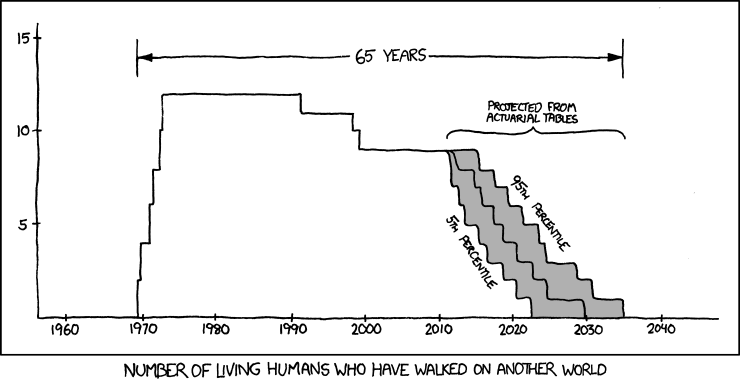
There should be no surprise that the passing of Neil Armstrong has seen an upsurge in the techo-pessimism meme, as well as the more general fears that America is in decline. The publication of Robert Gordon's paper, "Is U.S. Economic Growth Over? Faltering Innovation Confronts The Six Headwinds", has provided the coincidental occasion, however it is interesting to note that while some media reports crowbarred the Apollo programme in as an example of modern decline, most focused on his provocative thought experiment that seeks to prove that the inventions of the last decade are small beer compared to running water and indoor toilets, a variation on Ha-Joon Chang's washing machine riff. Gordon's proposition is that you'd happily surrender your netbook to avoid reverting to a netty. But before we explore the s-bend of innovation, a last thought on Armstrong & co's achievement ...

The title of Gordon's paper packs three assumptions: first, the focus on the US and the implicit fear that it may have had its "turn in the sun"; second, the belief that economic growth is sputtering because of faltering innovation; and third, the belief that there are structural "headwinds" that will make matters worse. Despite the gloomy tone, this is still an essentially optimistic American perspective, encapsulating exceptionalism (it's still all about the US) and the belief that the situation can be remedied ("if we can just sort out those goddamn headwinds ...")
Gordon's fundamental premise is that there were three industrial revolutions: 1750-1830 saw steam engines, cotton spinning and railways; 1870-1900 saw electricity, the internal combustion engine, central heating, air-con and indoor plumbing; and 1960-1990 saw computers and the Internet. He believes that the second was the most impactful and that the third lost momentum as productivity gains weren't sustained beyond the 1980s and post-2000 development focused on entertainment and communication devices. He also follows the idea, popularised by Joel Mokyr and others, that innovation is a process punctuated by macroinventions followed by long tails of microinventions, or the dynamic between what (discovery) and how (invention). In effect, he is arguing that the second revolution, whose breakthroughs were not fully exploited till the 1960s, was an exception in human endeavour and that subsequent macroinventions will not have as profound an effect on the economy or the median standard of living.
He picks a dubious example to highlight this: "The audacious idea that economic growth was a one-time-only event has no better illustration than transport speed. Until 1830 the speed of passenger and freight traffic was limited by that of "the hoof and the sail" and increased steadily until the introduction of the Boeing 707 in 1958. Since then there has been no change in speed at all and in fact airplanes fly slower now than in 1958 because of the need to conserve fuel." He completely ignores Concorde, but you get the point. Since 1958 the revolution in transport has been the extension of flying to the majority of the population in the developed world and a significant minority elsewhere. It's about quantity not quality. (As an aside, he wistfully mentions the Jetsons as well).
The US-specific "headwinds" Gordon lists are: the end of the "dividend" of the 50s/60s baby-boom (more male workers and more women moving into the labour market) and the increase in retirees; rising income inequality (which means growth for the majority is much lower than the average); "factor price equalization" due to globalisation and the Internet (i.e. global convergence of labour costs, which means wage repression in advanced economies); cost inflation in higher education and poor secondary student performance; the burden of environmental regulations and taxes (which he assumes China will sidestep); and the overhang of consumer and government debt. These choices reflect certain prejudices (e.g. anti-debt, with the emphasis on public debt), though he has tried to be politically even-handed. Some is just silly. Though increasing education costs are a problem, we shouldn't forget that vastly more kids are securing further education now than ever before, while relative performance reflects the system as much as innate intelligence, as this year's English GCSE results have proven.
He assumes that the faster spread and earlier petering-out of the inventions of the third industrial revolution, compared to the second, is indicative of the relative weakness of the more recent surge. In fact, the cycle of penetration of innovations has always accelerated, for two reasons. First, the more developed a society is in terms of technology, the more opportunities will exist to marry an invention with the existing base. The effect is cumulative. This can perversely result in us belittling inventions because they are more likely to appear as adaptations or step-changes rather than unprecedented novelties. Thus the steam engine was sui generis, while the internal combustion engine was initially seen as just a better engine. Second, better communication, and more developed institutions for the dissemination of technology (government, education, large businesses, civil society etc), make each successive wave easier to propagate. This is a triumph of exploitation, not proof that the inventions lack stamina.
It's also worth bearing in mind that that the tail of microinventions following the macroinvention breakthroughs in computing and communications in the 60s and 70s may have some way to run yet. The first and second industrial revolutions (in Gordon's scheme) had different durations (80 and 30 years respectively), but they appear to have had a similar length tail of 70 years. That implies that the current tail may well stretch to 2060, though I personally suspect there will be another macroinvention surge well before that. Gordon quotes Robert Solow's 1987 paradox, "We can see the computers everywhere except in the productivity statistics", but he fails to challenge Solow's assumption that an IBM mainframe was a sort of robot, capable of replacing human workers. Computers improve individual human productivity, they don't substitute for people, any more than abacuses did.
This points to Gordon's fundamental beef, which is that recent innovations have not replaced labour: "Attention in the past decade has focused not on labor-saving innovation, but rather on a succession of entertainment and communication devices that do the same things as we could do before, but now in smaller and more convenient packages. ... These innovations were enthusiastically adopted, but they provided new opportunities for consumption on the job and in leisure hours rather than a continuation of the historical tradition of replacing human labor with machines". There's a strong whiff of protestant distate for all this wired jollification, but there is also a failure to consider that the non-appearance of androids (and the coincident appearance of new white-collar jobs) may actually have been a willed outcome.
Gordon doesn't consider the possibility that we humans were better prepared during revolution number 3 (having learnt lessons in revolutions 1 and 2) to channel/direct/sabotage the course of development to meet wider social and economic objectives. He is also guilty of historical simplification, claiming that prior to 1750 growth was negligible for millenia. In fact, there were periods of rapid technological advance in the past, notably in China and the Roman Empire in the first century AD. This included printing, concrete, central heating, the compass, flush toilets and indoor plumbing. The point to remember was that these were elite goods, while the achievement of the second of Gordon's revolutions was to provide such benefits for ordinary people, though this took a century to achieve extensive penetration (I first experienced central heating in the 70s, while I last used a shared outside toilet, in Leeds, in the early 80s).
His focus on the benefits of running water and indoor toilets is rather American. As a Brit, I wouldn't for a moment suggest that these weren't major advances, improving public health as well as delivering real comfort, however there is no doubting our (how I shall I put it) more relaxed attitude. Compare a British pub toilet (mens) to an American diner restroom and you'll see what I mean. Americans are distinctly more anal (there's no other word for it) than Europeans when it comes to toilet hygiene. We've developed a taste for central heating (two millenia after the hypocaust first appeared in Britain), but we see air-conditioning as something for offices or Mediterranean holiday villas. This obviously reflects our more temperate climes, so you can forgive a citizen of Chicago or Minneapolis for being a little more sensitive about HVAC. Of course, American pessimism may just reflect the realisation that even in the area of toilet technology, they have now been surpassed by the Japanese.
The title of Gordon's paper packs three assumptions: first, the focus on the US and the implicit fear that it may have had its "turn in the sun"; second, the belief that economic growth is sputtering because of faltering innovation; and third, the belief that there are structural "headwinds" that will make matters worse. Despite the gloomy tone, this is still an essentially optimistic American perspective, encapsulating exceptionalism (it's still all about the US) and the belief that the situation can be remedied ("if we can just sort out those goddamn headwinds ...")
Gordon's fundamental premise is that there were three industrial revolutions: 1750-1830 saw steam engines, cotton spinning and railways; 1870-1900 saw electricity, the internal combustion engine, central heating, air-con and indoor plumbing; and 1960-1990 saw computers and the Internet. He believes that the second was the most impactful and that the third lost momentum as productivity gains weren't sustained beyond the 1980s and post-2000 development focused on entertainment and communication devices. He also follows the idea, popularised by Joel Mokyr and others, that innovation is a process punctuated by macroinventions followed by long tails of microinventions, or the dynamic between what (discovery) and how (invention). In effect, he is arguing that the second revolution, whose breakthroughs were not fully exploited till the 1960s, was an exception in human endeavour and that subsequent macroinventions will not have as profound an effect on the economy or the median standard of living.
He picks a dubious example to highlight this: "The audacious idea that economic growth was a one-time-only event has no better illustration than transport speed. Until 1830 the speed of passenger and freight traffic was limited by that of "the hoof and the sail" and increased steadily until the introduction of the Boeing 707 in 1958. Since then there has been no change in speed at all and in fact airplanes fly slower now than in 1958 because of the need to conserve fuel." He completely ignores Concorde, but you get the point. Since 1958 the revolution in transport has been the extension of flying to the majority of the population in the developed world and a significant minority elsewhere. It's about quantity not quality. (As an aside, he wistfully mentions the Jetsons as well).
The US-specific "headwinds" Gordon lists are: the end of the "dividend" of the 50s/60s baby-boom (more male workers and more women moving into the labour market) and the increase in retirees; rising income inequality (which means growth for the majority is much lower than the average); "factor price equalization" due to globalisation and the Internet (i.e. global convergence of labour costs, which means wage repression in advanced economies); cost inflation in higher education and poor secondary student performance; the burden of environmental regulations and taxes (which he assumes China will sidestep); and the overhang of consumer and government debt. These choices reflect certain prejudices (e.g. anti-debt, with the emphasis on public debt), though he has tried to be politically even-handed. Some is just silly. Though increasing education costs are a problem, we shouldn't forget that vastly more kids are securing further education now than ever before, while relative performance reflects the system as much as innate intelligence, as this year's English GCSE results have proven.
He assumes that the faster spread and earlier petering-out of the inventions of the third industrial revolution, compared to the second, is indicative of the relative weakness of the more recent surge. In fact, the cycle of penetration of innovations has always accelerated, for two reasons. First, the more developed a society is in terms of technology, the more opportunities will exist to marry an invention with the existing base. The effect is cumulative. This can perversely result in us belittling inventions because they are more likely to appear as adaptations or step-changes rather than unprecedented novelties. Thus the steam engine was sui generis, while the internal combustion engine was initially seen as just a better engine. Second, better communication, and more developed institutions for the dissemination of technology (government, education, large businesses, civil society etc), make each successive wave easier to propagate. This is a triumph of exploitation, not proof that the inventions lack stamina.
It's also worth bearing in mind that that the tail of microinventions following the macroinvention breakthroughs in computing and communications in the 60s and 70s may have some way to run yet. The first and second industrial revolutions (in Gordon's scheme) had different durations (80 and 30 years respectively), but they appear to have had a similar length tail of 70 years. That implies that the current tail may well stretch to 2060, though I personally suspect there will be another macroinvention surge well before that. Gordon quotes Robert Solow's 1987 paradox, "We can see the computers everywhere except in the productivity statistics", but he fails to challenge Solow's assumption that an IBM mainframe was a sort of robot, capable of replacing human workers. Computers improve individual human productivity, they don't substitute for people, any more than abacuses did.
This points to Gordon's fundamental beef, which is that recent innovations have not replaced labour: "Attention in the past decade has focused not on labor-saving innovation, but rather on a succession of entertainment and communication devices that do the same things as we could do before, but now in smaller and more convenient packages. ... These innovations were enthusiastically adopted, but they provided new opportunities for consumption on the job and in leisure hours rather than a continuation of the historical tradition of replacing human labor with machines". There's a strong whiff of protestant distate for all this wired jollification, but there is also a failure to consider that the non-appearance of androids (and the coincident appearance of new white-collar jobs) may actually have been a willed outcome.
Gordon doesn't consider the possibility that we humans were better prepared during revolution number 3 (having learnt lessons in revolutions 1 and 2) to channel/direct/sabotage the course of development to meet wider social and economic objectives. He is also guilty of historical simplification, claiming that prior to 1750 growth was negligible for millenia. In fact, there were periods of rapid technological advance in the past, notably in China and the Roman Empire in the first century AD. This included printing, concrete, central heating, the compass, flush toilets and indoor plumbing. The point to remember was that these were elite goods, while the achievement of the second of Gordon's revolutions was to provide such benefits for ordinary people, though this took a century to achieve extensive penetration (I first experienced central heating in the 70s, while I last used a shared outside toilet, in Leeds, in the early 80s).
His focus on the benefits of running water and indoor toilets is rather American. As a Brit, I wouldn't for a moment suggest that these weren't major advances, improving public health as well as delivering real comfort, however there is no doubting our (how I shall I put it) more relaxed attitude. Compare a British pub toilet (mens) to an American diner restroom and you'll see what I mean. Americans are distinctly more anal (there's no other word for it) than Europeans when it comes to toilet hygiene. We've developed a taste for central heating (two millenia after the hypocaust first appeared in Britain), but we see air-conditioning as something for offices or Mediterranean holiday villas. This obviously reflects our more temperate climes, so you can forgive a citizen of Chicago or Minneapolis for being a little more sensitive about HVAC. Of course, American pessimism may just reflect the realisation that even in the area of toilet technology, they have now been surpassed by the Japanese.
Subscribe to:
Posts (Atom)