
The British Empire was a form of internationalism that required a strong isolationist stance: we would not get involved in continental entanglements because we were busy on the other side of the globe. Similarly, the transition from empire to the European Union has been marked by an instrumental use of isolationist tropes ("our money", "our demands") while advancing greater integration (Maastricht etc). Even now, advocates of Brexit talk about how "leaving" will allow us to forge closer ties with other parts of the world. Not even UKIP is suggesting that we emulate the Japanese era of Sakoku and quarantine ourselves from foreign influence. British elites are adroit at playing these two chords, advancing sectional interests (most notably the City) by first stressing one and then stressing the other.
The chief problem this gives rise to is not manifest in domestic politics, given that both tendencies are found in varying degrees inside all parties, but in international relations. Though you'd never know it from the British media, the foreign perception of the UK remains heavily influenced by l'Albion perfide. This is most striking in the hyperbolic realm of sport, which is why comically corrupt outfits like FIFA still see mileage in playing the hypocrite/sour-grapes card in response to British (or more often English) criticism, and why we in turn are prone to assume that the English FA's performance is best explained by blazered incompetence rather than cupidity or malice. No doubt Seb Coe's fall from grace, if it comes, will be excused at home as "poor judgement" or "naivety", rather than an over-fondness for money and status perks.
When foreigners, particularly our bezzies in Western Europe, talk about the "British sense of fair play", they are often being ironic. There is a genuine admiration for popular British attitudes, i.e. the habits and values of the people, witness the number of foreign managers and players who rave about our football culture (but, let's be honest, you don't rock up on day one and tell your employers their game is "shit on a stick", as Jorge Valdano memorably did from a distance). But there is also a belief that the UK is unprincipled and unreliable in the sphere of international affairs, hence our sports administrators are treated with suspicion abroad, particularly when they pontificate about ethical standards. In other words, foreign observers are often more acute in distinguishing between the people and national elites than the natives are.
The continental media coverage of the marital infidelities of the British royal family, which we largely ignored until the 1980s, despite the ample evidence, was also emblematic of this perceived unreliability and hypocrisy. So, in reverse, was the longstanding British belief that our public servants and commercial institutions were peculiarly free of the corruption that plagued other countries. The last 30 years have revealed corruption on an industrial scale in the City, not to mention among the police, local government and politicians, yet we still cling to the myth of "bad apples", or slyly suggest that the misbehaviour arose from precipitously advancing the "wrong sort", from working class traders to ethnic-minority council officials, due to misguided "political correctness".
The current friction in the Parliamentary Labour Party can easily be framed as pacifism vs belligerence, and thus shunted into the meaningless siding of "national security", but this is to miss the underlying conflict between isolationism and internationalism, which has traditionally manifested itself in Labour as socialism in one country versus European social democracy. There are very few principled pacifists, just as there are few people who think we should pile into every fight going, so it is misleading to harp on about Jeremy Corbyn's personal preferences. The idea that he might resign "on principle" if the PLP votes to bomb Syria strikes me as far-fetched, not to mention an over-determination of the parallels with George Lansbury.
It is easy to forget that Lansbury's pacifism was part of a wider internationalist strain that arose during the interwar years that actively pursued multilateral solutions, especially through the League of Nations, and which was social democratic in its domestic policies (it's worth remembering that Lansbury's greatest modern admirer is John Cruddas). His departure from the leadership in 1935 was due to the shift in internationalist sympathy within the party in the early 30s away from peace towards resistance against Fascism. One thing we know about Corbyn is that he enjoys strong support among party members and there has been no major shift in their attitudes yet. The key moment in 1935 was Ernest Bevin's denunciation of Lansbury at the annual party conference over the latter's opposition to League sanctions (and potential force) against Italy in respect of Abyssinia.
However, it should not be forgotten that Bevin was also instrumental in ensuring TUC and Labour Party support for non-intervention in Spain, after the outbreak of civil war in 1936, until shopfloor and constituency party pressure prompted a volte-face in 1937. In other words, the process by which the historically isolationist TUC leadership and the right of the Labour Party became actively internationalist took 15 years, following the 1931 split, and was only cemented by the exigencies of war, American pressure and the realisation that the UK's future influence would largely depend on keeping the US onside. Isolationism still lived on, hence the reluctance to get involved in the embryonic moves towards European unity and the continued support for the Sterling area, but multilateral internationalism, in the form of NATO, was the bedrock of postwar foreign policy.
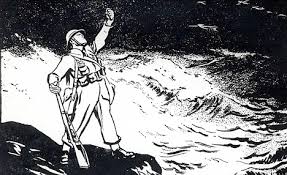
The socialist left went through a comparable transformation, though moving in the opposite direction and over a later period, from roughly 1940 to 1956. The start of this shift was marked by the Battle of Britain ("Very well, alone"), boosted by the achievements of the Attlee administration (often assumed, wrongly, to be unique), and closed with the Russian invasion of Hungary. The left sought to combine this isolationist stance with a continued commitment to multilateral solutions (notably via the UN) and support for the oppressed abroad, reflecting the rank-and-file's instinctive internationalism. It resolved the apparent contradiction by promoting a romantic British exceptionalism (hence the renewed interest in the 17th century and the roots of domestic socialism among Marxist historians) along with a commitment to economic unilateralism that would culminate in the Alternative Economic Strategy and the campaign to quit the EEC.
That the two wings of the party should have swapped clothes like this is not so remarkable. While pacifism may be a point of principle for some, the competing sirens of isolationism and internationalism are treated pragmatically by most. British politics is constantly debating the merits of free trade versus protectionism, and multilateralism versus unilateralism. While the French have a historic bias towards protectionism because of the centralised state, and the Germans a recent abhorrence of unilateralism due to Nazism, the British are happily two-faced. The attraction of unilateral nuclear disarmament for many socialists has always been the unilateralism, not the disarmament (remember that Michael Foot, despite being a supporter of CND, was a vocal advocate of war with Argentina).
Though some historians have claimed that Labour's reconciliation with the EU in the late 80s and early 90s was due to a desire to employ social legislation as a defence against Thatcherism, this ignores both the facts on the ground (the Social Chapter did not prevent the erosion of worker rights and living standards in the UK any more than it did in Germany) and the persistent strength of internationalist feeling among the party membership. As the Tories became more isolationist and fractious over the EU, the Labour Party became more comfortably internationalist simply because this was a pragmatic oppositional manoeuvre. There was an attractive space it could happily move into. However this did not mean that its own isolationism dwindled, merely that it went underground.
It resurfaced when Tony Blair twisted the evidence of Iraqi WMD to fulfil a promise to the Americans. This was an affront to sovereignty: our ability to unilaterally decide what was in the country's best interests (you may recall that Blair's sole unilateral intervention, in Sierra Leone, did not generate significant criticism). Inasmuch as Labour currently has a policy over the absurdity that is "shoot to kill", it is unilateral. Saying "we shouldn't automatically shoot" doesn't mean we won't shoot, merely that we reserve the right to decide for ourselves when and if we shoot. Similarly, refusing to join the posse to bomb Syria is less an expression of pacifism and more an expression of independence (and a reasonable scepticism about military and political utility), even if wrapped in a commitment to multilateral negotiation.
In this light, the PLP's failure to support Corbyn is less about their fear that he is iffy on national security or the summary execution of terrorists and more about the fear that he wishes to pursue a more isolationist and unilateral foreign policy. There are a lot of careers in the Labour Party that started with a stint in the Berlaymont in Brussels and benefited from a trip to Washington. Even though John McDonnell's emerging economic policy is mild social democracy, it represents a shift towards a more unilateral approach in rejecting the prevailing political orthodoxy in Europe (and is thus ironically closer to economic orthodoxy and US policy). What we're witnessing is the latest turn in the dynamic tension between isolationism and internationalism. The moment of crisis will come not over Syria, let alone the operational mandate of armed police units, but over the EU referendum.
The continental media coverage of the marital infidelities of the British royal family, which we largely ignored until the 1980s, despite the ample evidence, was also emblematic of this perceived unreliability and hypocrisy. So, in reverse, was the longstanding British belief that our public servants and commercial institutions were peculiarly free of the corruption that plagued other countries. The last 30 years have revealed corruption on an industrial scale in the City, not to mention among the police, local government and politicians, yet we still cling to the myth of "bad apples", or slyly suggest that the misbehaviour arose from precipitously advancing the "wrong sort", from working class traders to ethnic-minority council officials, due to misguided "political correctness".
The current friction in the Parliamentary Labour Party can easily be framed as pacifism vs belligerence, and thus shunted into the meaningless siding of "national security", but this is to miss the underlying conflict between isolationism and internationalism, which has traditionally manifested itself in Labour as socialism in one country versus European social democracy. There are very few principled pacifists, just as there are few people who think we should pile into every fight going, so it is misleading to harp on about Jeremy Corbyn's personal preferences. The idea that he might resign "on principle" if the PLP votes to bomb Syria strikes me as far-fetched, not to mention an over-determination of the parallels with George Lansbury.
It is easy to forget that Lansbury's pacifism was part of a wider internationalist strain that arose during the interwar years that actively pursued multilateral solutions, especially through the League of Nations, and which was social democratic in its domestic policies (it's worth remembering that Lansbury's greatest modern admirer is John Cruddas). His departure from the leadership in 1935 was due to the shift in internationalist sympathy within the party in the early 30s away from peace towards resistance against Fascism. One thing we know about Corbyn is that he enjoys strong support among party members and there has been no major shift in their attitudes yet. The key moment in 1935 was Ernest Bevin's denunciation of Lansbury at the annual party conference over the latter's opposition to League sanctions (and potential force) against Italy in respect of Abyssinia.
However, it should not be forgotten that Bevin was also instrumental in ensuring TUC and Labour Party support for non-intervention in Spain, after the outbreak of civil war in 1936, until shopfloor and constituency party pressure prompted a volte-face in 1937. In other words, the process by which the historically isolationist TUC leadership and the right of the Labour Party became actively internationalist took 15 years, following the 1931 split, and was only cemented by the exigencies of war, American pressure and the realisation that the UK's future influence would largely depend on keeping the US onside. Isolationism still lived on, hence the reluctance to get involved in the embryonic moves towards European unity and the continued support for the Sterling area, but multilateral internationalism, in the form of NATO, was the bedrock of postwar foreign policy.
The socialist left went through a comparable transformation, though moving in the opposite direction and over a later period, from roughly 1940 to 1956. The start of this shift was marked by the Battle of Britain ("Very well, alone"), boosted by the achievements of the Attlee administration (often assumed, wrongly, to be unique), and closed with the Russian invasion of Hungary. The left sought to combine this isolationist stance with a continued commitment to multilateral solutions (notably via the UN) and support for the oppressed abroad, reflecting the rank-and-file's instinctive internationalism. It resolved the apparent contradiction by promoting a romantic British exceptionalism (hence the renewed interest in the 17th century and the roots of domestic socialism among Marxist historians) along with a commitment to economic unilateralism that would culminate in the Alternative Economic Strategy and the campaign to quit the EEC.
That the two wings of the party should have swapped clothes like this is not so remarkable. While pacifism may be a point of principle for some, the competing sirens of isolationism and internationalism are treated pragmatically by most. British politics is constantly debating the merits of free trade versus protectionism, and multilateralism versus unilateralism. While the French have a historic bias towards protectionism because of the centralised state, and the Germans a recent abhorrence of unilateralism due to Nazism, the British are happily two-faced. The attraction of unilateral nuclear disarmament for many socialists has always been the unilateralism, not the disarmament (remember that Michael Foot, despite being a supporter of CND, was a vocal advocate of war with Argentina).
Though some historians have claimed that Labour's reconciliation with the EU in the late 80s and early 90s was due to a desire to employ social legislation as a defence against Thatcherism, this ignores both the facts on the ground (the Social Chapter did not prevent the erosion of worker rights and living standards in the UK any more than it did in Germany) and the persistent strength of internationalist feeling among the party membership. As the Tories became more isolationist and fractious over the EU, the Labour Party became more comfortably internationalist simply because this was a pragmatic oppositional manoeuvre. There was an attractive space it could happily move into. However this did not mean that its own isolationism dwindled, merely that it went underground.
It resurfaced when Tony Blair twisted the evidence of Iraqi WMD to fulfil a promise to the Americans. This was an affront to sovereignty: our ability to unilaterally decide what was in the country's best interests (you may recall that Blair's sole unilateral intervention, in Sierra Leone, did not generate significant criticism). Inasmuch as Labour currently has a policy over the absurdity that is "shoot to kill", it is unilateral. Saying "we shouldn't automatically shoot" doesn't mean we won't shoot, merely that we reserve the right to decide for ourselves when and if we shoot. Similarly, refusing to join the posse to bomb Syria is less an expression of pacifism and more an expression of independence (and a reasonable scepticism about military and political utility), even if wrapped in a commitment to multilateral negotiation.
In this light, the PLP's failure to support Corbyn is less about their fear that he is iffy on national security or the summary execution of terrorists and more about the fear that he wishes to pursue a more isolationist and unilateral foreign policy. There are a lot of careers in the Labour Party that started with a stint in the Berlaymont in Brussels and benefited from a trip to Washington. Even though John McDonnell's emerging economic policy is mild social democracy, it represents a shift towards a more unilateral approach in rejecting the prevailing political orthodoxy in Europe (and is thus ironically closer to economic orthodoxy and US policy). What we're witnessing is the latest turn in the dynamic tension between isolationism and internationalism. The moment of crisis will come not over Syria, let alone the operational mandate of armed police units, but over the EU referendum.
