Search

Tuesday, 19 July 2016

Phone Home

An ICM poll for British Futures suggests that three-quarters of those who voted leave think that EU nationals already in the UK should be allowed to stay, with only 16% of the total population backing repatriation. While Theresa May has refused to give assurances on the status of EU nationals, her stance is clearly aimed at preserving bargaining chips rather than a determination to "send 'em back" (the infamous Home Office vans on her watch were little more than a PR stunt). That pretty much everyone else has insisted that EU nationals should be reassured (though David Davis has tempered this with talk of future curbs) suggests that politicians think that popular opinion is not as xenophobic as claimed by some shocked remainers, though this then leaves us struggling to explain why immigration was the decisive factor in the referendum.

The poll could be taken to suggest that it is the future expectation of immigration that drove the support for leave (hence the power of the Turkey "threat" and the "breaking point" poster), and is thus a matter of flow rather than stock. I'd personally take that with a pinch of salt, given popular ignorance of the ethnic and foreign-born share of the population. Clearly immigration is an immediate concern, not the calculation of a future discounted utility. We know that anti-immigrant sentiment is highest in areas with low immigration, which means that "pressure on public services" isn't a credible explanation, and we also know the issue is immigration across the board, not just the free movement of EU citizens. The suggestion during the campaign that fewer Polish plumbers would mean more Bangladeshi curry chefs was not what most leavers were hoping to hear.

It would be easy to assume that abstract xenophobia is the driver, or that immigration (like the EU) is a proxy for modernity more generally, standing in for developments as diverse as gay marriage and kale juice. There certainly seems to be evidence that reactionary views, rather than age or education, are the best indicator of whether someone voted leave. Some even espy a cultural divide: "liberal cosmopolitanism versus anti-liberal populism", or a cognitive division between "those who dislike difference – signifying a disordered identity and environment – and those who embrace it", but these look like magazine articles masquerading as academic studies. There are plenty of reactionaries in London and 38% of those who voted in Sunderland opted for remain (I doubt many of them would self-identify as liberal cosmopolitans). I'm going to suggest an alternative thesis: that the concern over immigration is driven in part by internal migration, as experienced by the "left behinds", and related to this, that the antipathy towards the EU incorporates a large dose of resentment towards London.

Much has been written about the impact of commonwealth immigration on old textile towns in Lancashire and Yorkshire during the 1960s and after, but less attention has been paid to the way that internal migration impacted on mono-cultural areas such as the North East and South Wales from the 1980s onwards. In Britain, there has historically been a fundamental difference between the larger industrial conurbations and both the smaller industrial towns (that specialised in sectors such as coal, shipbuilding and steel) and rural towns. The conurbations were populated in the 19th and 20th centuries by immigrants from both the surrounding countryside and further afield (e.g. Irish and Welsh factory-hands in Manchester), while the small towns were often relatively insular with only a small number of skilled immigrants (e.g. Scottish engineers) or itinerant workers who were not encouraged to stick around (e.g. seasonal Irish agricultural workers). What distinguished these in turn from small towns in other countries, like Ireland or Italy, was the absence of regular emigration in the twentieth century.

Though we think of the pivotal shift from manufacturing to services as occurring in the 1980s, it's worth remembering that the UK has been a predominantly service economy for the best part of a century. What changed in the 80s is that service jobs, as well as manufacturing jobs, were lost from small towns to cities as industries like financial services consolidated and as globalised business services expanded. This trend was exacerbated by the development of the digital economy in the 90s. Far from allowing people to work anywhere, the Internet made remote service delivery easier and thus amplified agglomeration in city-based "hubs". This process simultaneously transferred jobs to the larger service centres (i.e. provincial cities as well as London) and accentuated the differential in wages between the metropolis and small towns. To give an example, the Isle of Wight, which voted heavily leave, is poorly-served (many online retailers won't deliver there), wages are low, the economy is overly-dependent on pensioners and the state (prisons), and talented youth head to Southampton or London.

We're familiar with the fact that many old industrial towns in the North have lost both skilled jobs and many of their young, but the same outcome - a reliance on low-wage work and a growing proportion of the elderly - has affected small towns across the South and Midlands as well. Before the 1980s, the worry that the cities would lure away the small-town youth of Britain was largely limited to those families whose children benefited from the expansion of further education in the 1960s - i.e. classic "social mobility" that often entailed geographic mobility. Thatcherism extended this deracination to skilled workers ("get on your bike"), and not just in the North and Wales but across the rest of the UK too. This was then exacerbated by the further expansion of tertiary education in the 1990s, which funnelled teenagers who might otherwise have looked to apprenticeships with local employers into often-distant urban colleges as a stepping-stone to work in the service sector.

In other words, the sense of disturbance captured in the fear of immigration may be more to do with contemporary internal migration, and the negative impact this has on family ties, than the dismantling of industries a quarter of a century ago, let alone the loss of empire. The young quitting Sunderland for London, or York for Leeds, may actually be more significant than migration from Poland (blaming migrants for your town's decline is one way of dealing with guilt over "desertion" by your adult children). In these smaller cities and towns, the average age and the proportion of OAPs has gradually increased, not because retirees are moving in but because the young are moving out. This has led to suggestions that a policy of managed decline should be adopted for some areas, further encouraging the emigration of the young or skilled. This suggestion is typically directed at old industrial towns in the North, but the problem of poor wages and too many pensioners is just as relevant in the South outside London.

If this thesis is correct - that the concern over the arrival of EU nationals during the last decade is actually resentment over the departure of native youth that started in the 80s and accelerated in the 90s - it helps to explain why concern over immigration mounts in the late-90s, 5 years before the accession of East European states to the EU in 2004. The political focus on immigration and asylum that started in the mid-90s certainly validated these as "legitimate public concerns", but its hard to believe that their resulting salience in small towns with minimal exposure to actual immigrants (let alone asylum-seekers) can be fully explained by either the power of the press or an increase in racial prejudice. There appears to be something else at work, and something more tangible and immediate than a cultural divide. "We want our country back" may have been an anguished cry directed at children who rarely phone.


Wednesday, 13 July 2016

Talk to the People

After the initial outpouring of class contempt, ageism and metropolitan narcissism, political commentators have sobered up and now suggest that the EU referendum result was a response to decades of deindustrialisation and austerity; that "taking back control" means more than simple xenophobia; and that it is a protest against a remote and unsympathetic elite by the "left behind". Despite this, there appears to be little appetite to talk at length with the people who cast the votes, either to understand their motives or to clarify their expectations. The vox-pops have moved on from "Did you really mean it?" to "Are you disappointed with the ensuing political chaos". Similarly, when people are asked why they voted leave, the answer "immigration" is accepted without any further enquiry, as if no further explanation was needed, showing how the cant of "understanding people's concerns" has enshrined ignorance.

Many have noted the irony that the government might need to hire expert trade negotiators from abroad as a result of the demands of Brexit, but perhaps the interlocutors we have greater need of are ones that can respond to the referendum result by talking to the voters. As it happens, that is the job description of an MP, but the current self-absorption of the two main parties suggests that they are determined to reassert parliamentary sovereignty by performatively ignoring the demos in favour of more niche electorates. The Tories have managed to engineer a new leader, and thereby a new Prime Minister, without recourse to the opinion of party members let alone the wider electorate. Despite the appointment of David Davis as minister for Brexit, the elevation of Theresa May will look like an establishment stitch-up to many who voted leave. The appointment of Boris Johnson as Foreign Secretary does not dilute the effect.

In contrast, the Labour Party has now determined that a challenge to the leadership must go to a ballot of members with the incumbent as a candidate by right, though with the proviso that the electorate be gerrymandered to try and conjure up an elusive anti-Corbyn majority. Given that one didn't exist last year, it is asking a lot to believe that the new £25 threshold for supporters is going to swing it. Corbyn may have lost the vote of some who elected him, but he may also have gained the votes of others disgusted by the manoeuvrings of the Blairites and their "centre-left" fellow-travellers. It beggars belief that the PLP seriously thought they could depose Corbyn by a procedural coup, though there has been no lack of evidence over the last year of their incompetence or capacity for self-delusion. Some are still talking about a split, which in practice means the PLP annulling the membership in their desire to preserve the purity of their idea of representative democracy.

A common response to the referendum has been to suggest that the people don't know what they want, both in the sense that we're almost evenly divided as a nation and more particularly that leavers want contradictory outcomes. That's patronising, but it is also an excuse to avoid engagement. An individual voter may be an idiot, but the collective electorate is not. Reflecting the will of the people through systems of representative government is difficult at the best of times, but trying to resolve a complex issue, even assuming it isn't misrepresented, is not best done through a binary referendum. Rather than regret Cameron's folly, that should encourage us to treat the result as the trigger for negotiation (a sort of internal Article 50), rather than the end of the process, not in the sense that we treat the referendum as "advisory", or that it be finessed to the point that the result is stood on its head, but that we should have a conversation to establish what a preferred outcome, consistent with the result, would look like.


I see little prospect of that happening. Theresa May and popular engagement do not sit easily together, and her track record at the Home Office suggests her curiosity is kept in check by her authoritarianism. Her sponsorship of the "snoopers' charter" displayed little interest in the technical or social realities of the Internet, while her attitude towards immigration has always been a depersonalised focus on process and quantification. She has vowed to be a "one nation" PM and fight for the many against the few, but then they all say that, don't they? Her government is likely to be more mercantilist and less socially liberal than Cameron's, reflecting her instincts as much as the opportunity of Brexit. Her promise on co-determination, like her promise to give "hard-working families" greater economic security, will be whittled away by that same mercantilist turn and pressure from the free-market right. This does not mean she is a committed deregulator but rather someone who sees regulation as the guarantor of markets. In other words, less neoliberal (Osborne) and more ordoliberal (Hammond).

There seems little prospect that the new government will spend much time asking people in Sunderland what they mean by "immigration" (given the paucity of immigrants in the area) or how they envisage Brexit working in practice. They certainly won't be inviting suggestions on the more fundamental issues that supposedly underlay the referendum vote, such as regional industrial policy or the desire for an English assembly outside London. No doubt opinion polls will be commissioned, but they are no less a "blunt instrument" than a referendum. As New Labour proved with its focus groups, structured questions serve to establish what people will tolerate, not what they aspire to. This incuriosity is hegemonic. The defeated candidates in last year's Labour leadership election do not appear to have spent much time talking to party members about why they voted for Jeremy Corbyn, while their discussions with the wider electorate haven't advanced beyond focus group banality: immigration is a concern; Corbyn is weird etc.

One lesson of Corbyn's success last year was that he valued engagement. His election meetings weren't packed out because he is a masterful talker or because his policy prescriptions were strikingly novel. He's a dull speaker (and thus suspected of honesty) and his platform is bog-standard social democracy with top-notes of internationalism. The attraction was that he was prepared to articulate values that appealed to members (e.g. "austerity isn't necessary") and showed respect for the members' own views. His was a victory of style as much as substance, which ironically means he was the most "Blair 97" of the candidates. Whether he can repeat the trick is moot, but there seems little reason to bet against it. Though he has received little credit from the PLP or media, his achievements over 9 months are of the sort that will appeal to party members, from forcing a reversal on welfare cuts to getting the Fire Brigades Union to affiliate.

Though some on the left harbour hopes for an extra-parliamentary movement, Corbyn is very much in the tradition of the parliamentary road to socialism in which popular engagement and public demonstration act as a buttress to support (and keep honest) the party in the legislature. This is why accountability is critical for his supporters, and why the PLP have made "bullying" the emblematic criticism of their opponents. One side sees the MP as a pure representative of party policy (and therefore the membership), the other as a mediator between the wider electorate and a cunning state. You can argue that party members are not representative of the electorate, but this is meaningless given that they self-select by party. What you can't argue is that MPs have a better understanding of the wider electorate when they spend so little time engaging with voters as political philosophers rather than as consumers of policy tat. The referendum starkly highlighted the UK's problem: too much Parliament, not enough democracy.

Thursday, 7 July 2016

Clueless

The slang term "whatever", meaning "I don't care", is thought to originate in a minor 1965 US TV sitcom, My Mother the Car, though it carries an obvious echo of the song Que sera, sera, which was a hit for Doris Day in 1956. It achieved mass popularity (along with its "W" hand-gesture) in the 1995 film Clueless, which brings us neatly to Tony Blair. That's not an entirely cheap shot, for reasons that will become apparent. Clearly, il maestro did not use the word in this dismissive sense in his now notorious and abbreviated promise to George W Bush, but what then is implied by his statement, "I will be with you, whatever"? Did he mean whatever the views of others, whatever the consequences for Iraq, or whatever the personal cost to himself? All of these readings are possible considering the text of the memo, not to mention subsequent events.

It is also worth noting that at this time (July 2002, eight months before the invasion of Iraq) Blair appeared to believe that Saddam might have WMD, which reinforces the conclusion that while the British Prime Minister may have subsequently been economical with the truth, he started out credulous rather than cynical. He lied, but primarily to himself. In contrast, we know the neocons in the Bush Administration were looking towards regime change in Iraq before 9/11, considering it unfinished business from the first Iraq War. This takes me back to Clueless, not merely in the suggestion that Blair was played for a schmuck by the Americans, but in recognition that the film's plot was loosely based on Jane Austen's Emma, which as Wikipedia notes is a novel about "youthful hubris and the perils of misconstrued romance". It adds to the poignancy to learn that Austen's intent was to write a novel about "a heroine whom no one but myself will much like".

Blair has form with the easy employment of "whatever", though he usually manages to develop it into a subordinate clause. Celebrating third-way politics in 2014, he said: "In foreign policy, whatever you think of the controversies post-9/11 and particularly Iraq, we led in the world: strong alliances in Europe; closest ally of the USA; leaders in development with a tripled aid budget; and putting climate change at the top of the world’s agenda". Moments later he insisted that "Third way politics begins with an analysis of the world shaped by reality not ideology, not by delusionary thoughts based on how we want the world to be, but by hardheaded examination of the world as it actually is". Whenever anyone rejects ideology, they are usually in the grip of it. Chilcot shows that Blair was motivated by belief, not facts, but he also shows that this sprang from an eagerness to please the US rather than any specific conviction. In other words, Blair's ideology centred on national status. His reimagining of the UK as a "young country" was an attempt at restoration and thus part of the elite tradition that has long obsessed over "decline".

Though the initial reaction to the Chilcot Report has understandably focused on personal blame and institutional failure, the historical significance is what it tells us about the relationship of the UK and the US. Blair was hardly the first PM to harp on about the special relationship, and not even the first to sincerely believe in it (Margaret Thatcher was notoriously soft on this point as well, though she never underestimated US instrumentalism, as in Grenada), but his emotional investment, which predated al-Qaeda's attack on the World Trade Centre, was close to infatuation. For Blair, "punching above our weight" was synonymous with advancing US interests, which made him a more committed Atlanticist than even Thatcher. Indeed Blair appears to have been the more demanding partner over the intervention in Kosovo in 1999, when Bill Clinton was in the White House, and his unconcealed admiration for George W Bush clearly owed a lot to finding a kindred spirit.


The special relationship, by emphasising British delusions in respect of the "top table" and the power of personal charisma, has helped corrupt British governance ever since Suez. That earlier debacle was the moment when the UK was obliged to acknowledge its inferiority in the relationship and formally cede its historic role as the world's policeman to the US (a reality since 1941). Iraq has shown us to be incapable of even functioning as a "hobby bobby". The need to keep the US sweet has long been used in domestic politics to marginalise critics of UK policy, from trade to defence. This has reinforced the elite idea that there are strategic interests above democracy, which was further amplified by neoliberalism. Blair's "sofa government" was an extension to the cabinet of the instrumental attitude that the leadership took towards the party membership in the 1990s, excluding it from policy formation and insisting that it provide unqualified support.

The original expectation of the current government appears to have been that publication of the report at this time would exacerbate Labour's internal tensions and draw attention away from Tory squabbles following a narrow victory for remain in the EU referendum. In the event, Chilcot appears to have boosted respect for Corbyn (at least outside the PLP) and emphasised that his demand for a "new politics" can best be understood by what it stands against: Blairism. Iraq saw expertise abused and the idea of government probity undermined. A defence of one's actions based on the grounds of sincere "belief", which Tony Blair has once more made, looks less acceptable at a time when Leavers are bring criticised for having believed obvious lies. Saddam's WMD was no more credible than the £350 million claim, and there is a direct line from the "dodgy dossier" to "breaking point". If we are living in an era of "post-truth politics", that owes much to the Iraq War.

The ironic consequence of Brexit is that London's influence in Washington will decline. It was always more dependent on the indirect influence that the US could exert on the EU (and vice versa) than on any sentimental affection for Magna Carta or Scottish golf courses. The UK's influence on Commonwealth countries has long been a dead letter, and now its role as a bridge between the US and Europe will dwindle. This is the end of the special relationship. The warning by Obama that Britain would henceforth be "at the back of the queue" was not scaremongering. In Washington, the views of Berlin and New Delhi will now count for more than the views of London, and they will be sought directly. The historic irony is that the special relationship's greatest champion has, through his desire to cleave to the US and thus maintain the UK as a global "playa", helped undermine trust in government to such an extent that the people have voted to opt-out: "stop the world, I want to get off".

Some Brexiteers will still insist that the UK can play a leading role on the world's stage, but Blair and others in the establishment know that this was only possible if it remained within the political institutions of the EU and thus useful to the US as a sympathetic agent. Membership of NATO counts for little since that organisation's eastward expansion and the end of Britain's pre-eminent role as Airstrip One. With a limited military capability (all too obvious in Iraq), dwindling influence in Asia and Africa, and a semi-detached relationship with Europe, the UK will increasingly look like Canada with rockets. That's not a bad thing, particularly if we see sense and junk the rockets, but it does represent a fatal blow to the establishment's self-image. The judgement of history will not be written by the protesters who marched in 2003, let alone those who protested this week, but by that same political establishment. For them, Blair's legacy is increasingly looking like "Fool Britannia".

Sunday, 3 July 2016

This is Not a Popular Drama

Whether through half-remembered Shakespeare, or TV series such as House of Cards and Game of Thrones, the tendency to explain politics by dramatic analogy is both an admission of ignorance about people's true motivations and an unwillingness to address the social forces at work. A focus on the players, rather than the groundlings, is one way of reasserting Parliamentary sovereignty. Casting Boris Johnson as a clueless Caesar, the Goves as incompetent MacBeths, or Corbyn as a half-mad Lear exposed on Highbury Fields is wryly amusing, but it serves to diminish politics to the level of entertainment, which is what gave us the Johnson phenomenon in the first place. When politicians discuss themselves in analogous terms, such as Gove expressing sympathy for a clever but unloved dwarf or rooting for the Spartans at Thermopylae, you know that schoolboy fantasy has triumphed over schoolboy wit.

Crafting a life-story congenial to an intended audience is routine in the era of the personal brand, and this means delving into the dressing-up box of the collective mind. For example, Theresa May's pitch, that as the daughter of a vicar and the granddaughter of a regimental sergeant major she has public service written in her DNA, is clearly intended to reassure Conservative Party members that she is straight outta' Middle England, rather than the Old Etonian establishment or the too-clever-by-half metropolis, but it also serves to conjure an image not a million miles away from the exclusively white milieu of Midsomer Murders, which will placate those worried that there might be backsliding on the party's commitment to halting or even reversing immigration. This isn't just an appeal to Tories, but to Kippers as well.

The failure of Johnson and Gove might look like a defeat for newspapermen, but what it really reveals is that vain and inconsistent columnists are mere instruments for proprietors, which should hardly surprise us. Nothing has been more ridiculous than the claims that various Tory politicians (and spouses) have fallen out with each other recently, as if this were a high-toned soap opera in which everyone is shocked by enmity and personal betrayal despite it driving the plot week after week. These people are no more genuine "friends" than those who swap recommendations on LinkedIn. The relationships are cold-blooded and calculating. The claim that Michael Gove's political career is now toast because of his "back-stabbing" should be taken with a pinch of salt. This is the party of Macmillan and Heseltine, not to mention more recent wielders of the knife like Iain Duncan Smith.

Conservative politics is about the defence of status and Tories who claim to be radical reformists are usually desperate to acquire it. The "Maoist" Gove was neatly characterised by Ian Leslie last year: "The vividly drawn persona we are familiar with today emerged, fully formed, at school, in an act of audacious self-invention. The young Gove sought not merely to fit in with his socially superior peers, but to stand out from them. He rode an old-fashioned bicycle to school, wore suits, recited poetry and starred in debates ... Precocious children often grow into adults with something of the child about them, and there is something eternally schoolboyish about Gove. The reflected admiration of his parents, teachers and classmates still radiates from his smooth-cheeked face". Leslie also noted the pathological nature of Gove's alleged charm: "Politeness comes at a cost to authenticity: it is, by definition, a formal mode of expression, used to conceal what we really feel".


This lack of authenticity is not a problem for Gove or any other Tory. What matters is the tribute paid to status, even if it takes the ridiculous form of Fogeyish affectations. The reason he is unlikely to become party leader is not that he has proven duplicitous but that he has proven to be as cack-handed as Johnson in the execution of his schemes (his Queen leak may have pleased Murdoch but it upset Conservatives). For this same reason I was never convinced that the former Mayor of London was a shoo-in as Cameron's successor, even before the 23rd. His pitch to Tory MPs was that his media profile would secure enough votes to win general elections (and it may well have been material to the referendum result), but his executive incompetence (all too obvious in London where MPs spend the week) pointed to disarray in office. With the enormity of the Brexit task ahead of them, I suspect that many (and not just Gove) decided he was simply not up to the job. The ultimate betrayal here may be that City grandees dropped their erstwhile champion. Andrea Leadsom's sudden elevation is not because she was convincing in debates.

That same assessment of incompetence is at the heart of the PLP revolt against Jeremy Corbyn, but in contrast to the Tories, it is authenticity that has prevented the coup reaching a climax. With the exception perhaps of George Lansbury, Corbyn is unusual among Labour leaders in being a typical party member. He has the same concerns for fairness and justice, and the same instincts of activism and solidarity, that distinguish the footsoldiers of the CLPs, and it is these very qualities that make it unlikely he will resign. Party membership selects for people who disagree with the claim that resistance is useless. Paradoxically, that he is typical is held up as evidence of his naivety and unfitness for the job. This leads to a surreal situation in which he is charged with simultaneously having insufficient enthusiasm for Remain while being unable to connect with Northern and Midland voters who chose Leave.

Representative democracy assumes a tension between policy correctness and effectiveness, between the ideal and the electable, but this dichotomy is itself ideological, suggesting that there must always be a gap between what people want and what they can reasonably expect, and that this gap must be mediated by a political class. What the EU referendum has shown is that the people will chose the ideal, even if it is impractical or contradictory, because they value the opportunity of unmediated expression. They didn't reject expertise so much as articulate long-held prejudices developed in defensive reaction to social and economic change and fanned by unscrupulous newspapers. The idea that this could be turned round by a few facts and some stardust was foolish. Ironically, Leavers are now being berated for their credulity in believing the promises on NHS funding and immigration by the same people who have long mocked the left for its focus on false consciousness.

The "We are the 48%" demonstration yesterday was almost tailor-made to prompt sneers about self-regarding metroplitan liberals. Organising a march to Westminster was pointless in a week when the government had largely evaporated. They would have done better to march through the streets of Bexley or Stoke-on-Trent, though claiming "This is what democracy looks like" might have prompted a less than sympathetic response. The referendum result will not be reversed any time soon, if ever, and the idea that we can somehow finesse it into "staying put" with EU agreement and popular acquiescence is for the birds. The nation is divided and it will take decades to shift popular opinion far enough to guarantee re-accession, and that's assuming there is still a recognisable EU to join. Ironically, the best hope of British europhiles is that the common currency fails in the next few years, leading to a general reset that can be sold as congruent with UK preferences. Don't hold your breath.

Wednesday, 29 June 2016

Plato on Wearside

In The Republic, Plato had two fundamental arguments against democracy. The first was that the mass of the people lacked the expertise to direct the state (sections 488a-e). The analogy he used was a "ship of fools" whose course could not be decided upon by a squabbling crew. It needed a navigator (a philosopher) to provide direction to a captain (the ruler) if the ship were not to founder. The choice of metaphor owed much to Plato's irritation that philosophers were dismissed as "star-gazers" when that was the precise skill required of a navigator. The second argument was that responding to the people's wishes ignored what was ultimately good (493a-c). The analogy he used was taming a wild beast by satisfying its desires, the "tamers" being populist politicians adept at winning elections but lacking in real judgement. These two fundamental criticisms - that the people lack technical competence (i.e. virtue/excellence) and that they cannot know what is best for themselves (i.e. the good) - underpin much of anti-democratic theory down the centuries.

Far from dying out as democracy has advanced over the last 100 years, Plato's attitudes continue to colour public discourse. This is apparent not only in the growth of a technocratic political and media class that seeks to separate politics from the people, but in the insistence on contingent ignorance as fundamental to the human condition. Opinion polls, the quantified self, the media focus on health and diet, and the spread of self-help and pop-psychology all reinforce the idea that we must treat ourselves as objects for inspection and control. We don't know who we are or what we really, really want, so must seek guidance. It is no coincidence that as politics has been drained from the economic sphere, corporate ideology has become more "Platonic", emphasising the visionary and virtuous CEO, the technical mysteries of finance and a style of personnel management that denies the ability of workers to articulate their own interests. We are living in an era that distrusts democracy outside of the tightly-controlled theatre of TV popularity contests.


It should therefore come as no surprise that the initial reaction to the EU referendum result was heavily tinged with contempt for "their" stupidity, selfishness and vandalism, which in its unthinking bigotry is as bad as Nigel Farage claiming a victory for "decent people". It cannot be stressed enough that while the agents of reaction come from the right, the popular advance of authoritarianism depends on the political centre becoming disillusioned with democracy, both in terms of its technical limitations and the perversity of the people. I'm not suggesting that a junta is imminent in the UK, though we can expect both genuine Fascists and casual bigots to be emboldened by the result, but that we shouldn't be shocked if centrist politicians start to demand a state of exception, as appears to be the case with the Parliamentary Labour Party. In justifying the denial of legitimacy to a popular vote, whether a national referendum last week or a party leadership contest last September, a variety of claims will be deployed, many of which bear the imprint of Plato's thought.

The victory for leave has been explained through a number of demographic dimensions familiar from the simplistic sociology employed by the media. For many this is the latest installment in the war of the generations, with baby-boomers trashing the future of their grandchildren. Though there is a correlation with age, this tells us little. Older voters are generally more xenophobic and nostalgic, but we also know that better-off areas with relatively few youngsters, such as Chiltern and Winchester, voted remain. We also know that the cutover point appears to have been closer to 45 than 65, suggesting that the pivotal voters may be parents with kids in their teens or early twenties rather than OAPs. This hasn't stopped Remainers bitterly complaining about selfish coffin-dodgers or Leavers sneering at lazy students. Articles about family rifts reinforce Plato's idea that democracy fosters avoidable antagonism. In reality, falling out with your parents is a micro-drama of social progress. The alternative is the Burkean tyranny of the past, which is no better than a tyranny of the future that denies the vote to oldies on the grounds that they won't have to live with the consequences.

The trope of generational inequality has often been used to obscure class differences, so perhaps the referendum is best understood as the working class revolt that The Guardian has regularly forecast (Plato's "beast" stirs), but this requires dismissing the pro-EU working class of Scotland and Northern Ireland as exceptional. What the media can't so easily ignore is that London, which has turned increasingly "red" in recent years with the growth in its working class population in the outer boroughs, broke 60/40 for remain. The leave vote increases as you head beyond the capital, with the balance flipping around places like Epping Forest, Bexley and Reigate. These are not working class redoubts. Nationally, Labour voters went 2:1 for remain, and there aren't enough middle class lefties to explain that away. The liberal media's failure to find lots of pro-remain working class voices was due to a lack of interest in finding them. While there is a class correlation with the result, this can largely be explained by working class Tories. You don't have to assume that UKIP is supplanting Labour.

Paralleling the class analysis (and treating class in cultural and geographic terms), is the claim that "the North outvoted the South". Some commentators have seen this as the fruit of a decade of austerity, while others source the problem back to Thatcher and the deindustrialisation of the 1980s. Again, this is substantially true, but the focus on "damaged" communities absolves others of responsibility. The vote isn't really a story of history's losers becoming accidental winners (a story in turn being undermined by the meme of "buyer's regret"). Though the economically depressed estuaries and river valleys of Eastern England saw the highest leave votes, the picture nationally shows that the strongest support for leave was often in relatively well-to-do areas outside the big cities (turnout was highest in the Home Counties and the better-off parts of the Midlands). For example, though London voted Remain 60/40, the South East voted Leave 52/48, mirroring the national average. These voters aren't the "left behind", any more than coastal towns like Hastings and Clacton, which enjoy disproportionate media exposure, are representative of the region.

Another popular interpretation is that the vote reflected education, with the implication being that the stupid voted leave and the intelligent voted remain (as would any Platonic philosopher-king). There is a correlation between university towns and remain, and between areas with low numbers of graduates and leave, but a moment's thought tells you that this reflects economic circumstance rather than average intelligence. Areas of high unemployment, or without many skilled jobs, don't tend to hang on to graduates. Similarly, university towns tend to be better-off than depressed, former industrial towns because they get an economic boost from the business of higher education and its spillovers. Redbrick university cities tend to be liberal if they've enjoyed urban regeneration (Manchester voted remain) and conservative if they haven't (Nottingham voted leave). We should also remember that graduate density is very different between the cohorts that finished school in the 70s and those that did so in the 00s, due to the expansion of further education in the 90s, so the correlation with education is as much about age as intelligence.

A related claim is that the electorate was denied the necessary facts to make an informed choice. Voters who insisted that Parliament should have taken the decision on EU membership were often making a point about politicians shirking their duty, not about their own incapacity, but the media span this as a Platonic criticism of the electorate's incompetence. There was also a suggestion that the two campaigns' reliance on hyperbole and lies was an example of politicians "feeding the beast", and that what was missing was respect for the "experts" (i.e. philosophers in Plato's wider sense). But this was not a campaign in which voters were keen to be swayed by either cogent argument or convincing passion (if it had been, turnout would have been lower due to uncertainty). Despite not being a vote that followed traditional party lines, over half the voters on either side claim to have made up their minds before the start of the year. That may have been on the basis of decades of propaganda, particularly around immigration, but that would be an argument for not holding a referendum on such a misrepresented subject. This was a technocratic misjudgement of epic proportions.

The most self-serving myth that has arisen is that this was a failure of the Labour leadership, and thus justification for the unfolding coup. As already noted, most Labour voters went for remain. In saying he was 70% for staying in the EU, Jeremy Corbyn was pretty accurately reflecting sentiment both among party members and Labour voters. Much of the PLP's antipathy towards Corbyn arises from his belief that he is a representative leader, which is at odds with the Platonic model adopted by Blair: a "strong" leader supported by sophisticated advisors. The idea that a different leader (even with sympathetic media) would have swung a million votes from leave to remain requires us to believe either that he could have increased the remainers among Labour supporters to levels well in excess of the europhile LibDems and Greens, or that he could have persuaded a substantial number of Tory voters to switch. If David Cameron couldn't persuade more Tories, or Gordon Brown more Labourites, why would Chuka Umunna have done any better?
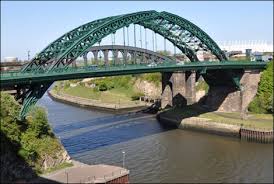

What seems to have swung it for leave were three things: 60% of Tory voters (i.e. excluding those who had already defected to UKIP in 2015) ignored their party leadership and voted out; around a third of Labour and LibDem voters opted for out; and the increased turnout (to 72%) appears to have skewed heavily to leave (the irony of the Leave camp's protest at the extension of the voter registration deadline is that many of those who benefited from this slippage may have been Brexiteers). We can see this more clearly if we examine a specific local authority area. As it was an early and strong result (62/38 for leave), I'm going to look at Sunderland in more detail. This comprises three parliamentary constituencies: Sunderland Central (an unhip small city), Washington & Sunderland West (a 70s new town and the Nissan car works), and Houghton & Sunderland South (a group of former pit villages).

Assuming the split in local sentiment matched YouGov's national exit poll (i.e. Labour votes broke 65% for remain while Tories broke 61% for leave), the 2015 General Election result would have predicted a total remain vote of 55,996. The actual vote was 51,930, suggesting Sunderland was marginally more leave than the rest of the country, which is credible. The projected leave figure on the same basis would have been 61,502, so Sunderland was already due to deliver a 52/48 leave vote based on the opinion polls (i.e. 62k to 56k). The actual leave vote was a stonking 82,394. The reason the final result saw a further 10% swing to 62/38 was partly due to the demographic factors emphasised by the pollsters and media - i.e. being in the North, poorer and less educated - but this only explains 4k out of a 21k increment. The reason leave won handsomely was because they captured most of the increased turnout, which went up 19k from 56% in 2015 to 65% (so 62 + 4 + 16 = 82).

In other words, Labour appears to have been successful in getting out the bulk of its "core" vote, if by that we mean those who have reliably voted for it over the last 15 years. The "Sunderland problem" is that Labour's combined vote across the 3 constituencies dropped from 85,187 in 1997 to 63,234 in 2001 (it was 62,655 in 2015), reflecting a decline in turnout from 60% to 49%. Nationally, Labour's vote went from 13.5m to 10.7m between the two general elections as turnout crashed from 71% to 59%. There has been a gradual recovery since, to 66% nationally and 56% in Sunderland (being safe seats, turnout tends to be lower that the national average). The 22k voters that went missing in 2001 appear to have initially abstained and then gradually drifted to the Tories and UKIP over the course of the 00s (the non-Labour vote grew from 35k in 1997 to 55k by 2015). Had they stayed with Labour and mirrored the polls, remain would have won. Insofar as there is a Labour "contribution" problem, this stems from desertion after 1997, not Corbyn's qualified enthusiasm.

The most striking correlation of the vote is with social attitudes. Leavers unsurprisingly regard immigration as a bad thing, but also multiculturalism, liberalism and feminism, and they are mostly nostalgic about the past and pessimistic about the future. In other words, they tend to be conservatives or even reactionaries. I'm dealing in net figures here, so it would be wrong to conclude that there are twenty thousand people in Sunderland who had their hopes of a revived social democracy dashed by Blair and consequently drifted to the political right thereafter. However, there is probably some truth in that story if we remember that the Labour Party was not particularly liberal in its social attitudes until the 1980s and that those influences didn't fully penetrate the North East until a decade or more later. Nationally, we can also surmise that the recovery to a turnout level last seen in the 90s was helped by the return of the four million conservative and reactionary voters who deserted the Tories in 1997 (from 14m in 1992 down to 9.6m) and who had yet to fully reappear in subsequent general elections.

The conclusion is that Labour has lost a chunk of its "traditional support" in the North and Midlands, but that this loss occured around the millennium and has little to do with either Ed Miliband or Jeremy Corbyn. Assuming this is a socially illiberal tranche, the idea that it can be won back by pandering to xenophobia or reviving some notion of social authoritarianism is delusional (it didn't work in the Blair years). Nothing short of severe immigration controls and the suspension (or even reversal) of liberal social reform is likely to satisfy, which risks alienating Labour's actual "core" support, and it's probable that both of these approaches will be adopted with greater vigour and credibility by whatever political formation arises out of the Tory/UKIP right. A further conclusion is that the neoliberal makover of the Conservative Party, marrying economic and social laissez-faire, has failed (David Cameron implicitly recognised this in his valedictory comments on gay marriage this week).

The right can now see a route to power by energising those millions who deserted in 1997 and have since only reluctantly returned to the Tory fold or who have preferred exile in UKIP. But this will lead to countervailing losses. Big capital and liberal Tories are likely to seek common ground with other centrists, a thought that presumably excites Blairites who, thinking they have learned the lesson of the 80s, hope to do a reverse-SDP in which the left is expelled from the Labour Party on the grounds of deviationism, (unfounded) antisemitism and online incivility (Corbyn is presumably sitting tight not just to defend the will of party members but to resist the purge). The lasting legacy of Cameron, "the heir to Blair", might not be gay marriage but the revival of the Whigs. If both the Conservative and Labour parties split, the clamour for proportional representation (the technocrat's preference) will be deafening, which will please those perversely arguing that PR would have prevented the disaster of a perfectly proportional vote.

To this end, we can expect the liberal assault on "vulgar democracy" to continue. In today's Guardian, David Van Reybrouck advocates sortition (appointment of representatives by the drawing of lots) rather than the popular vote ("a blunt axe, wielded by disenchanted and poorly informed citizens"), citing ancient Athens as an ideal. What he fails to note is that the demos of Athens excluded women, slaves and immigrants, and only men over 30 could be office-holders (the electorate was around 10% of the population of Attica). As ever, this is the democracy of the better sort. Plato considered sortition a necessary evil ("in the hope of escaping in some degree from factions ... we are obliged to use the equality of the lot" - from Laws book 6), but he always insisted that politics should be based on the "distribution of natural equality among unequals" and so employ a method that "gives to the greater more, and to the inferior less". Little has changed in the attitude of the bulk of the political class.