I was initially optimistic about the outcome of the Greek debt crisis, reasoning that Syriza represented the best vehicle for genuine structural reform and therefore the completion of the country's long-delayed integration into the "Eurosystem", however I think I may have under-estimated the extent to which German conservatives have adopted a laager mentality since 2008, which has been evident in their increasingly vocal contempt for those, such as Syriza, whom they consider to be "impudent" in their criticism of the neoliberal/ordoliberal orthodoxy (a charge now being echoed by Greek conservatives). Oddly, this means the Germans are becoming more like the British in their attitude towards their fellow Europeans. Just as domestic eurosceptics assume that continentals don't fully understand such concepts as liberty, so the conservative core of the EU is now dismissive of the definitions of democracy and popular will current in the periphery.
Behind the caricatures and fantasy of the popular media, Britain's attitude to Europe has always been instrumental rather than idealistic, and seen as such by other European states. This gave us a reputation for being "high maintenance" long before Margaret Thatcher's handbag swung into action. It also led to a suspicion (at least on the part of the French) that La Perfide Albion, as a historic opponent of any form of continental union from the Holy Roman Empire onwards, would prefer Europe to remain weak and fractious, though after 1945 this was assumed to be driven more by the interests of US hegemony (sold domestically as "the special relationship") than the traditional balance of powers. That suspicion has largely evaporated as America has turned its focus towards Asia since the 90s and encouraged the EU to treat (and contain) Russia as a regional issue. A by-product of this has been the increasing marginalisation of the UK, both in Washington and "the chancelleries of Europe". The attitude of the French and Germans has evolved respectively from exasperation and indulgence to disinterest and polite boredom.
The decisive factor in the UK's attitude to Europe has always been the City of London. Big capital has been broadly pro, small capital broadly anti, leaving money capital the casting vote. The ideology of "global free trade" obscures the significance of the continent as the chief foreign market for London's financial services since the early 19th century. In the postwar era, with the sterling area entering its twilight, Europe was pretty much the only game in town. As the eurodollar markets developed in the 1960s, it became clear that closer political integration would be necessary to pre-empt the development of an "insider" competitor to London in any future union. The later growth of euroscepticism was fuelled in part by the City's embrace of globalisation once the US banks moved in after 1986 (Nigel Farage is a product of this era), however 2008 may have been the point at which the "buccaneering" conceit jumped the shark. It is now clear that the euro isn't going to be allowed to fail, and equally clear that banking union and future financial regulation will disadvantage any "outsider". This means that the City will probably plump for continued membership, with suitable "guarantees" over its operational independence.
Though it will be painful, a Grexit will be accommodated by the eurozone, and even a Brexit will be accommodated by the EU. Both have clearly been priced in, hence the willingness of the French and Germans to wind up Cameron by advocating moves towards a common EU Treasury while he is trying to "make nice". The caveat is that this indicates an acceptance that not all states will jump on the integration bus - i.e. a two-speed Europe is now official policy - with the eurozone "core" proceeding in lock-step and other EU states proceeding as they see fit. According to Angela Merkel: "we have always been able also to pursue a Europe at different speeds, to find opt-out solutions for example". This is pragmatic. Europe is neither an island nor as geographically and culturally consistent as North America. There are always going to be peripheral states that will require customised arrangements: Russia, Turkey, Switzerland, Norway etc. Extending this logic to states that are already members of the EU, but outside the eurozone, is no big deal, which is why a Brexit would not be as binary (and traumatic) as many think. But as Greece is finding, no such customisation will be tolerated within the eurozone.
However, Merkel's stance also glosses the actual history of the EU and in particular the tension, between a federalist vision of "ever closer union" and a sovereigntist one based on intergovernmentality and subsidiarity, that marked the decade up to Maastricht in 1991. The latter vision has become dominant, essentially because the fall of the Berlin Wall and the clamour for East European states to join the EU led to an acceptance that the greater economic variety required a "variable geometry" of integration (ironically, German reunification was much more idealistic than pragmatic). The pivotal moment was the paper, Reflections on Europe, produced by Karl Lamers and Wolfgang Schäuble in 1994. Though this continued to advance a federal vision, it was significant for proposing that EU integration should proceed with a "hard core" - essentially the traditional Franco-German axis and their closest allies - which acknowledged the impossibility of all Europe advancing as one for the foreseeable future. In other words: a looser arrangement for the EU as a whole, but more rapid integration for the core.
This hard core of the EU will inevitably be coterminus with the eurozone. Euro 2.0 will entail greater fiscal control by the EU to match monetary control, and the embedded ideology of that control will be neoliberal. The euro will be a means of disciplining nation states, as Greece is now finding. Another way of looking at this is that the hard core concept is a way of shoring-up the euro and making it resilient against future financial system shocks: fortress euro. That suggests a growing appetite to cut Greece loose as the "weakest link". The Greeks' miscalculation earlier this year was to assume that their eurozone peers would either acknowledge that their debts were unpayable and write them off (and encourage the IMF to do likewise), or extend-and-pretend in return for a sincere fiscal reform programme. Underlying this was the assumption that no one wanted Greece to leave the eurozone, either out of genuine pro-european solidarity or aversion to a setback for the common currency. That now looks like a misjudgement.
To write-off Greek debts would be to admit that Greece should never have been admitted to eurozone membership in the first place. This would stick in the craw of the other states that had to make sacrifices both in the lead up to the euro's launch and during the crisis of 2010-12. To push Greek repayments into the distant future would be to set a precedent for future fudges around fiscal responsibility, and would (at least in the mind of conservatives) raise the prospect of populist national governments "looting the EU treasury". This explains the salience of Greek pensions in popular mythology. In short, the EU core seems set on a policy of intolerance and obduracy until such time as the fiscal infrastructure of euro 2.0 is built and "good housekeeping" habits are internalised. The Greek miscalculation was encouraged by the reflationary noises made by Francois Hollande in France since 2012. In the event, he was unable to either significantly amend the fiscal pact or get agreement on a parallel growth pact. The German view simply steamrollered on. Both Hollande and Matteo Renzi of Italy continued to talk of "flexibility" up to late 2014, but both appear to have been called to order since then.
The history of the EU can be broken down into three, twenty-year periods: 1950 to 1970 focused on the free trade in goods - the original common market; 1970 to 1990 focused on the liberalisation of services, the harmonisation of goods and regional support; while the period between 1990 and 2010 shifted focus to accommodating growth eastwards. (As an aside, the commitment to the formation of the EU, including monetary union and social harmonisation, was made in 1972, ahead of the UK's 1975 referendum, so the claim that "we never voted for this" is specious). The Social Chapter of the 1991 Maastricht Treaty signalled the high-water-mark of "social Europe" and solidarity. Far from ushering in a mandatory regime of frogs' legs and siestas, this proved to be little more than the harmonisation of employment terms for big capital, hence the alacrity with which New Labour sidestepped John Major's opt-out and incorporated the provisions into statute in 1997.
The 1990-2010 period not only saw social policy gradually sidelined, it also saw the hegemony of neoliberalism, which moved the vocabulary of EU debate from cooperation to competition. This was reinforced by the particular circumstances of individual states as they responded to globalisation, such as the Harz reforms in Germany, which shifted the focus of economic development away from the liberalisation and infrastructure investment of the 1970-90 period towards labour market reform and wage repression. This turn inevitably undermined national welfare systems thereby eroding support for the nation state as the "container of social citizenship". As Étienne Balibar puts it, "In Europe today, therefore, the crisis of democratic legitimacy resides in the fact that national states have neither the means nor the will to defend or to renew the 'social contract', and the fact that the instances of the European Union are not predisposed to search for the forms and the contents of a social citizenship of a higher level".
Parallel to this, neoliberalism has also undermined the state through privatisation and marketisation, denigrating the public sector's motives and competence and calling into question the very idea of public service - i.e. that there might be a middle-ground between profit-seeking and charity. But this movement is not shrinking the state and marginalising it in our lives. Rather it is turning the state into the agent of privileged corporations that have growing control over us but who are increasingly beyond our control. The result is a collapse in loyalty to the state, which can be seen in the growing disillusion with the "political system", the compensatory affection for supra-state institutions - such as the NHS and the monarchy, the emergence of "national identities" that are anything but national (viz English vs British), and the increasing disregard for state integrity (the historic significance of May 2015 may be the death of conservative unionism and the consequent emergence of Scotophobia). This collapse in loyalty is both fed by and feeds the desire of the state to develop ever more thorough means of surveillance, which leads all too easily to the means of behavioural control and the direction of opinion.
Since 2010 we have obviously been in a new period of European history. Though it's early days, the outline is becoming clear: this will be the era in which EU policy is increasingly run in the interests of the core, with the periphery urged to adopt the "Berlin consensus" wholesale in the spirit of neoliberal competitiveness rather than any antiquated notion of international social solidarity. It looks like the Greek crisis will now be resolved in July. The delayed €1.6bn repayment to the IMF is not the problem. The real challenge is the €6.7bn of euros due to be repaid to the ECB in July and August, which just happens to be a little less than the €7.2bn being withheld by the Troika from the second bailout programme pending acceptable structural reforms. Shuffling the monies back and forth would open up negotiations for a third bailout, where the Greek government would focus on the necessity of write-offs as the quid pro quo for further reforms.
The question is whether Germany is holding out for better terms up-front, or whether it has no intention of agreeing to a write-off, come what may. I'm now in the latter, pessimistic camp. Either the Greek government will run up the white flag, leading to the split of Syriza and sending a clear message to other European states about the limits of democracy, or the Greeks will default. Alexis Tsipras's defiant speech to parliament today suggests that which way the Greek government jumps will now depend on popular reaction over the next few weeks: a call to democracy (which means people on the street as much as opinion polls) that must profoundly irritate the Troika. While the general assumption is that a default means Grexit, it could in fact result in neoliberal "special measures" whereby a Monti-like technocratic government takes over to impose EU-friendly reforms as the price of staying in the euro and guaranteeing small depositors. The risk for Syriza is that staying in the euro may trump all other considerations for enough Greeks to make this viable. In other words, the outcome is probably going to be the same whatever Alex Tsipras & co decide: the party of order wins.
Search
Friday, 5 June 2015
Monday, 1 June 2015
The Global Game
Arsenal's FA cup win has been described as evidence that they must now push on for the league title and a welcome reminder that "the sport we love" is about joy rather than bribes. That these two views were expressed by the TV broadcasters, who are the ultimate generators of the money that ends up in both player transfers and dodgy wire transfers, perfectly illustrates the psychosis of the sport. Despite being a season ticket-holder since the mid-80s, I didn't get a ticket in the ballot for the final (the odds were about 40%), my "seat" presumably being occupied by some other fan who paid a small fortune via the black market to the secretary of a non-league club (aka "the football family"). I'm sure the latter has conscientiously recycled the cash into a new set of kit, just as some of FIFA's largesse will have made its way through the sieve of intermediaries to fund an all-weather pitch in an African township. The Cup Final ticket allocation scam is an example of traditional English corruption, wholly unlike the bungs circulating among FIFA members.
Football is a gripping sport because goals are few and the team that scores is not necessarily the one that is on top. The grippingness didn't last long on Saturday. Despite a couple of late penalty shouts, Aston Villa were never really in the game. Arsenal controlled it and never looked in danger of not winning in normal time once Alexis Sanchez had scored the second goal. Wenger comprehensively out-thought Sherwood, and the Arsenal players showed no nervousness, unlike last year. In contrast, the Villa players looked tired from the kick-off and never really matched the Gunners' level of determination. My only disappointment was that "big Villa fan" David Cameron was otherwise engaged on the day - possibly discussing with Karen Brady how much more public money could be funnelled West Ham's way. As the match drew to a close, and the cameras picked up Randy Lerner bending the ear of the President of the FA (presumably saying "I'm out of here"), my thoughts turned to Friday's election to the post of President of FIFA and the oddity of another prince standing as the reform candidate.
FIFA reflects the state of global governance, which is why any exposure of its inner workings is unedifying, and why the product of nepotism can be advanced as the champion of probity. It was founded by the European powers in 1904, as part of the wider movement towards international technical coordination, but with a strong whiff of imperial soft-power about it. The UK (i.e. the four "home nations", but essentially England) has had a troubled relationship with the francophone organisation, marked by delusions of superiority and frequent sulking (out, in, out and then in again). The first twenty years were marked by volatile expectations of the positive, irenic impact of the sport on wider society - a style that lives on in the hyperbole of its modern PR and its love of fresh-faced, innocent children. The initial champagne toasts and goodwill to all mankind were dashed by World War One, then revived in the spirt of the League of Nations and post-war reconciliation, only to be further undermined by the strident nationalism of the twenties and thirties.
FIFA's history can be characterised as a simple echo of wider geopolitical forces, but this downplays the agency of the self-appointed elites who have dominated the organisation since day one, exemplified in the 1930s by their willing cooperation with Fascist Italy. The 1960s saw the temporary triumph of reaction, quite out of keeping with the times, as England's Stanley Rous became president, but the shifting geopolitical sands were evident both in the boycott of the 1966 World Cup tournament by the African nations, who had been denied a direct qualification place, and Rous's failure to get Apartheid South Africa readmitted as a FIFA member. The 1970s saw the emergence of two secular changes: the dominance of the developing world, as more countries joined the organisation, which provided the powerbase first for Joao Havelange and then Sepp Blatter; and the growth of revenues due to TV, which has transformed FIFA into a rent-seeking monopolist providing cash in exchange for influence (and presidential votes).
FIFA finds it difficult to hide its admiration for authoritarian regimes, from Junta-era Argentina to Putin's Russia. Much of the attraction of Qatar, beyond the bank transfers of uncertain purpose, is the ability of that country to build the required (and ultimately wasted) infrastructure through simple diktat. The deaths of construction workers are not a regrettable by-product: they're evidence of the sort of power that gives FIFA officials a hard-on. When Blatter & co talk about "legacy", they are dreaming the dream of Ozymandias, though as they showed with the US in 1994, guaranteed profits trump legacy. As an individual, Blatter may well be innocent of paying or receiving bribes, but then it's clear that what gets him out of bed is the adulation that the job brings: he's a power-junkie. His reputed $11 million salary can be seen as a cut provided by the grateful recipients of those bribes, but it can also be seen as a standard neoliberal reward for failure - i.e. turning a blind-eye to systemic abuse.
Much of the criticism Blatter is now facing is both legitimate and hypocritical, stemming from the failure of the England and US bids to host the 2018 and 2022 tournaments. From Blatter's perspective, the awards to Russia and a Middle Eastern state were not only politically logical, they addressed a historic imbalance. Of course, it would have made more sense footballistically (to borrow a Wengerism) to have awarded the tournament to the USSR in the 60s or 70s, and Egypt would be a more logical Middle Eastern location even now (cooler, more fans, handy for Ozymandian ruins etc). As a rent-seeker, FIFA will always go where the money is, which means either disguised state subsidies or guaranteed commercial revenues. The US Soccer Federation and the English FA know this perfectly well. They don't have a problem with corruption, so long at it isn't too overt and accords with bourgeois norms - so Mulberry handbags are an acceptable "gift", prostitutes are not. Their real gripe is that the growth of the global TV audience is reducing their relative importance to advertisers.
The attraction of a global sporting event - and the Olympics is the only serious competitor to the World Cup in this space - is that it allows global brands to reach a global audience. But this in turn means that the attractiveness is biased towards emerging markets where those brands can achieve above average growth. The US and Europe are saturated markets where advertising spend is focused on brand maintenance. The Middle East, Africa and Asia are markets where the potential return on each advertising dollar is much higher. They are also the growth areas targeted by global TV companies, such as Sky, for the same reason. The consequence is that the money wants to pile into emerging markets, which suits the "democratic" structure of FIFA (by the way, the perpetuation of the separate UK associations, not to mention minnows like San Marino and Andorra, owes a lot to the "rotten borough" indulgence of UEFA seeking to maximise its own bloc).
It is unlikely that there will be any break up of FIFA. A fragmented tournament would see a collapse in commercial value, and could also result in a general waning of interest, much as the FA Cup suffered after the launch of the Premier League. European clubs already complain about the demands of regional tournaments other than the Euros, so you could expect to see any inter-continental tournament quickly reduced to an 8-team exhibition. The FA Cup has partially re-established itself, but it has done so by becoming more TV-friendly: the final at 5:30, wall-to-wall nostalgia, aggressive international sales. For that most English of institutions, it has become more and more of a global event, with fans watching in sports bars from Wellington to Washington, cavorting in their replica shirts from Lagos to Kuala Lumpur. Saturday's goals were scored by an Englishman, a Chilean, a German and a Frenchman, all playing for a global brand. I'm perfectly happy with that, but I would like the opportunity to see it with my own eyes.
Football is a gripping sport because goals are few and the team that scores is not necessarily the one that is on top. The grippingness didn't last long on Saturday. Despite a couple of late penalty shouts, Aston Villa were never really in the game. Arsenal controlled it and never looked in danger of not winning in normal time once Alexis Sanchez had scored the second goal. Wenger comprehensively out-thought Sherwood, and the Arsenal players showed no nervousness, unlike last year. In contrast, the Villa players looked tired from the kick-off and never really matched the Gunners' level of determination. My only disappointment was that "big Villa fan" David Cameron was otherwise engaged on the day - possibly discussing with Karen Brady how much more public money could be funnelled West Ham's way. As the match drew to a close, and the cameras picked up Randy Lerner bending the ear of the President of the FA (presumably saying "I'm out of here"), my thoughts turned to Friday's election to the post of President of FIFA and the oddity of another prince standing as the reform candidate.
FIFA reflects the state of global governance, which is why any exposure of its inner workings is unedifying, and why the product of nepotism can be advanced as the champion of probity. It was founded by the European powers in 1904, as part of the wider movement towards international technical coordination, but with a strong whiff of imperial soft-power about it. The UK (i.e. the four "home nations", but essentially England) has had a troubled relationship with the francophone organisation, marked by delusions of superiority and frequent sulking (out, in, out and then in again). The first twenty years were marked by volatile expectations of the positive, irenic impact of the sport on wider society - a style that lives on in the hyperbole of its modern PR and its love of fresh-faced, innocent children. The initial champagne toasts and goodwill to all mankind were dashed by World War One, then revived in the spirt of the League of Nations and post-war reconciliation, only to be further undermined by the strident nationalism of the twenties and thirties.
FIFA's history can be characterised as a simple echo of wider geopolitical forces, but this downplays the agency of the self-appointed elites who have dominated the organisation since day one, exemplified in the 1930s by their willing cooperation with Fascist Italy. The 1960s saw the temporary triumph of reaction, quite out of keeping with the times, as England's Stanley Rous became president, but the shifting geopolitical sands were evident both in the boycott of the 1966 World Cup tournament by the African nations, who had been denied a direct qualification place, and Rous's failure to get Apartheid South Africa readmitted as a FIFA member. The 1970s saw the emergence of two secular changes: the dominance of the developing world, as more countries joined the organisation, which provided the powerbase first for Joao Havelange and then Sepp Blatter; and the growth of revenues due to TV, which has transformed FIFA into a rent-seeking monopolist providing cash in exchange for influence (and presidential votes).
FIFA finds it difficult to hide its admiration for authoritarian regimes, from Junta-era Argentina to Putin's Russia. Much of the attraction of Qatar, beyond the bank transfers of uncertain purpose, is the ability of that country to build the required (and ultimately wasted) infrastructure through simple diktat. The deaths of construction workers are not a regrettable by-product: they're evidence of the sort of power that gives FIFA officials a hard-on. When Blatter & co talk about "legacy", they are dreaming the dream of Ozymandias, though as they showed with the US in 1994, guaranteed profits trump legacy. As an individual, Blatter may well be innocent of paying or receiving bribes, but then it's clear that what gets him out of bed is the adulation that the job brings: he's a power-junkie. His reputed $11 million salary can be seen as a cut provided by the grateful recipients of those bribes, but it can also be seen as a standard neoliberal reward for failure - i.e. turning a blind-eye to systemic abuse.
Much of the criticism Blatter is now facing is both legitimate and hypocritical, stemming from the failure of the England and US bids to host the 2018 and 2022 tournaments. From Blatter's perspective, the awards to Russia and a Middle Eastern state were not only politically logical, they addressed a historic imbalance. Of course, it would have made more sense footballistically (to borrow a Wengerism) to have awarded the tournament to the USSR in the 60s or 70s, and Egypt would be a more logical Middle Eastern location even now (cooler, more fans, handy for Ozymandian ruins etc). As a rent-seeker, FIFA will always go where the money is, which means either disguised state subsidies or guaranteed commercial revenues. The US Soccer Federation and the English FA know this perfectly well. They don't have a problem with corruption, so long at it isn't too overt and accords with bourgeois norms - so Mulberry handbags are an acceptable "gift", prostitutes are not. Their real gripe is that the growth of the global TV audience is reducing their relative importance to advertisers.
The attraction of a global sporting event - and the Olympics is the only serious competitor to the World Cup in this space - is that it allows global brands to reach a global audience. But this in turn means that the attractiveness is biased towards emerging markets where those brands can achieve above average growth. The US and Europe are saturated markets where advertising spend is focused on brand maintenance. The Middle East, Africa and Asia are markets where the potential return on each advertising dollar is much higher. They are also the growth areas targeted by global TV companies, such as Sky, for the same reason. The consequence is that the money wants to pile into emerging markets, which suits the "democratic" structure of FIFA (by the way, the perpetuation of the separate UK associations, not to mention minnows like San Marino and Andorra, owes a lot to the "rotten borough" indulgence of UEFA seeking to maximise its own bloc).
It is unlikely that there will be any break up of FIFA. A fragmented tournament would see a collapse in commercial value, and could also result in a general waning of interest, much as the FA Cup suffered after the launch of the Premier League. European clubs already complain about the demands of regional tournaments other than the Euros, so you could expect to see any inter-continental tournament quickly reduced to an 8-team exhibition. The FA Cup has partially re-established itself, but it has done so by becoming more TV-friendly: the final at 5:30, wall-to-wall nostalgia, aggressive international sales. For that most English of institutions, it has become more and more of a global event, with fans watching in sports bars from Wellington to Washington, cavorting in their replica shirts from Lagos to Kuala Lumpur. Saturday's goals were scored by an Englishman, a Chilean, a German and a Frenchman, all playing for a global brand. I'm perfectly happy with that, but I would like the opportunity to see it with my own eyes.
Thursday, 28 May 2015
Executive Competence
Simon Wren-Lewis points out that one major political party in the recent general election was vocally anti-austerity, pro-immigration and pro-welfare - and they won big. The party, of course, was the SNP. While there are obviously other factors at play, this shows that a "leftish" stance in these three policy areas is no impediment to popularity. Assuming that Scottish exceptionalism is a myth, and that social attitudes are not so very different in Coatbridge and Chipping Norton, this suggests that Labour's electoral problem is less about left-versus-right than coherence and plausibility. What Blairites like Liz Kendall appear to have forgotten is that the popularity of New Labour in 1997 was not about being pro-business (which is not the same as neutralising the charge of being "anti-business"), but in offering the hope of greater competence and probity after years of ineptitude and sleaze. Lest we forget, aspiration was defined as a better education for all, not free schools for the sharp-elbowed.
Most people have no idea how the economy works, not because they're thick, but because they lack the interest, which in turn reflects the narrow focus of their own experience. Related to this, we instinctively understand microeconomics, but have to reason through the counterintuitive nature of much macroeconomics (e.g. the "paradox of thrift" is not that difficult to understand, but why would you even make the effort?). The result is that many of us rely on anecdata and media expressions of "confidence". The latter privileges not only business leaders, per Michal Kalecki, but media owners who can orchestrate the mood music. Structural factors such as investment and productivity are poorly understood and treated superficially in public debate. Instead, the media bias towards the human-scale of small businesses and commuters. In this environment, opinion on whether a party can be "trusted with the economy" is usually a proxy for wider executive competence rather than a judgement on fiscal or monetary policy, let alone industrial or commercial policy.
The classic modern example of this is the Tory victory in the April 1992 general election. This came on the back of the 1990-92 recession, which in turn had revealed the hubris of the Lawson Boom of the late 80s and undermined the claim that the UK economy had been transformed for the better under Margaret Thatcher. Despite the evidence of both long-term and short-term failure in the management of the economy, the Tories were rewarded with a majority of 21 seats. Though Labour had been ahead in the polls since 1989, its lead was slender during the period after Major succeeded Thatcher in November 1990, indicating that popular attitudes were little influenced by actual economic performance. All this changed after Black Wednesday in September 1992, when the UK was forced out of the European Exchange Rate Mechanism and the government was left looking incompetent. Not only did Labour quickly restore its lead in the polls, but the margin steadily grew, reaching double figures in 1993. It stayed that way until 1997.
Objectively, the Tory party is wholly undeserving of a reputation for economic competence. If you divide the great disasters of the last 100 years between those occasions when the government shot itself in the foot and those when it was the victim of external events, the greatest self-inflicted wounds were the result of foolhardy decisions by Tories, notably Churchill's return to the Gold Standard in 1925 and the ERM debacle. And those are just the uncontentious ones. Many would also cite Thatcher's monetarist experiment in the early 80s and the moratorium on council house-building, which, together with financial deregulation, condemned us to the structural weaknesses that are all too evident today. Similarly, Osborne and Cameron's "talking down" of the economy in 2010 ("we could end up like Greece") and advocacy of austerity ("expansionary fiscal contraction") was mendacious, negligent and wilfully stupid.
Labour has never been guilty of a policy decision in government as deluded or as damaging, which explains why many of the examples of Labour's incompetence turn out to be myths, such as Jim Callaghan's "Crisis, what crisis?" quote and Gordon Brown selling-off our gold reserves too cheaply. Labour's historic misfortune was to be in power during the two great global recessions, in 1929 and 2008. Its timid adherence to economic orthodoxy contributed to depression on the first occasion, while its flexibility and initiative were instrumental in stabilising the global situation during the second. Ironically, it was then undone again by its timidity in the aftermath, failing to adequately challenge the lurch to austerity in 2009-10. In contrast, David Cameron (Norman Lamont's bag-carrier at the time of Black Wednesday) appears to have absorbed the lesson of 1992 only too well, using the flimsiest of props (Liam Byrne's "no money" note) to bang home the message that Labour lacked executive competence. It's crass, but it works.
But perhaps a more robust defence of fiscal stimulus in 2010 by Labour would not have made any difference. The evidence suggests that the electorate punishes whoever was steering at the time, regardless of whether the crash was due to drunk-driving or another vehicle. It is the impression of not being in control that seems to matter most, hence the terminal damage of Black Wednesday. There are paradoxes aplenty. The neoliberal premise was that only by following a global orthodoxy could a government avoid accidents, but this orthodoxy demanded the ceding of much government control over the economy, which thereby increased the likelihood that an accident would be politically fatal. Gordon Brown's career in government was bookended by acts of letting go (the independence of the Bank of England in 1997) and intervention (the Keynsian resurgence of 2008-9), but it was the former that communicated the greater sense of control to the public.
The lesson for Labour is that a reputation for economic competence does not depend on cosying-up to business leaders or developing detailed plans for long term productivity improvements, even though both of these may have tactical value in occupying media bandwidth as well as strategic significance. The crucial factor is to avoid being on duty when the ship hits an iceberg. If you're off-duty, your priority is to point the finger and shout loudly about the incompetence of the other guy, with minimal regard to the facts. If Cameron and Osborne knew this, then I suspect that messrs Brown, Balls and Miliband did too. Was the intellectual lassitude of Labour after 2010 the result of this learned helplessness? Was the focus on the "double-dip" recession in 2012 evidence that Labour was waiting for the Tories to screw up, and was the "35% strategy" (assuming there actually was one) an acceptance from 2013 that a game-changing cock-up wasn't likely before the end of the parliament?
What this reading suggests is that Labour's fortunes may well revive simply because the Tories are likely to screw up, and because there isn't a credible alternative government beyond Labour. History tells us that the Conservative Party is prone to cavalier misjudgements, while Labour (absent external events) is cautious and risk-averse. George Osborne will not be able to blame future economic performance on the last Labour government (though I'm sure he'll try), while even the EU is no longer a credible excuse. The danger for Labour is that we've been here before, but the period in question was not the early 90s but the early 80s, when the Tories were able to exploit a war in the South Atlantic to build an unassailable poll lead despite a record of economic mismanagement that stood comparison with the early 1930s. Following Marx's maxim, "the first time as tragedy, the second time as farce", my money's on a border dispute over Berwick-upon-Tweed.
Most people have no idea how the economy works, not because they're thick, but because they lack the interest, which in turn reflects the narrow focus of their own experience. Related to this, we instinctively understand microeconomics, but have to reason through the counterintuitive nature of much macroeconomics (e.g. the "paradox of thrift" is not that difficult to understand, but why would you even make the effort?). The result is that many of us rely on anecdata and media expressions of "confidence". The latter privileges not only business leaders, per Michal Kalecki, but media owners who can orchestrate the mood music. Structural factors such as investment and productivity are poorly understood and treated superficially in public debate. Instead, the media bias towards the human-scale of small businesses and commuters. In this environment, opinion on whether a party can be "trusted with the economy" is usually a proxy for wider executive competence rather than a judgement on fiscal or monetary policy, let alone industrial or commercial policy.
The classic modern example of this is the Tory victory in the April 1992 general election. This came on the back of the 1990-92 recession, which in turn had revealed the hubris of the Lawson Boom of the late 80s and undermined the claim that the UK economy had been transformed for the better under Margaret Thatcher. Despite the evidence of both long-term and short-term failure in the management of the economy, the Tories were rewarded with a majority of 21 seats. Though Labour had been ahead in the polls since 1989, its lead was slender during the period after Major succeeded Thatcher in November 1990, indicating that popular attitudes were little influenced by actual economic performance. All this changed after Black Wednesday in September 1992, when the UK was forced out of the European Exchange Rate Mechanism and the government was left looking incompetent. Not only did Labour quickly restore its lead in the polls, but the margin steadily grew, reaching double figures in 1993. It stayed that way until 1997.
Objectively, the Tory party is wholly undeserving of a reputation for economic competence. If you divide the great disasters of the last 100 years between those occasions when the government shot itself in the foot and those when it was the victim of external events, the greatest self-inflicted wounds were the result of foolhardy decisions by Tories, notably Churchill's return to the Gold Standard in 1925 and the ERM debacle. And those are just the uncontentious ones. Many would also cite Thatcher's monetarist experiment in the early 80s and the moratorium on council house-building, which, together with financial deregulation, condemned us to the structural weaknesses that are all too evident today. Similarly, Osborne and Cameron's "talking down" of the economy in 2010 ("we could end up like Greece") and advocacy of austerity ("expansionary fiscal contraction") was mendacious, negligent and wilfully stupid.
Labour has never been guilty of a policy decision in government as deluded or as damaging, which explains why many of the examples of Labour's incompetence turn out to be myths, such as Jim Callaghan's "Crisis, what crisis?" quote and Gordon Brown selling-off our gold reserves too cheaply. Labour's historic misfortune was to be in power during the two great global recessions, in 1929 and 2008. Its timid adherence to economic orthodoxy contributed to depression on the first occasion, while its flexibility and initiative were instrumental in stabilising the global situation during the second. Ironically, it was then undone again by its timidity in the aftermath, failing to adequately challenge the lurch to austerity in 2009-10. In contrast, David Cameron (Norman Lamont's bag-carrier at the time of Black Wednesday) appears to have absorbed the lesson of 1992 only too well, using the flimsiest of props (Liam Byrne's "no money" note) to bang home the message that Labour lacked executive competence. It's crass, but it works.
But perhaps a more robust defence of fiscal stimulus in 2010 by Labour would not have made any difference. The evidence suggests that the electorate punishes whoever was steering at the time, regardless of whether the crash was due to drunk-driving or another vehicle. It is the impression of not being in control that seems to matter most, hence the terminal damage of Black Wednesday. There are paradoxes aplenty. The neoliberal premise was that only by following a global orthodoxy could a government avoid accidents, but this orthodoxy demanded the ceding of much government control over the economy, which thereby increased the likelihood that an accident would be politically fatal. Gordon Brown's career in government was bookended by acts of letting go (the independence of the Bank of England in 1997) and intervention (the Keynsian resurgence of 2008-9), but it was the former that communicated the greater sense of control to the public.
The lesson for Labour is that a reputation for economic competence does not depend on cosying-up to business leaders or developing detailed plans for long term productivity improvements, even though both of these may have tactical value in occupying media bandwidth as well as strategic significance. The crucial factor is to avoid being on duty when the ship hits an iceberg. If you're off-duty, your priority is to point the finger and shout loudly about the incompetence of the other guy, with minimal regard to the facts. If Cameron and Osborne knew this, then I suspect that messrs Brown, Balls and Miliband did too. Was the intellectual lassitude of Labour after 2010 the result of this learned helplessness? Was the focus on the "double-dip" recession in 2012 evidence that Labour was waiting for the Tories to screw up, and was the "35% strategy" (assuming there actually was one) an acceptance from 2013 that a game-changing cock-up wasn't likely before the end of the parliament?
What this reading suggests is that Labour's fortunes may well revive simply because the Tories are likely to screw up, and because there isn't a credible alternative government beyond Labour. History tells us that the Conservative Party is prone to cavalier misjudgements, while Labour (absent external events) is cautious and risk-averse. George Osborne will not be able to blame future economic performance on the last Labour government (though I'm sure he'll try), while even the EU is no longer a credible excuse. The danger for Labour is that we've been here before, but the period in question was not the early 90s but the early 80s, when the Tories were able to exploit a war in the South Atlantic to build an unassailable poll lead despite a record of economic mismanagement that stood comparison with the early 1930s. Following Marx's maxim, "the first time as tragedy, the second time as farce", my money's on a border dispute over Berwick-upon-Tweed.
Monday, 25 May 2015
Onwards and Upwards
And so the season finishes with Arsenal enjoying the giddy heights of third. Despite our points total dropping from 79 last season to 75 now, I think most observers consider this to be progress (the 5-season record is 68, 70, 73, 79, 75). In fact, the lack of the traditional nail-biting finish may well be to blame for the recent points slump, with the draw at Old Trafford pretty much signalling the end of our league season. The game against Sunderland saw the return of the old handbrake, while the spanking of West Brom was as close to beach football as you can get under the beady eye of Tony Pulis. Though it was amusing to see Wilshere's strike win the goal of the season poll on MOTD last night, the truth is that he'd have had his ankle kicked off in a truly competitive match. Talking of school's out, am I the only one who noticed the Stoke defence obligingly part for Steven Gerrard's consolation yesterday? He must have been sickened to hear that Lampard scored as well.
This stately progress obviously owes a lot to the inconsistency of Manure, Liverpool, the Spuds and Southampton, but that in turn highlights Arsenal's now perennial ability to produce consistent runs during the season. Between the loss at St. Mary's (1st January) and the home draw against Chelsea (26th April), we picked up 33 out of 36 points, with the blip at White Hart Lane being the only failure. If you divide the season into thirds (12, 13 and 13 games), Chelsea's tripartite record was: 32, 27, and 28 points. Arsenal's comparable record was: 17, 28 and 30. The contrast in fortunes over the first third pretty much determined the season's outcome. Mourinho's triumph was down to the careful husbanding of resources (they did well to avoid major injuries, particularly in defence) and the pragmatic preservation of that early lead. The charge of "boring" is legitimate but as irrelevant as Mourinho's diversionary media tactics. Chelsea were able to hang on because the challengers either started too far back (Arsenal) or were inconsistent (everyone else).
In the previous season we managed 28, 27 and 24 points, which shows that the falling off at the business end was not quite as pronounced as some fans thought at the time (it looked worse because of the marginally better performance by Citeh and Chelski and Liverpool's mad dash for the line). One extra win in the final third of the season would have evened up our points but would not have been enough to improve on fourth spot. Basically we were a couple of points short in the first two thirds of last season and 4 short in the final third. This season, an extra 12 points over the first third (i.e. 29) would have left us level on points with Chelsea, and it's reasonable to think that momentum and the prospect of the prize might have secured an extra 2 or 3 points over the last month. To challenge for the title, we need to average 29 points per third. We did that over the last two thirds of this season, which is why I think we have made progress, despite the lower final points tally.
This will remain the case even if we fail to win the Cup next Saturday. In fact, it's worth emphasising that our cup progress over these two seasons is indicative of improvement in the league, rather than a compensation in the manner of Hull or Villa, with the victories over Liverpool and Manure as psychologically important to the team's development as the league victory at Citeh. Whether we win or lose, the event should serve to sharpen the players' appetite for next season. The only real cloud on the horizon (and it's small one, to be honest) is the possible effect of the Copa America, specifically on Alexis Sanchez (David Ospina is less of a concern). As the host team, Chile will be expected to do well, which might mean up to 6 games, with the final on the 4th of July. Even our own Duracell bunny is going to look jaded after that so don't be surprised if he misses the new season start on the 8th of August.
In terms of the squad, the additions of Sanchez, Ospina, Welbeck, Gabriel and Debuchy have added depth, while Chambers and Bielik are sensible investments for the future. The pressure to buy this summer looks less intense, which might mean a record-breaking signature purchase, or it might mean three teenagers from Ligue 2. You never can tell with Wenger. Most fans think we need another goalkeeper, given the uncertainty over Szczesny and Ospina's recent regression (that Fabianski fella looks quite handy), though it's possible our last remaining Polish custodian might re-establish himself if he gets the nod for the FA Cup and plays a blinder. Many fans still feel we need another defensive midfielder: some balls to go with our Coq. Morgan Schneiderlin looks an obvious target and is of the age when he needs Campions League football if he is to progress further, though there are also rumours about the more all-action Arturo Vidal.
Contrary to popular belief, Per Mertesacker, who turns 31 later this year, can get slower and will. It's also worth noting that Koscielny, Debuchy and Monreal will all turn 30 by the end of next season. While we have excellent, proven young full-backs in Bellerin and Gibbs, we will start to look light at centre-back again unless Wenger is confident enough to promote Isaac Hayden alongside Gabriel as the backup plan. Talking of age, Rosicky's extension is surely a Peter Pan-esque exception to the usual rule and we can expect a few of the other older players to depart. Arteta might have another season in him, if only for ambassadorial and coaching reasons, but Flamini looks like he's ready for the vets league while Diaby at 29 has the legs of a 40-year-old. Santi Cazorla at 30 is also approaching the borderline, though I suspect Wenger wants to retain him to alternate with Jack Wishere.
The core younger players have generally progressed. Alex Oxlade-Chamberlain has had a season fragmented by injuries, but he has shown maturity in his few appearances. Both Ramsey and Wilshere are more intelligent and less predictable in their approach, which probably owes something to Wenger playing them "out of position" on the flanks, but may also reflect the influence of Ozil. The German can still risk the fans' ire with the slacker nonchalance that masks his scheming, but I think most observers (or at least those privileged enough to see him live, where you get a better sense of his spatial awareness) recognise he is a special talent. He's already built up a substantial YouTube archive of improbable passes, flicks and dummies that stands comparison with Denis Bergkamp. He's even started to win the odd challenge, which always elicits a cheer, though I doubt he'll ever progress to the red-card devilment the Dutchman was capable of. At 26 years of age, you suspect he has a golden season coming soon.
Theo Walcott has recovered his speed, while the timing of his runs has got better, but his control is still hit-and-miss. What also seems to have improved is his shooting, but he requires space to exploit this - which West Brom kindly provided yesterday - hence he may be less effective than the stronger Welbeck against a deep and obdurate defence. The positive is that Arsenal have a variety of contrasting attacking talents in these two plus Giroud and Sanchez. There are some fans who fancy an upgrade in the form of Raheem Sterling, though this ignores the similarity of the Liverpool player not with Walcott but with Sanchez. Despite the retro success of Harry Kane and Charlie Austin, I think Wenger is right to think that a modern strikeforce, particularly one that wants to progress in Europe, is a complementary combination of parts rather than a one-man show. This would, of course, explain the signing and limited use of Lukas Podolski. I'm not sure there is a rational explanation for Yaya Sanogo, though.
My predictions for this season (in December, just after we'd lost away to Stoke in miserable circumstances) were optimistic but reasonable:"My punt is third place in the league, just edging out Manure, and (with a bit of luck in the draw) last eight in Europe. We might even get back to Wembley in the FA Cup." We fluffed our lines in Europe, despite getting precisely the luck I'd hoped for, but otherwise I was bang on (just talk among yourselves for a minute while I preen). It's too soon to be making precise predictions for next season, but I do think we will get over 80 points for the first time since 2008 and we've got to crack that round-of-16 nut in the Champions League sooner or later.
This stately progress obviously owes a lot to the inconsistency of Manure, Liverpool, the Spuds and Southampton, but that in turn highlights Arsenal's now perennial ability to produce consistent runs during the season. Between the loss at St. Mary's (1st January) and the home draw against Chelsea (26th April), we picked up 33 out of 36 points, with the blip at White Hart Lane being the only failure. If you divide the season into thirds (12, 13 and 13 games), Chelsea's tripartite record was: 32, 27, and 28 points. Arsenal's comparable record was: 17, 28 and 30. The contrast in fortunes over the first third pretty much determined the season's outcome. Mourinho's triumph was down to the careful husbanding of resources (they did well to avoid major injuries, particularly in defence) and the pragmatic preservation of that early lead. The charge of "boring" is legitimate but as irrelevant as Mourinho's diversionary media tactics. Chelsea were able to hang on because the challengers either started too far back (Arsenal) or were inconsistent (everyone else).
In the previous season we managed 28, 27 and 24 points, which shows that the falling off at the business end was not quite as pronounced as some fans thought at the time (it looked worse because of the marginally better performance by Citeh and Chelski and Liverpool's mad dash for the line). One extra win in the final third of the season would have evened up our points but would not have been enough to improve on fourth spot. Basically we were a couple of points short in the first two thirds of last season and 4 short in the final third. This season, an extra 12 points over the first third (i.e. 29) would have left us level on points with Chelsea, and it's reasonable to think that momentum and the prospect of the prize might have secured an extra 2 or 3 points over the last month. To challenge for the title, we need to average 29 points per third. We did that over the last two thirds of this season, which is why I think we have made progress, despite the lower final points tally.
This will remain the case even if we fail to win the Cup next Saturday. In fact, it's worth emphasising that our cup progress over these two seasons is indicative of improvement in the league, rather than a compensation in the manner of Hull or Villa, with the victories over Liverpool and Manure as psychologically important to the team's development as the league victory at Citeh. Whether we win or lose, the event should serve to sharpen the players' appetite for next season. The only real cloud on the horizon (and it's small one, to be honest) is the possible effect of the Copa America, specifically on Alexis Sanchez (David Ospina is less of a concern). As the host team, Chile will be expected to do well, which might mean up to 6 games, with the final on the 4th of July. Even our own Duracell bunny is going to look jaded after that so don't be surprised if he misses the new season start on the 8th of August.
In terms of the squad, the additions of Sanchez, Ospina, Welbeck, Gabriel and Debuchy have added depth, while Chambers and Bielik are sensible investments for the future. The pressure to buy this summer looks less intense, which might mean a record-breaking signature purchase, or it might mean three teenagers from Ligue 2. You never can tell with Wenger. Most fans think we need another goalkeeper, given the uncertainty over Szczesny and Ospina's recent regression (that Fabianski fella looks quite handy), though it's possible our last remaining Polish custodian might re-establish himself if he gets the nod for the FA Cup and plays a blinder. Many fans still feel we need another defensive midfielder: some balls to go with our Coq. Morgan Schneiderlin looks an obvious target and is of the age when he needs Campions League football if he is to progress further, though there are also rumours about the more all-action Arturo Vidal.
Contrary to popular belief, Per Mertesacker, who turns 31 later this year, can get slower and will. It's also worth noting that Koscielny, Debuchy and Monreal will all turn 30 by the end of next season. While we have excellent, proven young full-backs in Bellerin and Gibbs, we will start to look light at centre-back again unless Wenger is confident enough to promote Isaac Hayden alongside Gabriel as the backup plan. Talking of age, Rosicky's extension is surely a Peter Pan-esque exception to the usual rule and we can expect a few of the other older players to depart. Arteta might have another season in him, if only for ambassadorial and coaching reasons, but Flamini looks like he's ready for the vets league while Diaby at 29 has the legs of a 40-year-old. Santi Cazorla at 30 is also approaching the borderline, though I suspect Wenger wants to retain him to alternate with Jack Wishere.
The core younger players have generally progressed. Alex Oxlade-Chamberlain has had a season fragmented by injuries, but he has shown maturity in his few appearances. Both Ramsey and Wilshere are more intelligent and less predictable in their approach, which probably owes something to Wenger playing them "out of position" on the flanks, but may also reflect the influence of Ozil. The German can still risk the fans' ire with the slacker nonchalance that masks his scheming, but I think most observers (or at least those privileged enough to see him live, where you get a better sense of his spatial awareness) recognise he is a special talent. He's already built up a substantial YouTube archive of improbable passes, flicks and dummies that stands comparison with Denis Bergkamp. He's even started to win the odd challenge, which always elicits a cheer, though I doubt he'll ever progress to the red-card devilment the Dutchman was capable of. At 26 years of age, you suspect he has a golden season coming soon.
Theo Walcott has recovered his speed, while the timing of his runs has got better, but his control is still hit-and-miss. What also seems to have improved is his shooting, but he requires space to exploit this - which West Brom kindly provided yesterday - hence he may be less effective than the stronger Welbeck against a deep and obdurate defence. The positive is that Arsenal have a variety of contrasting attacking talents in these two plus Giroud and Sanchez. There are some fans who fancy an upgrade in the form of Raheem Sterling, though this ignores the similarity of the Liverpool player not with Walcott but with Sanchez. Despite the retro success of Harry Kane and Charlie Austin, I think Wenger is right to think that a modern strikeforce, particularly one that wants to progress in Europe, is a complementary combination of parts rather than a one-man show. This would, of course, explain the signing and limited use of Lukas Podolski. I'm not sure there is a rational explanation for Yaya Sanogo, though.
My predictions for this season (in December, just after we'd lost away to Stoke in miserable circumstances) were optimistic but reasonable:"My punt is third place in the league, just edging out Manure, and (with a bit of luck in the draw) last eight in Europe. We might even get back to Wembley in the FA Cup." We fluffed our lines in Europe, despite getting precisely the luck I'd hoped for, but otherwise I was bang on (just talk among yourselves for a minute while I preen). It's too soon to be making precise predictions for next season, but I do think we will get over 80 points for the first time since 2008 and we've got to crack that round-of-16 nut in the Champions League sooner or later.
Thursday, 21 May 2015
The Strange Non-Death of Labour England
Labour's "historic defeat" has now been upgraded to an "existential threat". According to Jon Cruddas, who seems to have been as busy as Peter Mandelson, "I always thought that the 2010 election result was the worst defeat for Labour since 1918. It was worse than the crisis of 1931 and worse than 1983. But a week ago we suffered an even worse defeat than 2010, so this could be the greatest crisis the Labour party has faced since it was created. It is epic in its scale". This is hyperbole, not to mention a surfeit of numbers. 1931 saw the Labour leadership under Ramsay MacDonald desert the parliamentary party to form a coalition with the Tories and Liberals. In the ensuing election, Labour was reduced from 287 to 52 seats. Oddly, Cruddas also doesn't mention 1979, which was unquestionably the most pivotal defeat ever suffered by Labour. Some of the hype can be attributed to the collapse of Labour in Scotland, but the attitude of English and Welsh voters was more of a shoulder-shrug than a Glasgow kiss. If you want a picture of rejection, complete with bin-liners of clothes dumped in the street, look at the LibDems.
For John Gray, "The threat Labour faces today is larger and more genuinely existential than it has faced at any time in its postwar history. ... Ukip has emerged as the third party in the UK in terms of votes ... and in constituencies where it came second it might be capable of mounting a tough challenge to Labour in 2020". That "might" is doing a lot of work. UKIP is an unstable alliance of conflicting interests, not to mention egos, with little prospect of survival after the EU referendum. A narrow "in" vote might keep it going - Farage had little compunction about finessing his resignation, so ignoring the will of the people should be a doddle - but the idea that it will then supplant Labour as the official opposition to the Tories is far-fetched. The contradictions within UKIP between libertarians and conservatives, and between free-traders and protectionists, means that once the capstone of the EU is removed the edifice will start to crumble. Some working class voters in the North may be disenchanted with Labour, but there is little evidence they see UKIP as anything other than a passing protest vote.
Representative democracies tend to coalesce around two dominant parties through which society can conduct a dialogue about economic privileges, fiscal transfers and personal liberty. For there to be a genuine existential threat to one of them, there needs to be a credible third party waiting in the wings, much as Labour stood relative to the Liberals in 1918, and that party needs to be seen (if only temporarily) as a better vehicle for the views and interests of one of the dominant parties' supporters. Recent examples are the SNP supplanting Labour in Scotland and Syriza supplanting PASOK in Greece. Both insurgent parties succeeded because they detached the majority of voters from the older party. As Gray implicitly concedes, UKIP failed to do this at what is likely to be their electoral high-watermark, not least because Labour actually increased its vote share. The recent wipeout of the LibDems, together with the incoherence of UKIP, means that Labour retains the advantage as far as English and Welsh politics are concerned.
UKIP is often presented as evidence of a wider vulnerability of the centre-left to nationalist populism across Europe, though this requires categorising other essentially centre-left parties, such as the SNP and Syriza, as nationalist or at least expressions of "national self-respect". Genuine nationalist parties (i.e. ones that reject internationalism and indulge racism), like the Front National in France, have deep roots via twentieth century fascism and authoritarianism (e.g. Poujade and Vichy) back to the clerical reaction and anti-semitism of the nineteenth century. Though the FN has expanded its "offer" to exploit the tensions of globalisation, it depends on a hard-core of well-organised ultras with long-standing influence in the state appartus (notably the police). It also depends on the prominence provided by a presidential system, which creates a focal point for the leader cult (despite the expectation that Marine Le Pen might, like her father, make the presidential run-off, her party has only two seats in the Legislative Assembly). This resilient milieu is lacking in England (the nearest equivalent would be Ulster loyalism), while the EU elections have provided only a weak plebiscitary opportunity, so the idea that Labour will evaporate as a parliamentary party in the face of the Farageprinzip is risible.
Some of this taste for the existential in Labour's fortunes springs from the opportunism of "modernisers" who see unfinished business in the links of the party with the trade unions. A couple of years ago, Martin Kettle, noting the common debt of Blair and Miliband to Eric Hobsbawm's 1978 critique, The Forward March of Labour Halted?, claimed that "the Labour party always has to transcend old failed labourism if it is to win and govern", which was a knowing misinterpretation of the old marxist's point about the structural inertia of the British labour movement. Hobsbawm traced the start of the halting process to the 1950s, encouraging the modernisers' tendency to see Labour as a product of the industrial age and thus bound for the same "post-fordist" scrap-heap ("post-industrialisation", "the new economy", and "the digital economy" are all examples of neoliberal teleology). But for all the talk about its roots in organised labour, and the salience of industrial relations in the 70s and 80s, Labour has predominantly been the party of tax and spend (i.e. fiscal transfers) throughout its history, a role it inherited from the Liberals.
The historic supplanting of the Liberal party by Labour reflected the transition from the nineteenth century economy (the concentration of capital through state intervention) to the twentieth century economy (the improvement of labour through state intervention). Just as free trade and empire gave us the Liberal party, so the welfare state gave us the Labour party. The Liberal party declined because it couldn't overcome the contradiction between its opposition to sectional interests and its suspicion of state power on the one hand, and the need to enable the collective management of labour for the benefit of capital on the other. As H G Wells put it, "It organises only because organisation is forced upon it by the organisation of its adversaries". It founded the welfare state, but was unable to mediate between capital and labour in the organisation of the economy (the near-coincidence of the People's Budget and Tonypandy were emblematic of this contradiction). Labour's success lay in combining state intervention in the social sphere (normalised for the middle classes by the Fabians) with support for autonomous labour power (i.e. unions and free collective bargaining).
The economic and geopolitical crisis of the 1970s saw the confluence of various, inter-related factors: increased international competition leading to manufacturing over-capacity and falling profitability; and the oil-price "shock", which triggered the growing unemployment and price rises of "stagflation". The solution in the 1980s was to use unemployment to restrain wage inflation, compensating mid-level workers through easier credit; reduce state intervention ("red tape") and taxes on business to grow profits; open up new sites of profit through privatisation; and offshore production to new labour markets (globalisation). The last of these, combined with the rapid advance of automation as the ICT revolution kicked in, has probably been the most profound as it led capital to the conclusion that it did not need to manage labour en masse any longer. The welfare state - the improvement of labour outside of the market system - was consequently downgraded and gradually absorbed into the market system itself. Once organised labour was defeated in the 80s, the Labour party found itself under pressure to ally with the progressive elements of capital (notably pro-EU multinationals) and rationalise the welfare state to meet capital's new priorities.
The charge of "labourism" - that the party was narrowly economistic, institutionally backward and socially conservative - suited the modernisers of New Labour because it supported the neoliberal proposition that the party should create the conditions for business to flourish, treat government as a species of management, and encourage a globalised liberal culture free of localised social obligations. In truth, labourism died in the 1970s. The SDP split, the failure of the Bennites in the 80s, and the success of New Labour in the 90s were all institutional responses to its demise, variously advocating a bourgeois European party, a sentimental popular front, and an Americanised election-winning "machine". Despite the silly propaganda about "Red Len" McCluskey, there was no return to labourism under Ed Miliband and no suggestion that the party was about to rediscover the socialism that had lain dormant for a century.
The role of the state changed during the neoliberal era to that of a talent-spotter (the "enabling state"), maximising the input of potential (hence the focus on education), but then acting as a filter to separate the compliant and profitable from the growing army of the economically redundant. Welfare has become a series of "tests" as opposed to entitlements, extending the success/failure paradigm now routinely applied to all public services. Job polarisation has increased the rewards to skill at the top-end of the labour "market", but it has also reduced the value of state subsidies at the bottom-end, in the eyes of big capital, hence the relentless focus on reducing "welfare bills" and the demonisation of the underclass. The problem is that more backward forms of capital - e.g. small businesses and landlords - remain wedded to state subsidies, in the form of in-work benefits, making it impossible for governments to radically "shrink the state". Despite 40 years of rhetoric, the extent of state intervention has barely changed even if its composition has (e.g. council housebuilding has given way to Ofsted).
The modern economy is characterised by endemic labour insecurity, the poor performance of the newer service sector relative to the older manufacturing sector, and the increase in those dependent on state benefits to top-up or replace wages (from 20% of working-age households in the late 70s to 38% now). We're seeing signs not merely of secular stagnation but of saturation in the service sector as technology serves to depress aggregate productivity. As Andrew McAfee puts it (explaining why "lousy productivity growth is entirely compatible with strong tech progress"), "lots of automation in manufacturing" may be driving "lots of jobs growth in the low-productivity service sector" and "sluggish overall demand growth". While wages remain low, the service sector has little incentive to automate, so investment is weak, aggregate demand is weak, in-work benefits are high, and job growth is biased towards low-wage and precarious roles. This in turn means inefficient use of skills in the short-term (e.g. baristas with PhDs), and a potential worsening of skills composition over the longer term (i.e. it makes less sense to invest in a PhD in the first place).
The existential question for Labour is whether the current transition - to an economy characterised by job polarisation and a surplus of cheap labour - requires a different political formation. Rachel Reeves's comment that "We don’t want to be seen, and we’re not, the party to represent those who are out of work" suggests not yet - i.e. the party remains focused on those who "aspire" to an improved life centred on work (ironically, labourism lives on in the neoliberal insistence that work is liberating). The financial crisis showed the limits of neoliberalism, but neoliberal hegemony remains intact. As it stands, there is little likelihood of Labour fundamentally changing its tune, but that is not in itself a vulnerability. None of the "challenger" parties has any real idea how to address these contemporary structural issues. The Greens have come closest, perhaps because their politics encourages imagination about the future, but their confusion over a basic income suggests that they remain trapped in the contradictions of their philosophy. The LibDems have no answer to the plight of the low-paid beyond a self-defeating increase in the tax-free allowance, while UKIP's insistence that low wages are solely the fault of immigrants isn't going to garner mass support.
It is easy to overdo the pessimism. Bill Mitchell reckons that "the Labour-type parties, given their historical charters, have now run out of meaning. They neither serve the working class (in its various states of employment and unemployment) nor capital and are thus expendable for both." Clearly, New Labour did serve capital well, and it even made some real improvements for society at large in terms of reducing pensioner and child poverty and repairing the fabric of public services. The problem is that this looks insufficient in an era in which the electorate is increasingly frustrated. This is not just a centre-left issue, but one for both main parties. Labour and the Conservatives have seen their combined vote share decline from a peak of 96% in 1955 to the point today where they each expect to secure roughly one third of the vote. Since 2005, no party has exceeded 40%, with the largest securing around 36% and the losers settling around 30%. In the context of recent history, a 35% strategy actually looks perfectly reasonable. In 1979, Labour lost the election with 36.9% of the vote. In 2015, the Tories won the election with precisely the same share.
Though there are now more alternative parties to the traditional big two, they tend to be variations on a communitarian theme, which is often styled as "nationalist" but can just as easily identify with another "higher power" such as the environment. John Gray is surely right to see this as partly a "reaction against the upheavals of globalisation" and the loss of autonomy. In this sense, UKIP, the SNP, Plaid Cymru and the Greens have much in common, and are categorically different to the racist nationalism of old exemplified by the NF and BNP, despite the strain of bigotry among UKIP members and supporters (in reality, no worse than unpolished Tories). Their differences, which are essentially tonal, reflect their supporters' anxieties, thus UKIP promise a better yesterday, with a default policy of "Whatever it is, I'm against it". This has obvious limitations as the basis for a majoritarian platform. Nigel Farage turning the dial up to 11 isn't going to get UKIP over the line across the North.
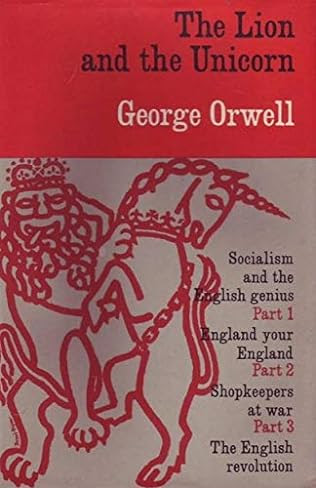
In contrast to the Kippers' brand of John Bull nationalism, the charm of "civic nationalism", of the type embodied by the SNP and now advocated by Blue Labour, is that it allows us to construct a national identity that is simultaneously nostalgic and forward-looking, internationalist and socially cohesive. It's really just a sentimental rerun of our greatest hits, from Orwell's The Lion and the Unicorn to the 2012 Olympics. But this is too diffuse to form a coherent political position on its own, as opposed to providing a veneer of self-deprecating patriotism that can accommodate both Jeremy Clarkson and Billy Bragg. The more misanthropic critics concede that this imagined community is gone, if it ever existed, but reveal their sorrow by attributing blame to moral decline and consumerist triviality. For David Selbourne, "What was once a polity is now largely composed of rights-bearing isolates, wheeling their trolleys through a shopping mall in unending file." The truth lies somewhere in between: we were never as homogenised a community as the myth has it, but we are not as atomised as the modern Cassandras believe.
For John Gray, "The threat Labour faces today is larger and more genuinely existential than it has faced at any time in its postwar history. ... Ukip has emerged as the third party in the UK in terms of votes ... and in constituencies where it came second it might be capable of mounting a tough challenge to Labour in 2020". That "might" is doing a lot of work. UKIP is an unstable alliance of conflicting interests, not to mention egos, with little prospect of survival after the EU referendum. A narrow "in" vote might keep it going - Farage had little compunction about finessing his resignation, so ignoring the will of the people should be a doddle - but the idea that it will then supplant Labour as the official opposition to the Tories is far-fetched. The contradictions within UKIP between libertarians and conservatives, and between free-traders and protectionists, means that once the capstone of the EU is removed the edifice will start to crumble. Some working class voters in the North may be disenchanted with Labour, but there is little evidence they see UKIP as anything other than a passing protest vote.
Representative democracies tend to coalesce around two dominant parties through which society can conduct a dialogue about economic privileges, fiscal transfers and personal liberty. For there to be a genuine existential threat to one of them, there needs to be a credible third party waiting in the wings, much as Labour stood relative to the Liberals in 1918, and that party needs to be seen (if only temporarily) as a better vehicle for the views and interests of one of the dominant parties' supporters. Recent examples are the SNP supplanting Labour in Scotland and Syriza supplanting PASOK in Greece. Both insurgent parties succeeded because they detached the majority of voters from the older party. As Gray implicitly concedes, UKIP failed to do this at what is likely to be their electoral high-watermark, not least because Labour actually increased its vote share. The recent wipeout of the LibDems, together with the incoherence of UKIP, means that Labour retains the advantage as far as English and Welsh politics are concerned.
UKIP is often presented as evidence of a wider vulnerability of the centre-left to nationalist populism across Europe, though this requires categorising other essentially centre-left parties, such as the SNP and Syriza, as nationalist or at least expressions of "national self-respect". Genuine nationalist parties (i.e. ones that reject internationalism and indulge racism), like the Front National in France, have deep roots via twentieth century fascism and authoritarianism (e.g. Poujade and Vichy) back to the clerical reaction and anti-semitism of the nineteenth century. Though the FN has expanded its "offer" to exploit the tensions of globalisation, it depends on a hard-core of well-organised ultras with long-standing influence in the state appartus (notably the police). It also depends on the prominence provided by a presidential system, which creates a focal point for the leader cult (despite the expectation that Marine Le Pen might, like her father, make the presidential run-off, her party has only two seats in the Legislative Assembly). This resilient milieu is lacking in England (the nearest equivalent would be Ulster loyalism), while the EU elections have provided only a weak plebiscitary opportunity, so the idea that Labour will evaporate as a parliamentary party in the face of the Farageprinzip is risible.
Some of this taste for the existential in Labour's fortunes springs from the opportunism of "modernisers" who see unfinished business in the links of the party with the trade unions. A couple of years ago, Martin Kettle, noting the common debt of Blair and Miliband to Eric Hobsbawm's 1978 critique, The Forward March of Labour Halted?, claimed that "the Labour party always has to transcend old failed labourism if it is to win and govern", which was a knowing misinterpretation of the old marxist's point about the structural inertia of the British labour movement. Hobsbawm traced the start of the halting process to the 1950s, encouraging the modernisers' tendency to see Labour as a product of the industrial age and thus bound for the same "post-fordist" scrap-heap ("post-industrialisation", "the new economy", and "the digital economy" are all examples of neoliberal teleology). But for all the talk about its roots in organised labour, and the salience of industrial relations in the 70s and 80s, Labour has predominantly been the party of tax and spend (i.e. fiscal transfers) throughout its history, a role it inherited from the Liberals.
The historic supplanting of the Liberal party by Labour reflected the transition from the nineteenth century economy (the concentration of capital through state intervention) to the twentieth century economy (the improvement of labour through state intervention). Just as free trade and empire gave us the Liberal party, so the welfare state gave us the Labour party. The Liberal party declined because it couldn't overcome the contradiction between its opposition to sectional interests and its suspicion of state power on the one hand, and the need to enable the collective management of labour for the benefit of capital on the other. As H G Wells put it, "It organises only because organisation is forced upon it by the organisation of its adversaries". It founded the welfare state, but was unable to mediate between capital and labour in the organisation of the economy (the near-coincidence of the People's Budget and Tonypandy were emblematic of this contradiction). Labour's success lay in combining state intervention in the social sphere (normalised for the middle classes by the Fabians) with support for autonomous labour power (i.e. unions and free collective bargaining).
The economic and geopolitical crisis of the 1970s saw the confluence of various, inter-related factors: increased international competition leading to manufacturing over-capacity and falling profitability; and the oil-price "shock", which triggered the growing unemployment and price rises of "stagflation". The solution in the 1980s was to use unemployment to restrain wage inflation, compensating mid-level workers through easier credit; reduce state intervention ("red tape") and taxes on business to grow profits; open up new sites of profit through privatisation; and offshore production to new labour markets (globalisation). The last of these, combined with the rapid advance of automation as the ICT revolution kicked in, has probably been the most profound as it led capital to the conclusion that it did not need to manage labour en masse any longer. The welfare state - the improvement of labour outside of the market system - was consequently downgraded and gradually absorbed into the market system itself. Once organised labour was defeated in the 80s, the Labour party found itself under pressure to ally with the progressive elements of capital (notably pro-EU multinationals) and rationalise the welfare state to meet capital's new priorities.
The charge of "labourism" - that the party was narrowly economistic, institutionally backward and socially conservative - suited the modernisers of New Labour because it supported the neoliberal proposition that the party should create the conditions for business to flourish, treat government as a species of management, and encourage a globalised liberal culture free of localised social obligations. In truth, labourism died in the 1970s. The SDP split, the failure of the Bennites in the 80s, and the success of New Labour in the 90s were all institutional responses to its demise, variously advocating a bourgeois European party, a sentimental popular front, and an Americanised election-winning "machine". Despite the silly propaganda about "Red Len" McCluskey, there was no return to labourism under Ed Miliband and no suggestion that the party was about to rediscover the socialism that had lain dormant for a century.
The role of the state changed during the neoliberal era to that of a talent-spotter (the "enabling state"), maximising the input of potential (hence the focus on education), but then acting as a filter to separate the compliant and profitable from the growing army of the economically redundant. Welfare has become a series of "tests" as opposed to entitlements, extending the success/failure paradigm now routinely applied to all public services. Job polarisation has increased the rewards to skill at the top-end of the labour "market", but it has also reduced the value of state subsidies at the bottom-end, in the eyes of big capital, hence the relentless focus on reducing "welfare bills" and the demonisation of the underclass. The problem is that more backward forms of capital - e.g. small businesses and landlords - remain wedded to state subsidies, in the form of in-work benefits, making it impossible for governments to radically "shrink the state". Despite 40 years of rhetoric, the extent of state intervention has barely changed even if its composition has (e.g. council housebuilding has given way to Ofsted).
The modern economy is characterised by endemic labour insecurity, the poor performance of the newer service sector relative to the older manufacturing sector, and the increase in those dependent on state benefits to top-up or replace wages (from 20% of working-age households in the late 70s to 38% now). We're seeing signs not merely of secular stagnation but of saturation in the service sector as technology serves to depress aggregate productivity. As Andrew McAfee puts it (explaining why "lousy productivity growth is entirely compatible with strong tech progress"), "lots of automation in manufacturing" may be driving "lots of jobs growth in the low-productivity service sector" and "sluggish overall demand growth". While wages remain low, the service sector has little incentive to automate, so investment is weak, aggregate demand is weak, in-work benefits are high, and job growth is biased towards low-wage and precarious roles. This in turn means inefficient use of skills in the short-term (e.g. baristas with PhDs), and a potential worsening of skills composition over the longer term (i.e. it makes less sense to invest in a PhD in the first place).
The existential question for Labour is whether the current transition - to an economy characterised by job polarisation and a surplus of cheap labour - requires a different political formation. Rachel Reeves's comment that "We don’t want to be seen, and we’re not, the party to represent those who are out of work" suggests not yet - i.e. the party remains focused on those who "aspire" to an improved life centred on work (ironically, labourism lives on in the neoliberal insistence that work is liberating). The financial crisis showed the limits of neoliberalism, but neoliberal hegemony remains intact. As it stands, there is little likelihood of Labour fundamentally changing its tune, but that is not in itself a vulnerability. None of the "challenger" parties has any real idea how to address these contemporary structural issues. The Greens have come closest, perhaps because their politics encourages imagination about the future, but their confusion over a basic income suggests that they remain trapped in the contradictions of their philosophy. The LibDems have no answer to the plight of the low-paid beyond a self-defeating increase in the tax-free allowance, while UKIP's insistence that low wages are solely the fault of immigrants isn't going to garner mass support.
It is easy to overdo the pessimism. Bill Mitchell reckons that "the Labour-type parties, given their historical charters, have now run out of meaning. They neither serve the working class (in its various states of employment and unemployment) nor capital and are thus expendable for both." Clearly, New Labour did serve capital well, and it even made some real improvements for society at large in terms of reducing pensioner and child poverty and repairing the fabric of public services. The problem is that this looks insufficient in an era in which the electorate is increasingly frustrated. This is not just a centre-left issue, but one for both main parties. Labour and the Conservatives have seen their combined vote share decline from a peak of 96% in 1955 to the point today where they each expect to secure roughly one third of the vote. Since 2005, no party has exceeded 40%, with the largest securing around 36% and the losers settling around 30%. In the context of recent history, a 35% strategy actually looks perfectly reasonable. In 1979, Labour lost the election with 36.9% of the vote. In 2015, the Tories won the election with precisely the same share.
Though there are now more alternative parties to the traditional big two, they tend to be variations on a communitarian theme, which is often styled as "nationalist" but can just as easily identify with another "higher power" such as the environment. John Gray is surely right to see this as partly a "reaction against the upheavals of globalisation" and the loss of autonomy. In this sense, UKIP, the SNP, Plaid Cymru and the Greens have much in common, and are categorically different to the racist nationalism of old exemplified by the NF and BNP, despite the strain of bigotry among UKIP members and supporters (in reality, no worse than unpolished Tories). Their differences, which are essentially tonal, reflect their supporters' anxieties, thus UKIP promise a better yesterday, with a default policy of "Whatever it is, I'm against it". This has obvious limitations as the basis for a majoritarian platform. Nigel Farage turning the dial up to 11 isn't going to get UKIP over the line across the North.
In contrast to the Kippers' brand of John Bull nationalism, the charm of "civic nationalism", of the type embodied by the SNP and now advocated by Blue Labour, is that it allows us to construct a national identity that is simultaneously nostalgic and forward-looking, internationalist and socially cohesive. It's really just a sentimental rerun of our greatest hits, from Orwell's The Lion and the Unicorn to the 2012 Olympics. But this is too diffuse to form a coherent political position on its own, as opposed to providing a veneer of self-deprecating patriotism that can accommodate both Jeremy Clarkson and Billy Bragg. The more misanthropic critics concede that this imagined community is gone, if it ever existed, but reveal their sorrow by attributing blame to moral decline and consumerist triviality. For David Selbourne, "What was once a polity is now largely composed of rights-bearing isolates, wheeling their trolleys through a shopping mall in unending file." The truth lies somewhere in between: we were never as homogenised a community as the myth has it, but we are not as atomised as the modern Cassandras believe.
Despite the anguish of the general election result, Labour does not face an existential threat, though it does face a stiff challenge to unseat the Tories. Its position in Scotland cannot get any worse, and Plaid Cymru looks incapable of mounting an SNP-like challenge in Wales. Any revival in LibDem fortunes is likely to hurt the Tories more than Labour (i.e. centre-left deserters were probably more disgusted by the coalition and less likely to return). UKIP isn't going to reinvent itself as a social democratic alternative to Labour, and a nationalist party to the right of the Tories isn't going to graduate beyond a protest vote. Ironically, the genuine existential threat to the Labour party would be the desertion of the unions, not just because of the money but because of their organisational sinew, though this would probably just hasten the Blairite resurgence and the party's evolution into the British Democrats, dependent on big capital and City hedge-funds. There may be a vacancy for the Labour leadership, but there doesn't appear to be a vacancy for a centre-left party in English politics.
Subscribe to:
Posts (Atom)