Search

Friday, 17 December 2021

The Right to Have Rights

Citizenship is often referred to, in the words of Hannah Arendt, as the right to have rights, a phrase central to chapter 9 of The Origins of Totalitarianism ("The Decline of the Nation-State and the End of the Rights of Man"). She was highlighting a paradox: that the universal declaration of human rights was meaningless outside of the context of the nation state, whose rights were limited to the national citizenry and therefore not universal. Though this is actually a conservative argument that originates in Edmund Burke's condemnation of the universal ambitions of the French Revolution, it struck a chord in 1951 in a Europe still awash with displaced persons and a world struggling to come to terms with the establishment of the state of Israel: a development that both crystallised the national rights of Jews and immediately deprived many Palestinians of their own rights. It was also a reminder of the failings of the interwar period, with the denial of rights to national minorities and the institutionalisation of refugees through Nansen passports, as well as a pointer to the way that the developing Cold War would centre polemically on the rights of dissent and democratic representation (though it's worth noting here how little contemporary tragedies such as the partition of India seemed to inform the debate around rights and citizenship).

The paradox that Arendt noted remains at the heart of today's discourse on rights, for example in the British tension between the European Convention on Human Rights and the nebulous ideal of a "bill of rights" that would be a particular expression of the national genius (itself an ambiguous concept in a multi-national state whose original Bill of Rights in 1689 was distinctly sectarian). Arendt's resolution of the paradox, insofar as she advanced one, was that no one should be denied the right to be a member of some political community - that they shouldn't be made stateless - as without this foundational right there could be no other rights. This made a sort of sense during the Cold War, when the denial of political rights often led to exile and asylum claims were treated sympathetically, at least in the context of movement East to West if not South to North, but in the present the right to have rights is increasingly a qualified right applied within the borders of a national polity. This highlights that the issue of rights is about something more fundamental and persistent than the statelessness that emerged with the fragmentaion of the old European empires after 1918.

The core of the rights entailed by membership of the national community - or, to put it another way, the supreme rights of citizenship - are political rights. But this presents a problem that has been present since the formalisation of the liberal ideal of citizenship in the 17th and 18th centuries, namely that these rights were never regarded as universal (and nor was democracy associated with universal suffrage until well into the twentieth century). Not only was the 1689 Bill of Rights explicitly anti-Catholic, but the US Constitution of 1776 famously excluded native Americans and slaves from the national community while the 1789 Declaration of the Rights of Man and of the Citizen denied full political rights to women and also failed to abolish slavery (though its claims to universality were still enough to inspire the revolt in Haiti). Olympe de Gouge, author of the Declaration of the Rights of Women and the Citizen, argued that if "Women have the right to mount the scaffold, they must also have the right to mount the speaker's rostrum". She never made it to the National Assembly but she did meet the guillotine in 1793. 


This discrimination in political rights is seen today not only in the tangible form of citizenship apartheid, as practised in Israel (both de jure in the 2018 Basic Law and de facto in the occupied territories), or an insistence that particular minorities prove their loyalty as citizens, as many across the political spectrum in France are now demanding. It also takes the form of the disciplining of citizens through restrictions on their national rights up to and including expulsion, as in the UK's 2014 Immigration Act and the current Nationality and Borders bill. Though such extreme measures may be rare in practice, the establishment of the principle of the "sovereign right of expulsion" - that the state can administratively deprive you of your rights such that the outcome is no different to being driven out of the country at the point of a gun - means that the lesser qualification of political rights, such as the denial of the vote to prisoners or the introduction of mandatory IDs at the ballot box, can be framed as modest hygiene measures rather than part of a more general programme that seeks to restrict democracy.

Jacques Rancière's 2004 critique of Arendt centres on what he sees as her questionable separation of the realms of the political citizen and the stateless: the presumption that those denied the rights of citizenship are thereby excluded from engaging politically, such that denationalisation equates to depoliticisation. This obviously rests on a narrow definition of the political, which may have been tenable in the 1950s but seemed too restrictive by the 1970s and the flowering of a range of activism (anti-racism, feminism, gay rights) that sought to intervene in society directly rather than via the vector of formal politics. Arendt's position has been rescued to a degree by those who emphasise that her understanding of statelessness centred not simply on the loss of political presence but on "world-loss", the loss of a sense of belonging in a human community, and that it is this that has been resisted by the growth of solidarity.  Another way of looking at it is that Arendt's own experience of statelessness (from 1937 to 1950) as a haute bourgeois German Jewish intellectual led her to see it in terms of individual exclusion and flight, to the detriment of a recognition that most exclusions affect entire communities and many do not even result in physical displacement.

While nation states continue to offer meagre support to refugees and asylum-seekers, and while social solidarity remains fitful - oscillating between sentimentality and disinterest, the activism of supporters is significantly better than it was in the postwar years precisely because it has moved on from charity and a pious humanitarianism to political engagement and thus the assumption of rights. Parallel to this, there has been an increasing recognition that groups within society, otherwise secure in their citizenship, face restriction and even outright curtailment of their rights in a structural manner that cannot be divorced from the operation of the state. For example, that "The key insight behind Black Lives Matters activism is, after all, that black Americans cannot depend on their government to guarantee them the standard legal protections routinely enjoyed by white citizens." Paradoxically, as the global population has become more mobile due to the opportunities of globalisation and the imperative of advancing climate change, the right to have rights has increasingly been discussed in terms of the qualification of citizenship rather than its supersession. 
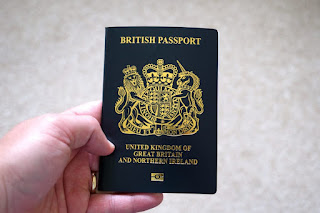

It is not remotely likely that the UK government will deprive six million people of their citizenship, but it is restricting the rights of that number. The idea that such fundamental rights could be qualified or taken away entirely gives rise to a pervasive sense of insecurity. This may express itself negatively in xenophobia and a lack of sympathy for refugees, but the causes are more to do with a fraying sense of social identity and the precariousness of employment and public services. A good example of this, and the anxieties it gives rise to, is the NHS. Being "free at the point of use" traditionally meant that it did not concern itself with the entitlement of those who sought its help. The introduction of an entitlement test, and the associated charging (more performative than effective), was partly driven by the creeping markestisation of the health service, but it also reflected the turn towards the idea that the NHS was the restricted right of the national community rather than a service operating on the principle of common humanity - i.e. that you had to be a legitimate citizen, not just a person in need of medical assistance. 

For a long time after 1945, rights were seen as a defence against the encroachment of the market into social relations. Not only could rights not be bought or bartered, but the realm of rights was conceived as being distinct and inviolable. Arendt's concern was that this realm ultimately depended on the nation state rather than any common humanity or the UN's hopeful declaration. The stateless were doubly disadvantaged - lacking rights and the right to have rights - but they could achieve rights once they crossed the border into citizenship. But this conception of a limited but secure realm of rights has given way under neoliberalism to an interpretation of rights as conditional privileges within the nation state. Universal human rights have not disappeared, but they are increasingly marginalised as someone else's concern ("We should look after our own first"), while their invocation has been reduced to a justification for military intervention by the West or a means by which the West ritually criticises other nation states for their "abuses". 

The idea of conditional privilege is a return to classical liberal thinking in which universality is no more than a rhetorical flourish that obscures a deliberate discrimination between the worthy and the unworthy, even when the latter are nominally included in the national community, such as women then and dual passport-holders now. This means that we have eroded the right to have rights. We may have and be able to exercise rights, but we no longer possess an absolute right to do so. That is because citizenship is now a privilege rather than a right, and a privilege that can increasingly be bought by the rich, and not just in the UK but in many countries around the world. Ironically, what is becoming universal is not the rights of man (or woman), but the privileges of wealth. The old ideal of a world state is slowly becoming a reality, but it will be a supranational state in which citizenship is strictly limited on an invitation-only basis. As Bong Joon Ho, the Korean director of the film Parasite puts it, "Essentially we all live in the same country called capitalism".

Friday, 10 December 2021

Blocking a Scene

A paradox of social media is that the leading brands are so associated with the individual personalities of their founders, notably Mark Zuckerberg at Facebook and Jack Dorsey at Twitter. In some ways, the desire to make these two otherwise uninteresting people the story reflects the comfort of old media commentators with the model of the domineering publisher that dates from over a century ago, much as the likes of the equally dull Jeff Bezos and Elon Musk are framed as Golden Age industrialists in the manner of John D Rockefeller and Andrew Carnegie, even if the conspicuous consumption of their wealth on space flight hardly compares with the more mundane philanthropy of the old robber barons. But it is nonetheless striking that a genuinely novel technology should still be thought of in terms that echo the anxieties of older media, from the pernicious effects of broadcasting (think of the various moral panics over cinema and TV) to monopoly (consider the desire to "break-up" the social media giants, as if they were comparable to the old telephone companies). Obviously the social isn't new, however amplified and extended by the technology, so perhaps this just reflects the perennial fear of the mob.

The announcement that Dorsey is to stand down as Twitter's CEO in order to spend more time with his payment platform, Square, and presumably invest further in crypto-currencies and blockchains (his new holding company, Block, is pretty suggestive), has been greeted as a sign that the micro-blogging business might start to grow and generate larger profits, but this is probably a vain hope. Twitter is not puny relative to Instagram and TikTok, let alone Facebook, because it doesn't have a good product or the company has been badly run but because it has a wholly different social function to those other platforms. As John Naughton recently summarised it through comparison: "Instagram is a way of combating boredom, endlessly scrolling in the hope of finding something interesting. A user in that frame of mind is more likely to be tempted by the prospect of an impulsive purchase. Twitter users, however, are not bored. Instead, they’re combative, annoyed, outraged or looking for a fight or a joke." This isn't quite Yeats's snobbish condescenion - "The best lack all conviction, while the worst are full of passionate intensity" - but it does subscribe to the idea that Twitter users are highly active, when in reality the overwhelming majority are passive spectators.

The point about the different platforms' relative value to advertisers is correct, but this is also a bit of a red herring. Twitter could probably do better commercially if it leant into its strengths: cultivating fierce loyalty and leveraging engagement. The reason why specialist magazines were traditionally able to command high advertising rates wasn't because of the size of the audience but because of its greater conversion potential, which reflected greater engagement. Twitter has the ability to create audiences with a deeper relationship, if smaller size, than its competitors. It should be charging commercial users for followers, not for promoted tweets. That it doesn't do so is probably down to Silicon Valley's limiting belief, normalised by Google, that advertising works best as a covert process that avoids the customer's conscious involvement. We all know that this doesn't actually work, even if it is more targeted than old-style blanket advertising. Who hasn't been stalked for weeks with adverts for a trivial product you were only ever likely to buy once, if at all? 

If we have to draw a parallel between Twitter and older media, it would perhaps be better to think of it in terms of those relatively low circulation but high status magazines and weekly newspapers that characterised the twentieth century, such as The New Yorker and The Economist. That might appear a bizarre comparison given the interactive, free-for-all and (largely) uncensored nature of the one and the elitist, broadcast and highly edited nature of the other, but then you have to ask why so many members of the contemporary intelligentsia (and the people who write for The Spectator) are to be found on both. And the answer is that combativeness that Naughton noted. Though they constantly deplore the incivility and trolling, it is clear that the luminaries of the established media cannot stay off Twitter. This is partly due to its strengths in breaking news, gossip and frivolity, but it is also because of its now almost unique ability to create a virtual public square in which ordinary civilians can answer back. It might not be Habermas's idealised public sphere, but it's pretty much all we've got now that so many formerly public squares, both literal and figurative, have been privatised.


Now you might think that this is the last thing that BBC journalists and Times columnists, not to mention bumptious human rights lawyers and members of the PLP, would want, but this is to ignore the power of the block, which has a very different function on Twitter than it does on other social media platforms. On the latter, blocking is something that is done routinely and without much comment: it's straightforward hygiene. On the former, blocking is a performative act, both in the sense that some habitual blockers will advertise the fact to their followers, with a detailed justification of the verdict, while those who are blocked for their derision or criticism will circulate a screengrab as a badge of honour. The difference in scale is also important, not only in the sense that Twitter is a relatively small platform but that it is only a very small fraction of the user base who actively engage with these elite (usually blue-tick) accounts, and that fraction tends to be atypical of both the user base and society at large. They have detached themselves from the crowd in the public square and thus put themselves in the firing line, and it's clear that the frisson of metaphorically pulling the trigger is an attraction for those who do the blocking.

At this point it's worth emphasising what I mean by the "intelligentsia". Broadly, this covers all those in society who are highly-educated and participate in debate on public affairs. The expansion of higher education since the 1960s, together with the greater opportunities afforded by social media since the millennium, means that this is a growing proportion of society. And this growth has been both absolute and relative. The passive readers of the traditional broadsheet press, a tiny fraction of whom might have engaged in letter-writing, have been replaced by a larger group of spectators who engage more regularly (if more superficially) through likes and retweets. The older sociology of the intellectual, such as Bourdieu's concept of the dominated-dominant (a dominated fraction of the dominant class), or Gramsci's idea of a class-specific "organic intellectual", can still apply to the core subset of the intelligensia who make a living out of the production or dissemination of cultural and symbolic capital, but it's clear that the outer layers have expanded and simultaneously become more engaged and thus critical of that core. 

This in turn has produced a counter-movement, particularly among those engaged in the production of politics, whom we might refer to as the clerisy, against what they see as the impertinence of "hipster analysis" or the incivility of the marginalised left. Twitter has become an important field in this conflict, arguably the most important (which is a symptom of the wider intelligentsia's structural weakness), hence the members of the clerisy are attracted to it as much because of their class interests (notice the regular emphasis on "solidarity" with fellow blue-ticks facing criticism) as their personal gratification. The current demand to end online anonymity, which is an important feature of Twitter, and the insistence that social media platforms do more to take down objectionable material (a demand that predictably reinforces the authoritarian), has emphasised how much the field has become one in which discipline has superseded any Habermassian notion of deliberation. In other words, the conflict is no longer between an exclusivist representative democracy and an inclusivist participatory democracy, as it arguably was in the 1980s and 90s, but between an unashamed epistocracy and a popular democracy in general retreat. 

While the choreography of this scene involves significant theoretical assaults on democracy, notably through the spectre of populism and the never-ending demands for a competent and virtuous centrism, it is mostly played out in social exchanges that emphasise hierarchy. Central to this is the role of political journalists and commentators. Where once this was, perhaps naively, thought of as a tribune-like mediation on behalf of the people against an over-mighty state and a weakening establishment, it is now clearly about the message management of that state and the defence of an establishment that has successfully absorbed the politico-media caste (mention of their incestuous relations is one of the quickest ways to earn a block). Twitter provides both the simulacrum of a public sphere that is genuinely democratic (again, anonymity is crucial to this) while also allowing those social hierarchies to be reinforced and performed through micro-punishments such as blocking and micro-rewards such as likes. It is a finely-balanced mechanism that will no doubt survive Jack Dorsey's departure. Whether democracy will survive is another matter.

Friday, 3 December 2021

Who Would Be Replaced?

As a conspiracy theory, the Great Replacement is no more credible than the Invasion of the Body Snatchers. You could even argue that the latter's story of an insidious menace (an ambivalent metaphor for either communism or McCarthyism in the original 1956 film) is a lot more credible and pertinent in its portrayal of an affectless society. But it is the former that is salient today. With this week's announcement by Eric Zemmour that he is to run for the French Presidency, the idea that France is under threat of being swamped by an alien culture has now achieved respectability among conservative politicians, a fact emphasised by the continuing lurch of les Républicains to the right. That Éric Ciotti wants a referendum "to stop mass immigration" and set up "a French Guantánamo bay" isn't in itself evidence of this lurch. Those are positions that would be supported by the current British Home Secretary and many centre-right politicians across Europe. But the renewed prominence of the big idea - first articulated by Renaud Camus in his 2011 book Le Grand Remplacement - and its deliberate yoking to the bogey of political correctness, certainly is. 


In effect, the politics of the Front National have been absorbed into the wider conservative worldview, but it looks like Marine Le Pen will not gain from this. That she has invested so much in the rebranding of her toxic party is not the least of the ironies here. That the chief beneficiary may well be a rightwing Jewish media intellectuel, a combination that would have infuriated Le Pen's father, is perhaps the greatest irony of all. In many ways Zemmour is a perfect example of the politico-media elite's ability to adapt, something we saw with the similar trajectory of Nigel Farage in the UK. That adaptation arises from both cynicsm and an innate sympathy, which was all too obvious in much of this week's coverage, despite the pearl-clutching by various liberal media types. The Spectator's already notorious interview with Zemmour was short and cursory: little more than a snatched conversation in which he rehearsed his standard lines. The way that this was filled out by the journalist's own musings was a classic case of projection. The magazine has little interest in French politics beyond its touch-points with the UK, with the notable exception of that French strain of Islamophobia and its delicious combination with the "war on woke".

Zemmour, with helpful prompting, makes this explicit: "This wokeness, he argues, is a kind of Trojan horse for the Islamification of formerly Christian nations. ‘It is by destroying our cultures, our history, that they make a clean sweep of all that and allow a foreign culture, history and civilisation to come and replace it.’" The metaphor suggests that wokeness is a covert plot, which distracts us from the non sequitur that imagines delicacy over pronouns is somehow advancing the cause of the Taliban. The idea that Islam might replace (or, shudder, "cancel") the canon of Western civilisation reflects a profound ignorance of Islamic culture, not least its role in preserving much of Greek and Roman art and science and its borrowings from both Judaism and Christianity. If there is to be a defining "clash of civilisations", this would clearly be between the West and the Far East, specifically China. But any objective analysis would admit that the West has already won that particular battle, hence China's embrace first of communism and then of capitalism, albeit with "Chinese characteristics", a formulation that is obviously defensive. So if Western civilisation is globally hegemonic, what is the Great Replacement conspiracy theory really about?

One insight is provided by the nihilistic literature of Michel Houellebecq. His novel Submission, which was partly-inspired by the fuss that Camus' earlier work of non-fiction had stirred, is obviously a fantasy, hence the importance that access to nubile women (a perennial concern of the writer) plays in the narrative. But it does highlight two themes that inform the theory of replacement: the decadence of the West and the connivance of self-interested elites. Since the book was published in 2015, there have been a number of seismic political shocks, notably Brexit and the election of Donald Trump, that have revived the liberal theory of populism. This diagnoses a pathology of political weakness and the vicious nature of the people, with their propensity for vulgar xenophobia and derision of meritocracy. Central to this theory is the idea that populists set the people against a notional and misrepresented elite. But this is a self-serving trope that helps to divert attention away from actual elites, something that was obvious in the pushback against the left in the US and UK (the equivalence of anticapitalism with anitsemitism was a frank, if inadvertant, admission of this). 

In other words, the great replacement theory centres on the elite and their decision to either resist or collaborate in the face of an external threat. This has obvious resonance in France, not only in respect of the Second World War but in the anti-totalitarian discourse of the 1970s and 80s. Arguably, it originates in the Dreyfus affair, which not coincidentally marked the emergence of the intellectual as a key figure in the drama of French politics. That the inheritors of the Gaullist tradition are now embracing a worldview previously limited to the inheritors of the Vichy tradition is remarkable, but what's perhaps more troubling is the claim that this is being driven by thinkers (Ciotti talks of Zemmour's "lucid analysis") rather than rabble-rousers. That le grand remplacement has been such a pronounced feature of French culture in recent years is perhaps less to do with the country's Muslim population and continuing interference in North Africa and more to do with the structural decline of the intellectual, a topic covered by Shlomo Sand's book The End of the French Intellectual, which includes biting critiques of Houellebecq and Zemmour.


Despite the best efforts of David Goodhart and Douglas Murray, there hasn't been the same embrace of the great replacement theory in Britain's salons. This probably owes as much to the different role of "thinkers" in the production and management of symbolic and cultural capital in this country as it does to any innate tolerance or scepticism. While national identity has been an acutely divisive issue for the French since the Revolution, the British preference has generally been to avoid the topic through strategic distractions such as empire and monarchy. With those having lost much of their charm recently (thanks, Wokeness!), and with the running sore of Scottish independence prompting a revival of English chauvinism, it looks like we may be heading in a similar direction, but I doubt this will be led by public intellectuals, marginal cases like Richard Dawkins' militant atheism aside. As recent cases such as the risible "martyrdom" of Kathleen Stock suggest, and as the continuing prominence of the ridiculous Jordan Petersen attests, the intellectual in Britain and North America is a cat's paw of the media rather than an original thinker, and as likely to be triviliased as promoted as a champion of free speech.

As Sand puts it, in the French context of a shift from Bourdieu and Foucault to Finkielkraut and Zemmour, "The time when intellectuals first acquired prestige and authority in the field of creation and research, only then appearing in the public sphere, belongs to a bygone past. The directors of the mainstream media can nowadays do without public figures with their own charismatic authority, whom they see as uncontrollable. They are satisfied with manufacturing their own intellectuals, in other words 'clerks' who refrain from direct criticism of today's real ruling elites, who know perfectly well where power really lies, and are always ready to accuse and crucify the misérables." In Britain, the anti-intellectualism of the establishment has always meant a slighter role for the thinker, but even here there has been a notable structural decline from the days when Bryan Magee could present a BBC series on philosophy or Stuart Hall on Caribbean history. Instead we now have a production line in which newspaper columnists and minor academics are promoted to radio and TV prominence purely on the basis of their reliably provocative but fundamentally pro-establishment views.

It isn't Christian or Western civilisation that faces replacement so much as the relative privilege of particular groups within society, and it is "wokeness" - the challenging of established privilege - that drives this fear rather than the prospect of mass conversion. Islamophobia is not simply the latest iteration of the demonisation of the "Other" and the construction of a narrow national identity. It also serves to buttress the elite defence of privilege through appeals to popular bigotry: we must defend the right of middle-aged men to patronise and insult whoever they want or else accept sharia law. But this is less to do with the petit-bourgeois defence of marginal economic status that has traditionally fuelled the political right and more to do with a particular age cohort for whom the advances of multiculturalism and feminism have represented the decline of traditional social hierarchies, hence the disproportionate prominence of these ideas in a media industry dominated by the male, pale and stale. 


The perversity of this is the way that an essentially reactionary politics has been transformed into a condemenation of Islam as a reactionary religion, which has allowed the right to adopt not only the language of the Enlightenment and secularism but of progressivism more generally, leading to a striking continuity between the extreme right and many soi-disant liberals. A particular characteristic of this continuity is the way that an ardent philosemitism, manifested in a reductive image of Israel, has become the corollary of Islamophobia. While antisemitism remains as strong as ever on the right (and not just the far-right), it has become more nuanced in its expression. The historic role of the Jew as the ultimate outsider and threat to national integrity has been obscured by the recent coinage of "Judeo-Christian civilisation": a historically illiterate notion that serves to represent Israel as an outpost of Western values. This may not be entirely effective in legitimising settler colonialism, but it is effective in persuading European and American liberals that they should support the status quo. And it is the status quo, and all that this entails in terms of privilege and exclusion, that lies behind the fantasy of the great replacement.

Friday, 26 November 2021

How the Left Might Win Inside the Labour Party

This is a follow-up to last week's post, Can the Left Win Inside the Labour Party? That was an essentially negative analysis, focused on the structural weaknesses of the party right in the context of historical decline. That decline encompassed both the wider Labour movement, seen in dwindling trade union numbers and a weakening of union authority within the party (the 2010 leadership election notwithstanding), and the decline in the establishment utility of the both the old Labour right after 1989 and the neoliberals after 2008. Though the 2016 EU referendum and its aftermath provided a springboard for the latter's bid for renewed relevance and ultimately helped secure the election of Keir Starmer as party leader, this came at the cost of highlighting the right's intellectual bankruptcy and manoeuvred them into a corner where 1990s nostalgia had to fill the void. This post is by way of a more positive analysis of the left's strengths and opportunities. But before I move on to that, it's worth recapping two of the key weaknesses of the right as these point to possibilities for the left. 

The most important is the fundamental distance between the mass of the membership and the Parliamentary Labour Party. In terms of political ideology, the contrast is between social democracy and economic liberalism, with social liberalism being the common ground, albeit offset by authoritarian instincts on the right. The PLP's marriage of social liberalism and economic liberalism has proved problematic. Not only has its disciplinary bent alienated many on the left, particularly among the young, but the contradictions between national sovereignty and globalisation have given rise to both an opportunistic and electorally-succesful Toryism and a popular disdain for social liberalism more generally (the so-called culture wars). The party right's attempt to reconcile this, through the emotionalism of Blue Labour or a doubling-down on economic liberalism (e.g. Keir Starmer and Rachel Reeves's current courting of business), have so far failed to capture the popular imagination. Ultimately the combination is unstable and there are grounds to believe that some on the Labour right intend to resolve this by marginalising the social liberalism, which means antagonising the party membership.

The second major weakness of the right is that the changes in the social composition of the Labour Party, both among the membership and the apparat, have made this ideological distance more difficult to bridge. This is not simply rephrasing the first point but highlights two sociological developments. The party membership has shifted towards greater social liberalism since the 1980s, in combination with a rejuvenated social democracy after 2008. In contrast, since the 1990s the PLP has increasingly drawn its members from a professional political class, nurtured in the upper echelons of the more conservative trade unions and "sensible" local government fiefdoms, that has strong personal relationships with the predominantly rightwing media. This twin movement has fuelled an atmosphere of mistrust and barely-concealed disdain in both directions between the membership and the PLP that clearly goes beyond the forever war against "Trots" or old Labour "behemoths". 

The most obvious evidence of this localised culture war is the current leadership's purge of the left, which has used the proxy of antisemitism, or proximity to those accused of antisemitism, to isolate and expel leftwing members. The point is not simply that the charge of antisemitism is usually false, but that the right feels the need to employ it at all. This is because an ideological attack on the left, in the manner of the struggle against Militant in the 1980s, would fail because the contemporary left are democratic socialists at worse, not Trotskyite entryists committed to the supersession of Labour as a bourgeois party by a genuine working class vanguard. While some of the expelled members are socialists, many are vanilla social democrats or even liberals with anti-imperialist sympathies. Objectively, the people currently being thrown out are well within the bounds of Labour's supposed broad church, including in their support for Palestinian rights.

To give him his due, Tony Blair does recognise that the underlying tension is ideological and is prepared to urge that Starmer expunges socialism from the Labour party altogether. But it is notable that this has led him to insist that Labour should reject "the wokeism of a small though vocal minority", which reflects both his starting position within an establishment still someway further to the right of Labour and even Starmer himself. The justification for this is another motivated polling report by Peter Kellner, for which Blair wrote a typically intemperate and self-regarding foreword. Kellner has followed the conventional wisdom of British political science in assuming a "decline in class-based voting" and its replacement by a politics centred on "the new divisions of age, education and culture". For all the insistence on clarity of purpose and direction, the analysis is incoherent and contradictory. Within four paragraphs of the executive summary Kellner assures us that both that "economics no longer trumps culture" and that "the people’s agenda today is primarily economic and social, not cultural". The Labour right remains in a transitional phase; not yet ready to claim it is the true conservative party: patriotic, trustworthy with the public finances and intolerant of progressive nonsense.

In straightforward electoral terms, the claim is that Labour can only win office by retaking the so-called Red Wall seats, specifically by winning back older, non-graduate voters, who hold socially conservative views. And the corollary to that is that Labour cannot do this if it too loudly proclaims the interests of its actual voting base: the socially liberal, the young and graduates, and of course the urban working class. But this is not simply a counsel of despair - assuming that older conservatives are the only decisive factor in Northern and Midlands seats outside the big cities - it is also perverse in its overt disdain for its most loyal supporters. It is this that provides the left within Labour with its most obvious route back to influence or even outright control: namely becoming the champion of the social progressivism that chimes with the membership. For all Starmer's efforts to simultaneously shrink the party and attract the likeminded, CLPs are not about to be taken over by an influx of Daily Express-reading pensioners, and many CLPs are clearly dismayed by the leadership's alacrity in adopting positions to the right of the Conservatives on topical subjects such as asylum and business-friendliness.

The second opportunity available to the left is the promotion of explicitly social democratic policies. In fetishising the socially conservative voter in Mansfield, the Labour right are careful to downplay that everyman's support for social democratic policies in the economic sphere, such as the nationalisation of utilities, higher taxes on the wealthy and a reversal of the marketisation and stealth privatisation of the NHS. The word "nationalisation" appears only once in the Kellner report, and that in a wholly negative vox pop ("So, I voted Conservative for the first time"). To put this in context, Blair's foreword mentions the "far left" four times. The fundamental problem for the Labour right remains its reluctance to embrace social democracy, old Labour nostalgia notwithstanding. This isn't because the Johnson government has occupied that particular space. None but a fool would imagine the Conservatives have become the party of the welfare state, or even of the developmental state committed to modernisation and public investment. The Labour right remains tied to the mast of neoliberalism (now reframed by Blair as riding the tiger of "the technology revolution"), and no one on the right appears to have a better alternative. 

Kellner, and presumably Blair, isn't  in denial about the public's appetite for social democracy, or even socialism, but he is determined to reinterpret it as anything but support for a left agenda. In a sentence that should go down in history, he claims "To make sense of this issue, we need to relate the widespread pro-socialist inclination among voters to the clear preference for staying close to the political centre". In a section that comes close to parody, he insists that "“Social” is a useful word for Labour to own: there is clearly a public appetite for the ethic of coming together for the common good. Adding “ism” on the end, however, is risky unless socialism can be stripped of its doctrinal associations". This is a logical progression from Blair's own Third Way reframing of what he referred to as "social-ism" in 1994, showing that the project continues in the minds of its leading lights. I doubt they'll take the next logical step and add "National" to the mix in order to appeal to the Red Wall, but it's pretty obvious that the intention is to not only bury "socialism" but to redefine "social" to mean little more than the disciplinary state.

I'm conscious that in outlining what I think are the positive reasons for the left to see hope in the Labour Party I've ended up focusing on Tony Blair. This isn't simply down to the coincidence of his latest intervention. For all his rebarbative qualities and the incoherence and sheer outdatedness of his prognoses, Blair remains an intellectual colussus on the Labour right. In other words, his prominence is entirely due to the lack of novel thinking. The vagueness of Starmerism, beyond status quo conservatism and an anti-leftism that is closer in style to the 1950s than the oft-cited 1980s, reveals the shallowness both of the man - an establishment hack whose managerial talents cannot hide a lack of curiosity and empathy - and the party right more broadly. Blair's haunting of Labour is not simply down to the media's indulgence of him or even genuine affection within the PLP (outside his longstanding coterie there are few who can tolerate his conceit and bitterness). It simply reflects that the party right is populated by intellectual pygmies at present. This is ultimately the left's real opportunity.

Friday, 19 November 2021

Can the Left Win Inside the Labour Party?

The academic Mike Wayne has an interesting essay, entitled Roadmaps After Corbyn, in the current New Left Review. It starts with the fantasy of a new socialist party but only in order to highlight what he terms the left's "collective inertia" and its meekness in the face of Starmer's purge: "Post-Corbyn, the left bows its head and hands back the keys, as acquiescent to the status quo as the Labour Party's tradition of Labourism has been vis-à-vis the institutions of the British state. Clinging to Labour or orbiting around it guarantees political paralysis". Wayne sees the Corbyn interlude as the answer to the question: can the left win inside the Labour Party? His conclusion is that it cannot, and not simply because of the power of the political and media establishment but because it will always have one hand tied behind its back by "the right-wing majority in the upper ranks of its own party". I'm not sure this is correct. The very fact of Corbyn's ascension to the leadership, and the inept response of the right that culminated in his re-election, suggest that "the right's commanding position within the party apparatus", as Wayne puts it, isn't quite as secure or decisive as it once was.

It might appear odd to argue that the balance of forces within Labour has shifted in the left's favour at a time when the right is not only in total command but apparently embarked on a campaign that will see the left extirpated once and for all, but that is what I'm going to attempt to do here and in part I'm going to do it by using Wayne's own analysis of the Labour right. The key distinction he makes is between an essentially social democratic membership (with socialism proper a significant but minority interest) and a PLP that marries economic liberalism and social liberalism. The traditional Labourism of the old-school right is a subordinate strand to the dominant neoliberal master discourse (as he puts it, "Deputy Leader Angela Rayner [is] the new John Prescott to Starmer's Blair"). The tension then is between social democracy and liberalism, and arguably has been since the party's inception, with substantive socialism (e.g. workers' control) and traditional Labourism occupying the flanks and exerting an essentially nostalgic pull. 

This tension was reconciled first by Fabianism and later by the postwar consensus centred on the welfare state. It was then undermined by the Thatcher revolution, with its twin focus on dismantling the welfare state and promoting economic liberalism, which in turn gave rise to a new tension between national sovereignty and globalisation with which the Conservative Party is still grappling. New Labour sought to supersede social democracy by embracing that economic liberalism (and explicitly welcoming globalisation as modernisation) while augmenting it with a social liberalism expressed in such shibboleths as openess and diversity, and in the relaxation of public moralising. Of course moralising didn't disappear altogether. By allying itself with economic liberalism social liberalism underwent a change: "No longer is it about the role of the state as a corrective to capitalism's tendency to increase social stratification. Its role is to guarantee a level playing field of competition, not impose social obligations on capital". This change was most evident in New Labour's attitudes towards the "underclass", a disciplinary regime that would be extended from ASBOs to welfare. 

This narrative is particularly useful in highlighting the continuity of New Labour in the Cameron-Clegg coalition government of 2010-15. Austerity was not merely a financial measure but a moral undertaking that valorised meritocracy and charity. Labour's failure to fully push back against austerity reflected not only its continuing adherence to the dominant combination of economic and social liberalism but also its now habitual substitution of moralism for political analysis. The hegemony that existed in this period across all the Westminster parties had an obvious blindspot: that tension between national sovereignty and globalisation which was increasingly articulated at a popular level as a rejection not only of the EU but of the liberal centre generally. While conservatism's inherent contradictions with capitalism allow it to compensate for the latter's disruptions (so xenophobia can co-exist with free enterprise), social liberalism's greater isomorphism with economic liberalism means it is less able to respond to popular disquiet when those contradictions become acute, as they did in 2016. 

As Wayne sees it, Corbyn's success was to shift the party's focus to the contrast between social democracy and economic liberalism, leading to the electoral advance of 2017, but his failure was attributable to the membership's continuing support for key elements of social liberalism, notably the remain cause, which alienated important parts of Labour's working class base and led to the electoral retreat of 2019. In summary, Wayne sees the problem as the membership's divergence from the electoral base. It's a commonplace of contemporary political science that party members are unrepresentative, and that Labour's in particular are much more middle class and educated than its voters, but Wayne is making a subtly different point: that the Labour membership's meekness (see the failure of most deselection attempts, despite the real fears of the right) arises from a political identification with social liberalism as much as a cultural affinity with middle class norms. 


This points to an important change in the sociology of Labour. Before the 1980s, Labour members were mostly socially conservative, in the style now attributed to Red Wall voters, while the cause of social liberalism was driven largely from within the PLP (see Roy Jenkins' reforms as Home Secretary) in tandem with elite-led civil society groups. The shift towards social liberalism among the membership did not occur as an inevitable corollary of the embrace of economic liberalism in the late-80s and early-90s, but was independently driven by extra-parliamentary social movements, notably focused on race, sexuality and womens' rights. More fundamentally, it reflected the delayed advance of the New Left of the 1960s and 70s and the impact that had on local government during the 1980s. While the Labour right was able to corral and neutralise this tendency, isolating the left within the PLP and embracing new public management in local government, it could do little to reverse its impact on the membership. With the revival of social democracy after 2008, this led to a widening gap between members and the PLP that culminated in the shock election of Corbyn as party leader in 2015.

But while that explains the motive force, we also need to understand why there was no effective resistance, and this is where I take encouragement that the left could advance within Labour again. The ability of the trade unions to act as a brake on the left in Labour has declined. This is not just because of the union movement's diminishing influence within the party, following various reforms around conference procedures, the manifesto and leadership elections. It also reflects a shift in union membership to white collar and increasingly public sector roles which has produced a more liberal base with less instinctive hostility towards the left. Though Corbyn's victory in the 2015 and 2016 leadership contests was variously attributed to the intellectual exhaustion of the PLP and the influx of new members, supposedly a mix of old lefties and youngsters radicalised by post-2008 politics, a no less important factor was the realisation that the Islington North MP's mild social democracy and principled internationalism was much more in line with the interests and sympathies of the unions than the reheated neoliberal nostrums of the other leadership candidates.

While the Labour right remain entrenched in the hierarchy of some unions, and while the unions collectively remain prepared to use their votes at conference to block more radical changes (e.g. to campaign for proportional representation), it's probably fair to describe the current situation as one in which the unions are becoming more detached from Labour: the election of Sharon Graham as General Secretary of Unite on a "workplace first" manifesto being obviously emblematic. The increased recourse of the Labour right to procedural mechanisms to expel the left, notably peremptory expulsions for trivial reasons, is in part a recognition that they can no longer rely on the unions to fulfill their traditional disciplinary role either within constituency parties or at conference. Similarly, the influence of councillors has declined within the party since the New Labour years, ironically because the embrace of technocratic managerialism in local government has drained the right of the sort of political enthusiasm that could motivate members. Topics such as anti-antisemitism and patriotism have taken on a greater importance because they provide a way to mobilise a right that is otherwise lacking a politics beyond a conservative defence of the status quo.

The manner in which the Labour right and centre have pushed back against the left also owes a lot to the encouragement of the media and the campaigns against antisemitism and Brexit during the 2017-19 period. The willingness of members of the PLP to countenance a government of national unity, on the proviso that Jeremy Corbyn would stand down as leader, was remarkable for the lack of self-respect it displayed, allowing the Liberal Democrats and various conservative-leaning commentators to set conditions that would be considered intolerable by any other party. The farce of Change UK was almost entirely down to key members of the PLP being seduced into believing that media support could translate into votes. While the formation of the SDP in 1981 was very much predicated on the calibre of the "Gang of Four", Change UK was a startling example of the delusion that media regard was equivalent to public recognition and as such a substitute for talent. The aborted leadership run of Jess Phillips in 2020 also falls into this category. What this outsourcing to the media highlights (again) is the void that exists on the Labour right. 

My conclusion is that the Labour right is terminally weak. Not only does it lack the intellectual coherence of a program comparable to the New Labour project, but it is forced to rely on the wider political and media establishment to prop it up and help prosecute its battles with the left. The recent BBC series - Blair & Brown: The New Labour Revolution - simply accentuated how much the right has decayed over the last twenty years. The ridiculous calls for the return of Blair are indicative not simply of an unhealthy nostalgia but of the failure of the right to overcome the contradictions of economic and social liberalism since 2008. The past cannot be properly buried and zombies roam the land. Corbyn offered a solution to that conundrum by proposing a new synthesis of social democracy and social liberalism. That solution remains viable (whatever its own inherent limitations and contradictions, as highlighted in 2019) and, with no alternative on offer beyond authoritarian centrism, likely to remain dominant among the membership. For all the current pessimism, I suspect the left will revive within Labour and I also suspect that the right will collapse once more, as it did in 2015, but next time it probably won't have the lucky break of a divisive issue as powerful as Brexit to help engineer its revival.